
C Fodoreanu: sutures — The First Unitarian Universalist Society of San Francisco, beginning November 1, 2026, for two months.
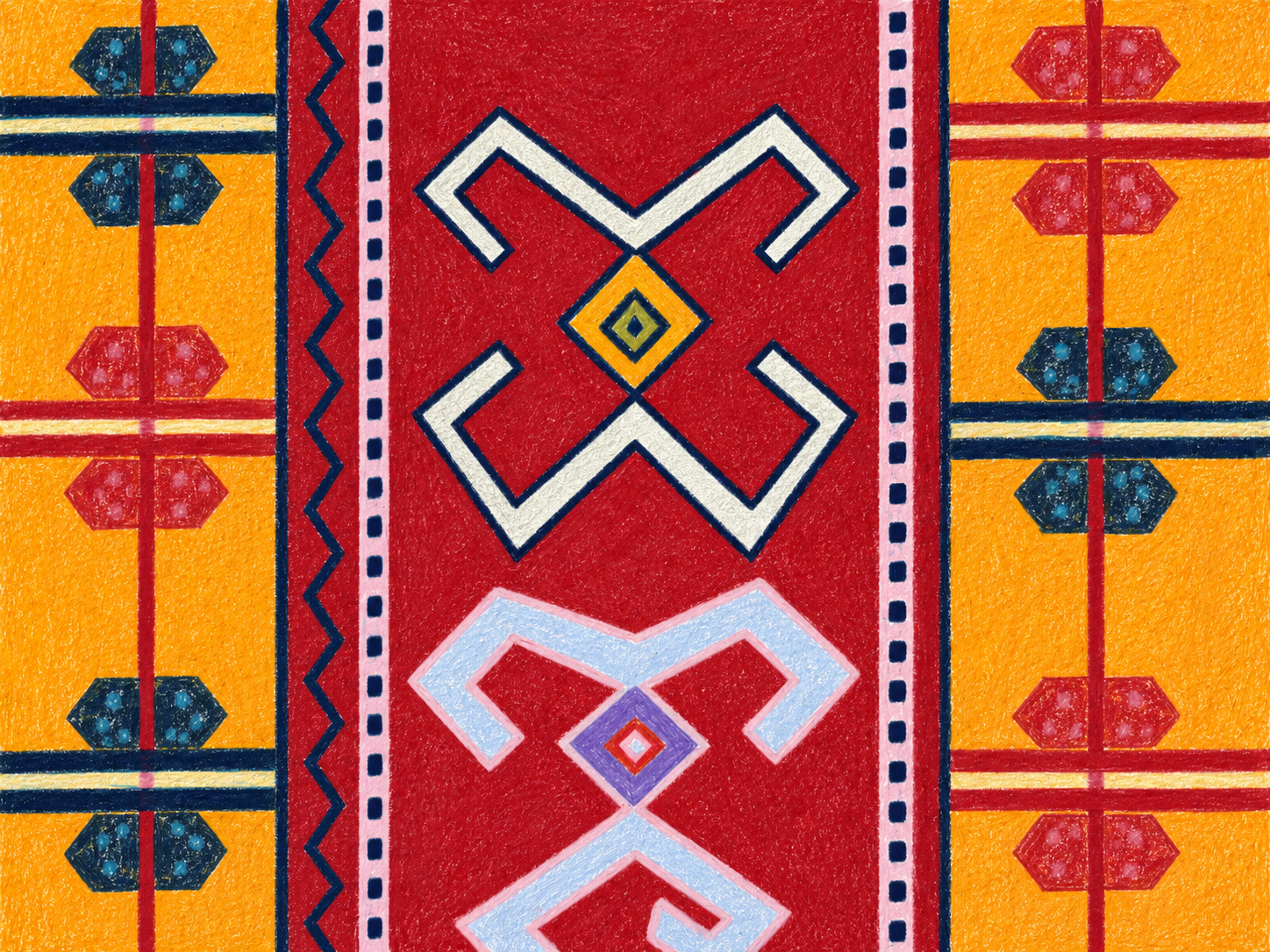
Forthcoming Exhibition
Artist's Statement
Wax on pressed cotton — wax of anatomy, of seals, of the candles that burn before icons.
The patterns begin with the vocabulary of Romanian folk stitching: stepped diamonds, cross-knots, the geometric ornaments and mirror-symmetries that woven and stitched textiles produce through their grid-based logic. The drawings do not transcribe these patterns line by line. I add lines that were not there. I subtract lines that were. The colors depart from the traditional palette of black, red, blue, and green into a contemporary chromatic range — lilac and yellow-green, magenta and mint, orange and gray-violet. The vocabulary is received; the syntax is shuffled. The structures are the starting point, but mutations are welcome.
A suture closes a wound. The body has a wound; the suture performs the closing. But suturing extends — relationships are mended, families held together, communities drawn back into integration. The Romanian word for this kind of work knows what the registers share. The needle and thread are the original technology of mending.
My name comes from Fodor — loosely, the wearer of a red tassel — a textile mark naming what would otherwise need to be said in many words. I am a physician. I suture wounds every week. The drawings extend the same labor into a different medium, with the same logic of binding and joining.
In Romanian Orthodox veneration, icons are not displayed alone. They are presented with stitched cloth, framing them on both sides. The icon writer and the textile worker performed complementary parts of the same religious life. My icon paintings continue the Nicula tradition that my great-grandfather Gheorghe Feur was the last documented to write. The sutures drawings continue the textile inheritance that accompanied that icon-writing. The two registers of my work are parts of one integrated practice.
The work is not preservation. The work is continuation.
Works in the Series
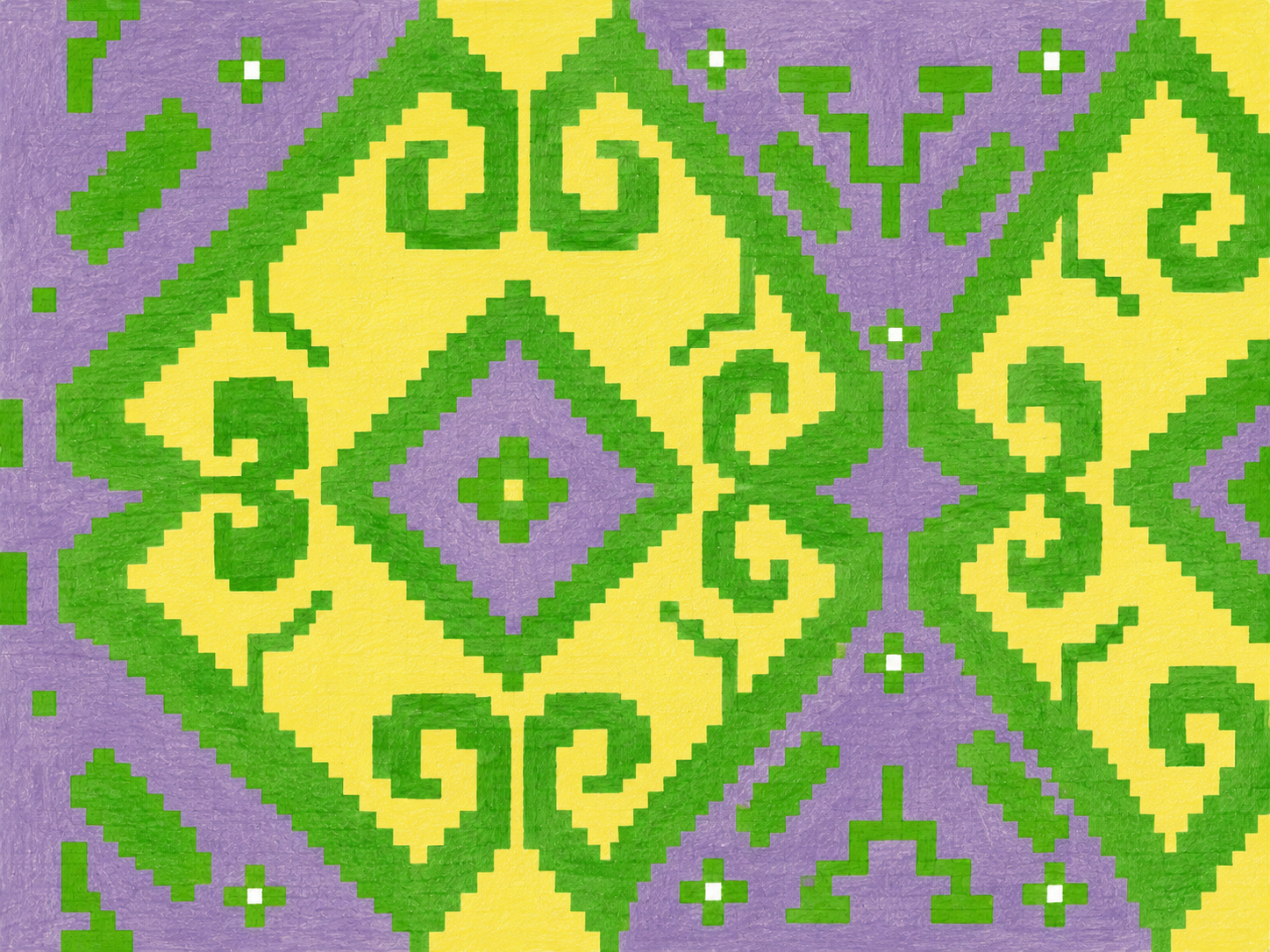
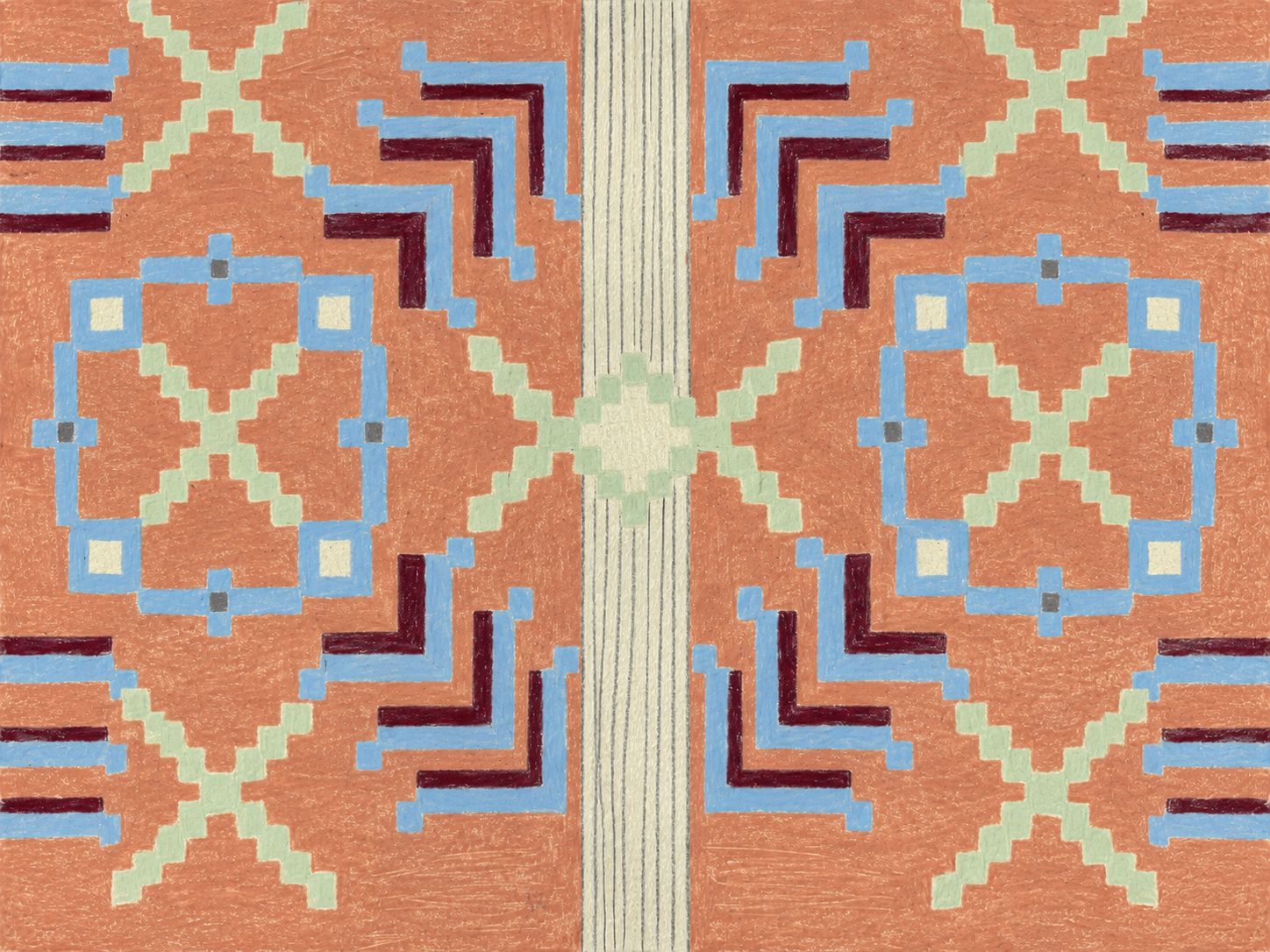
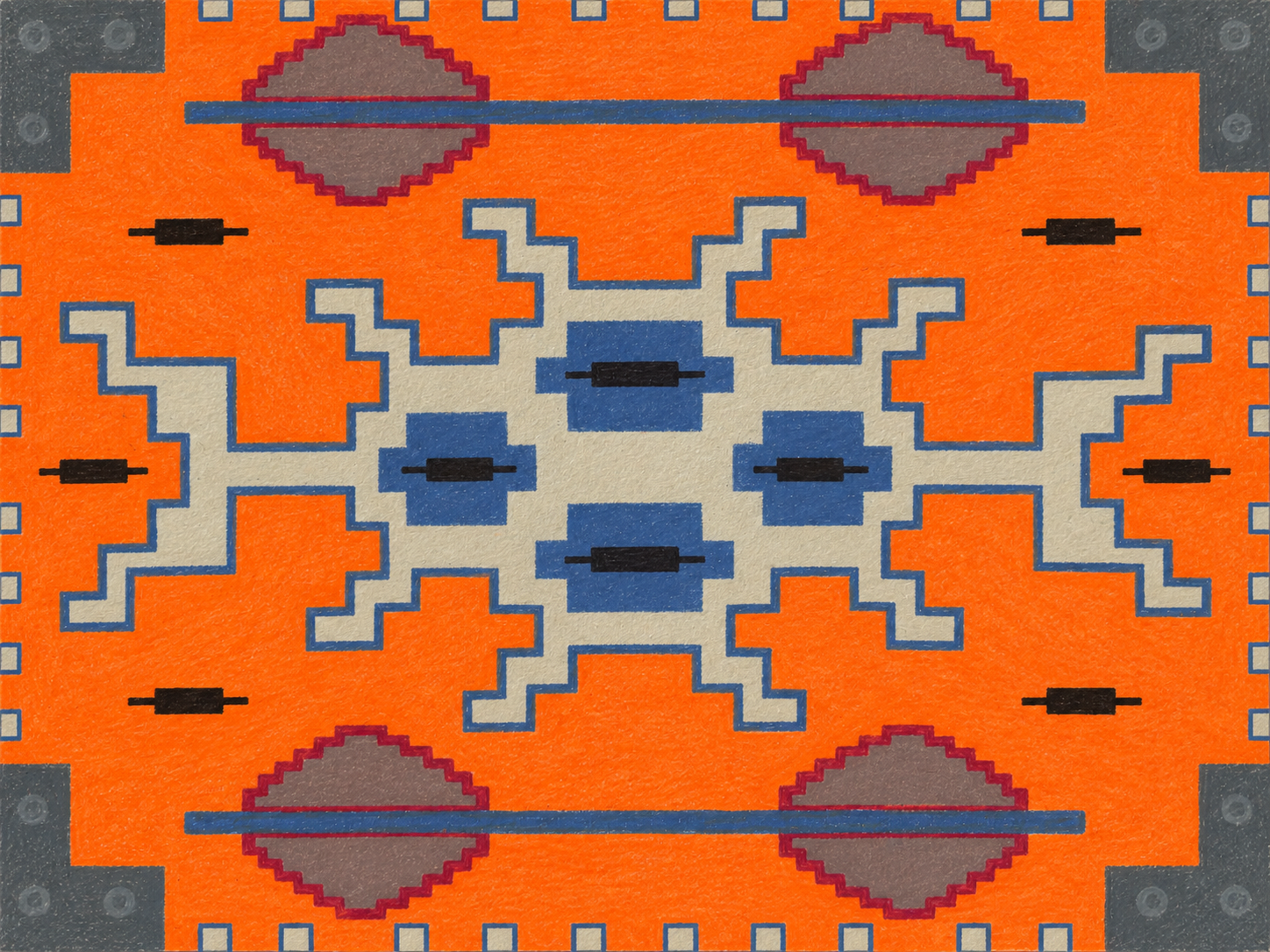
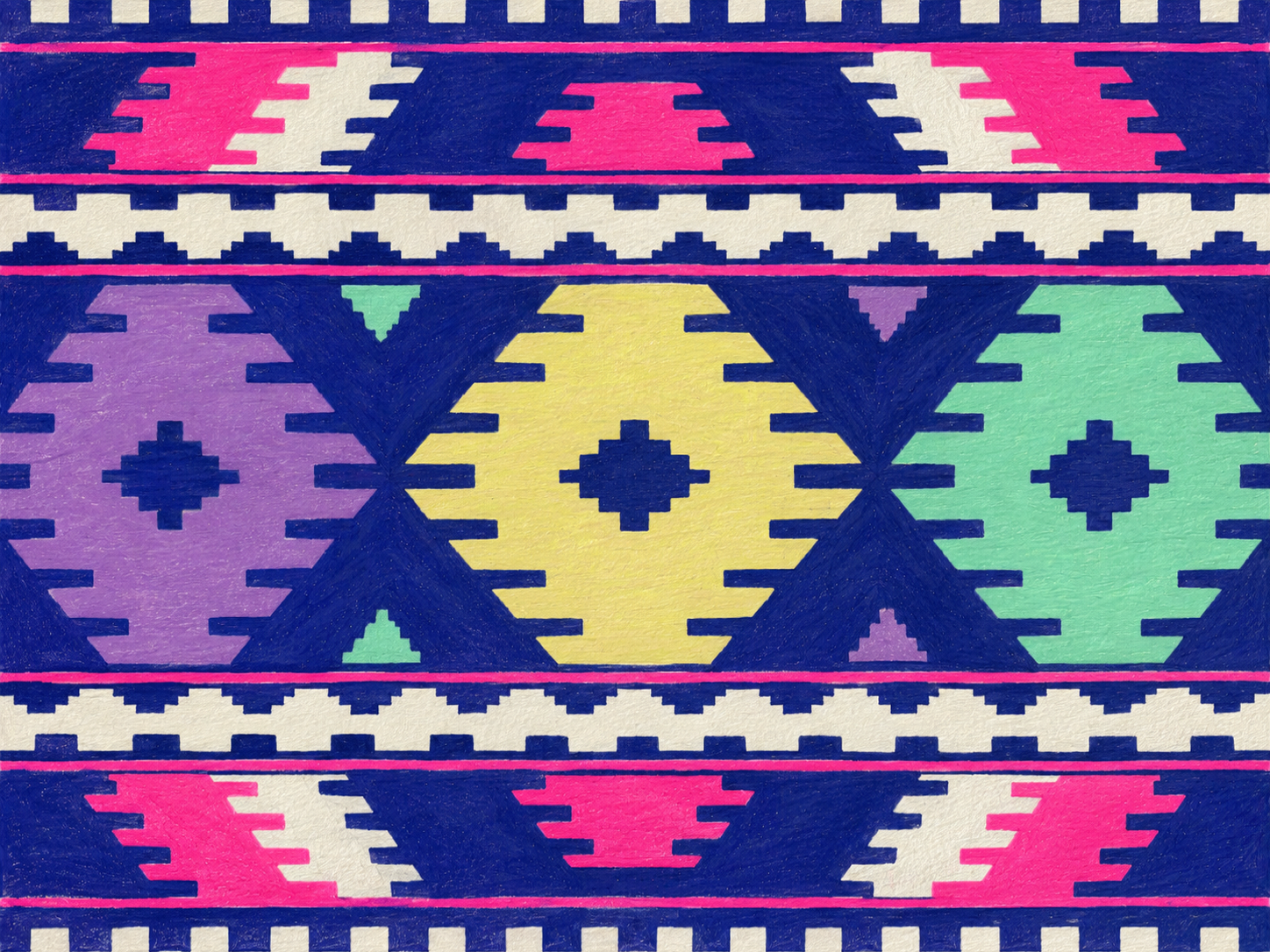
Series ongoing. Additional works in progress.
C Fodoreanu