Exhibition
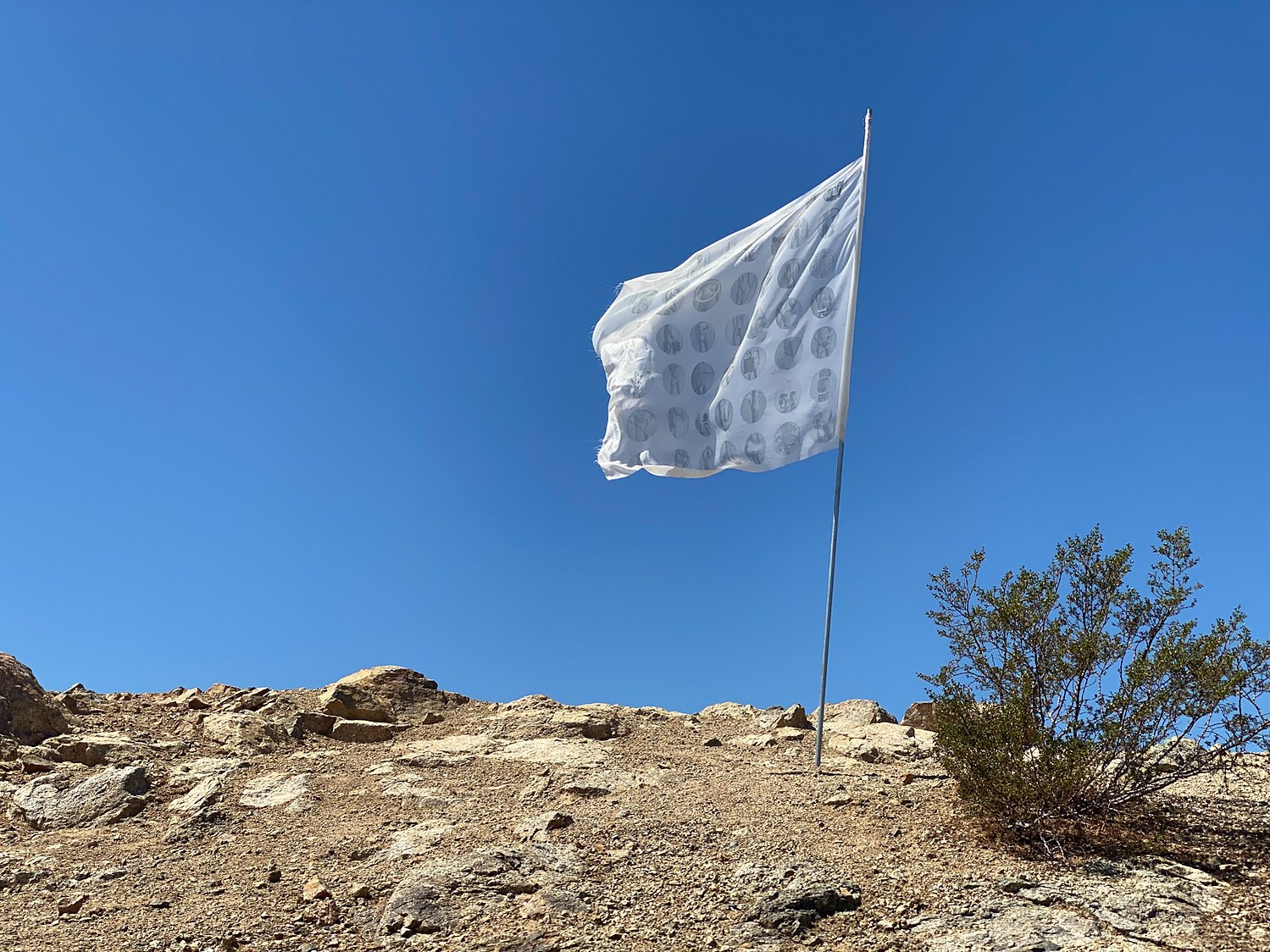
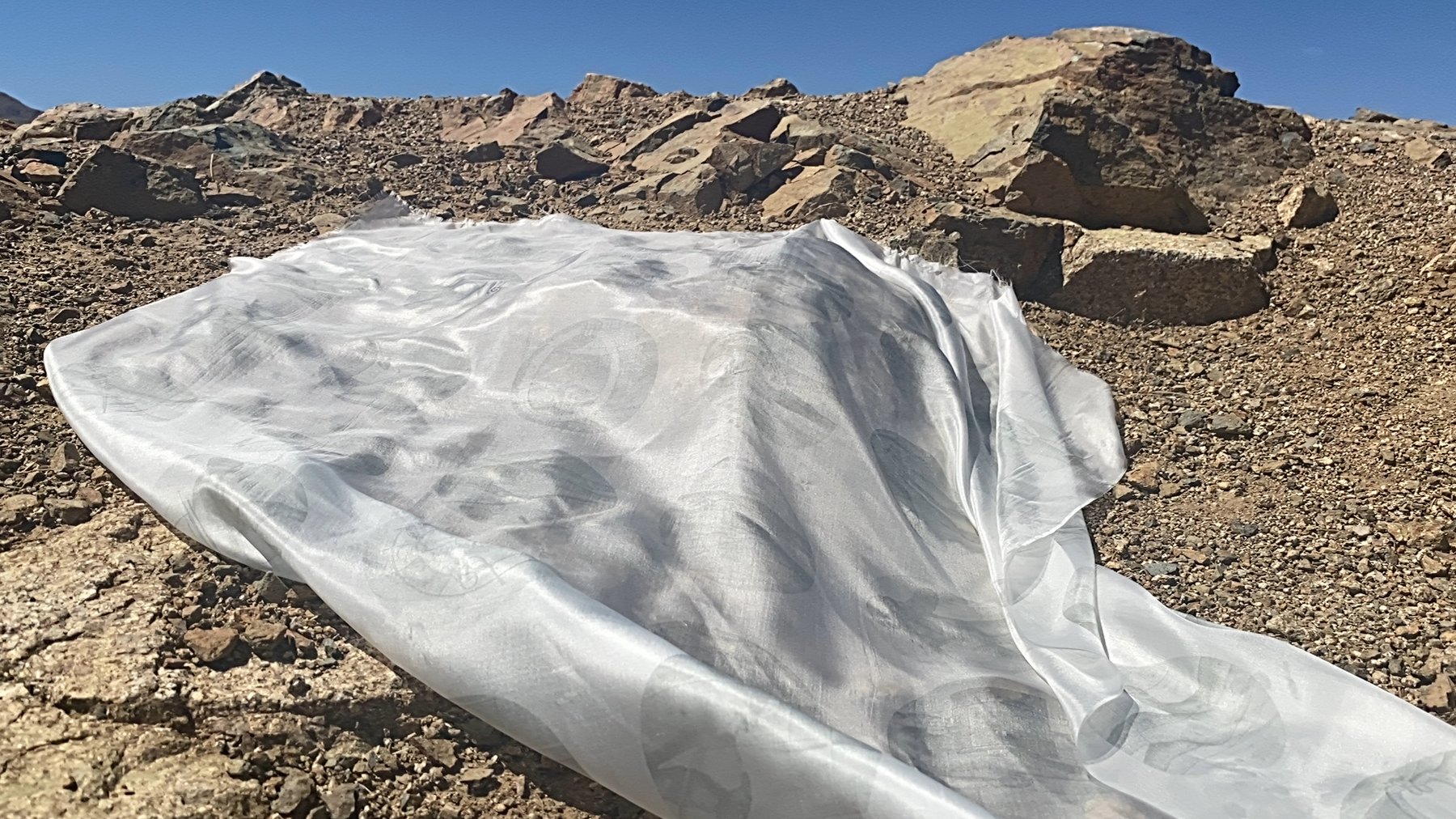
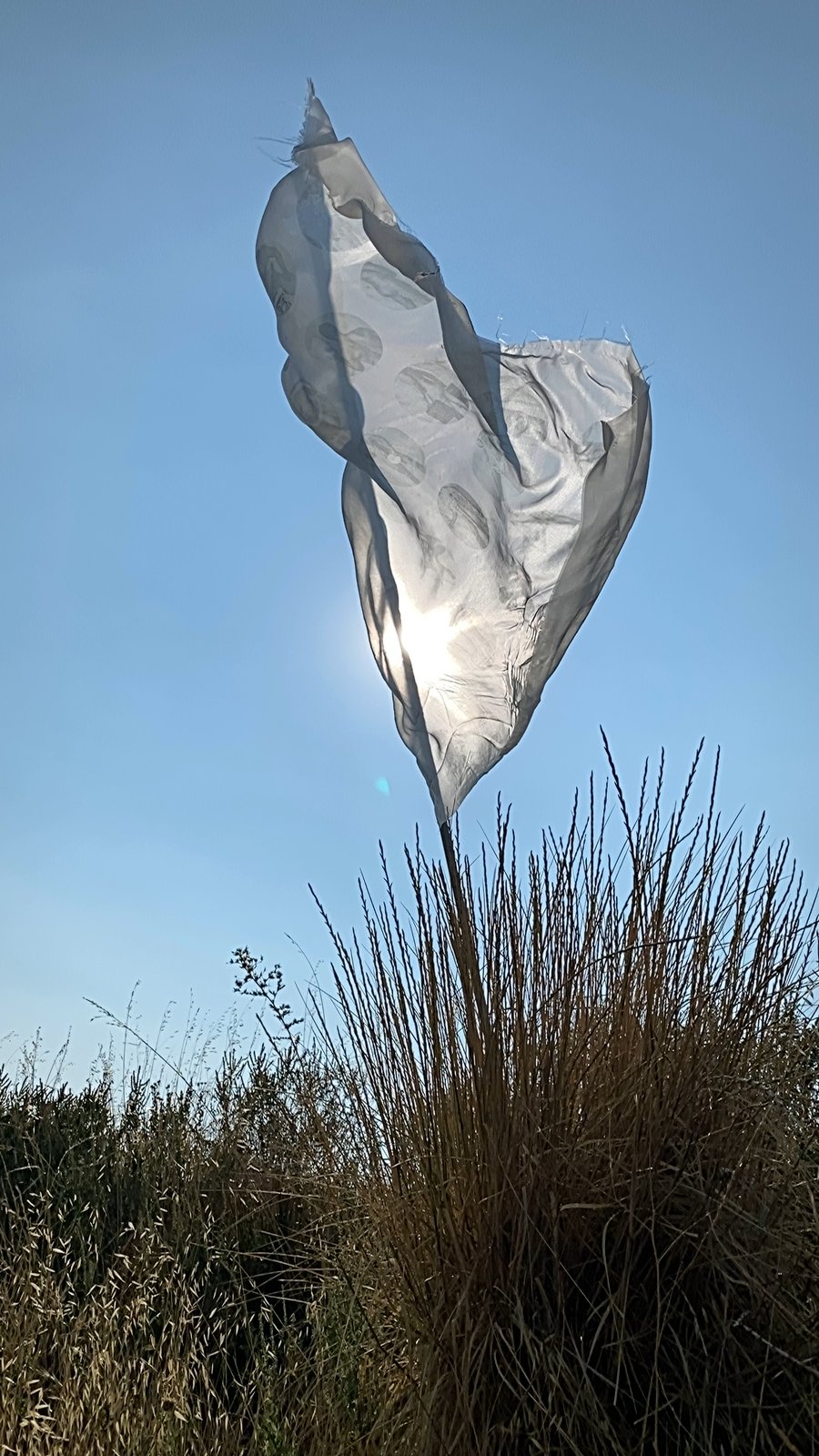
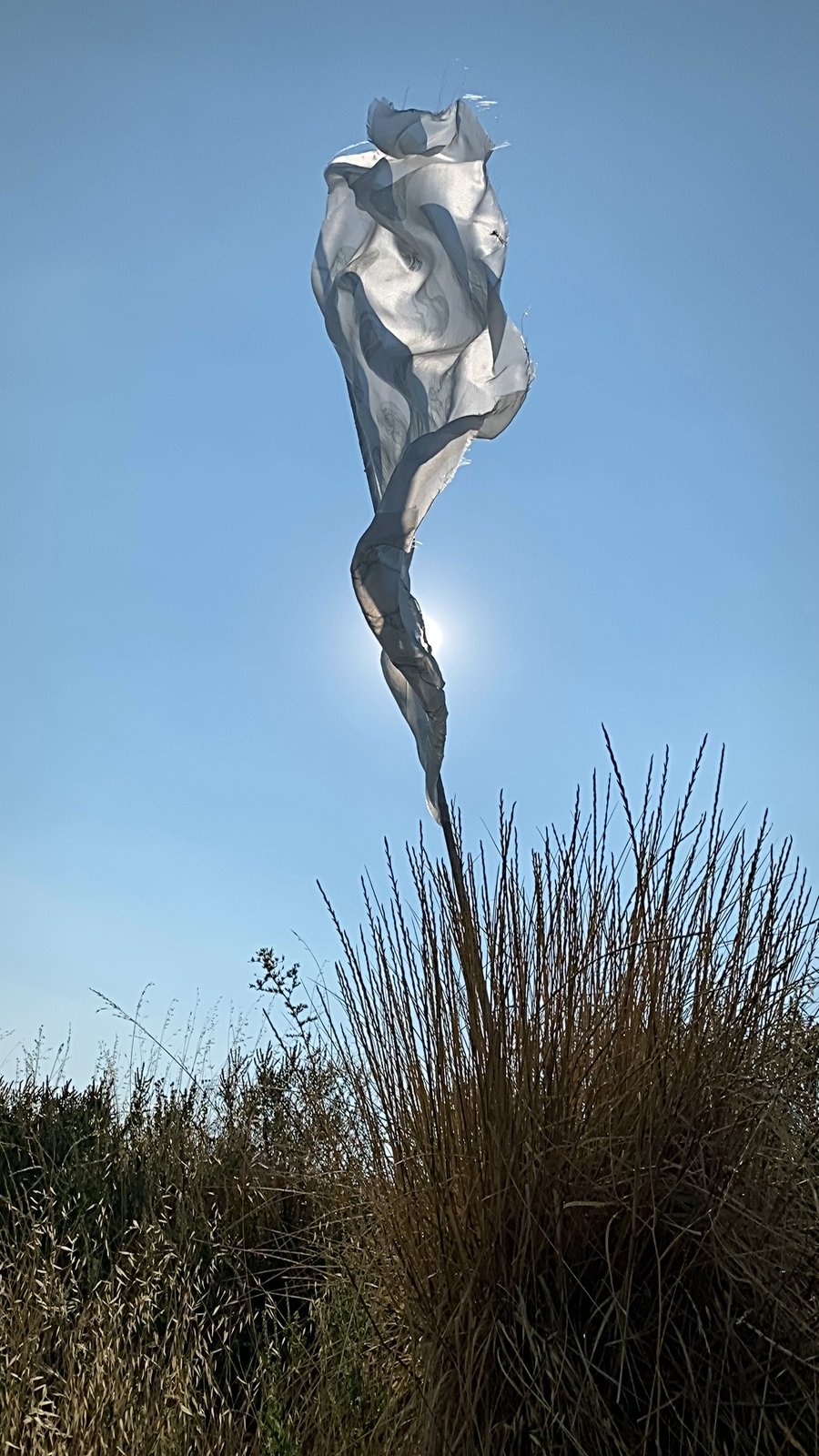
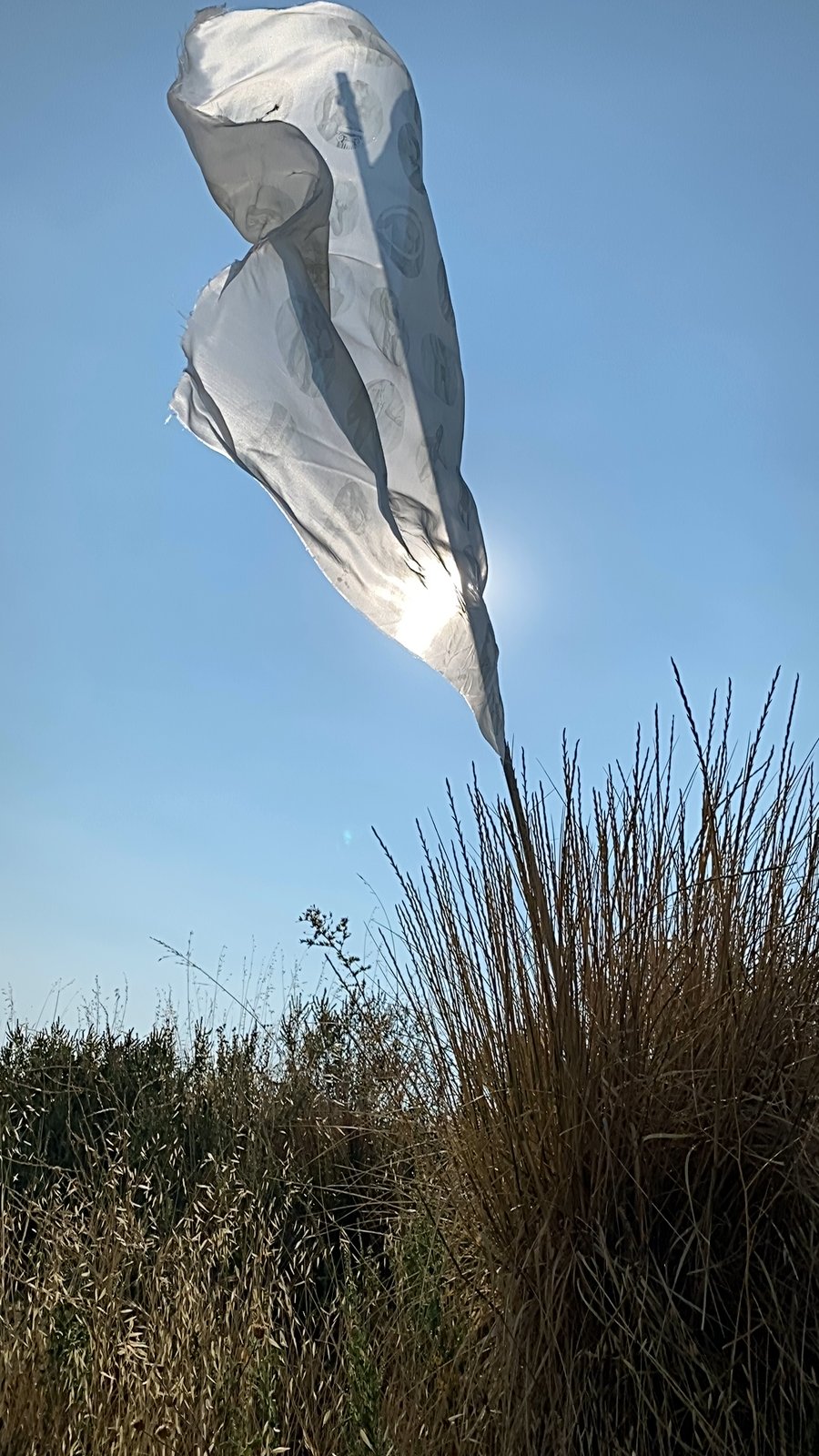
the white flag, Chocolate Drop, Twentynine Palms, CA, 2021.
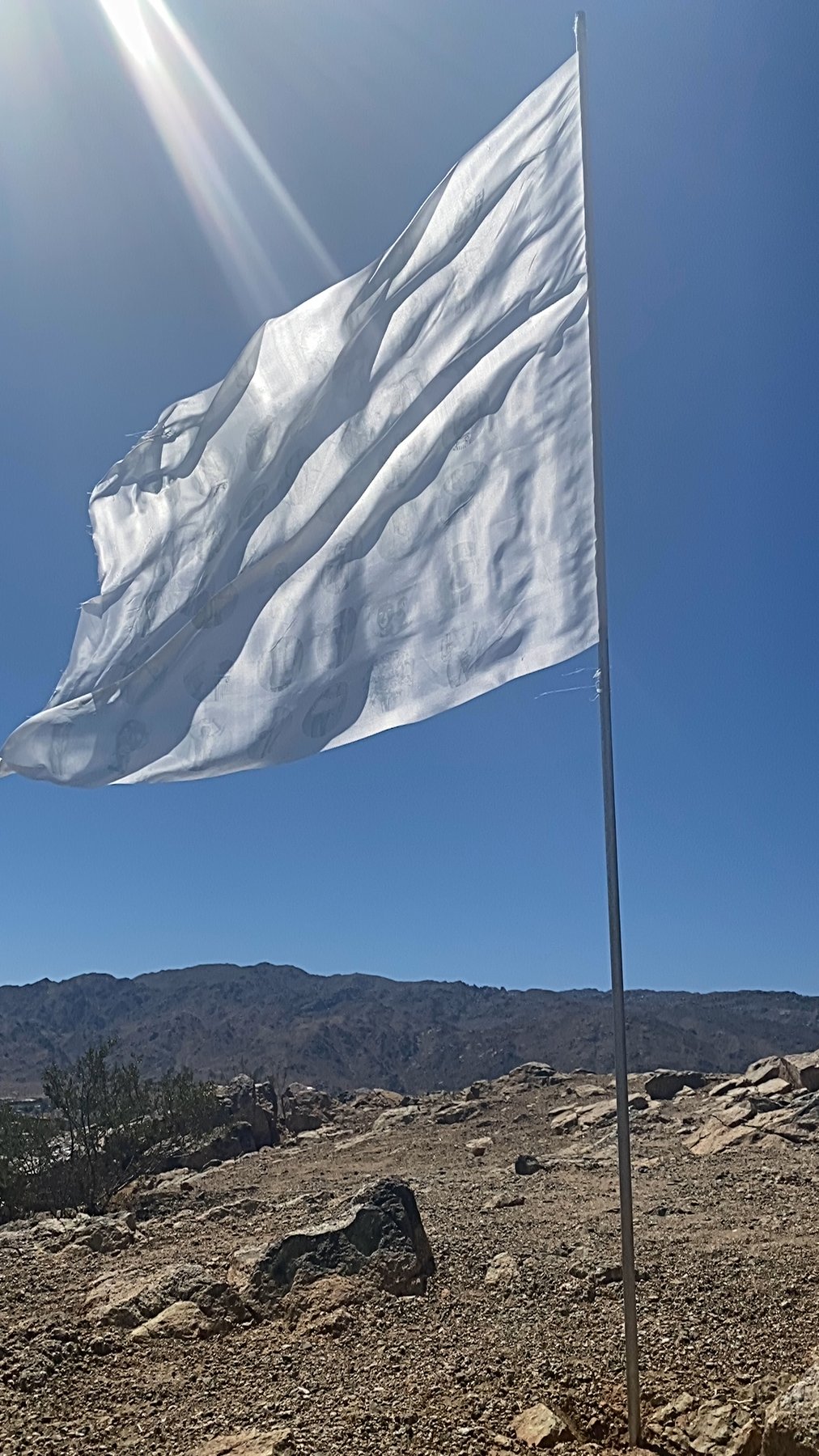
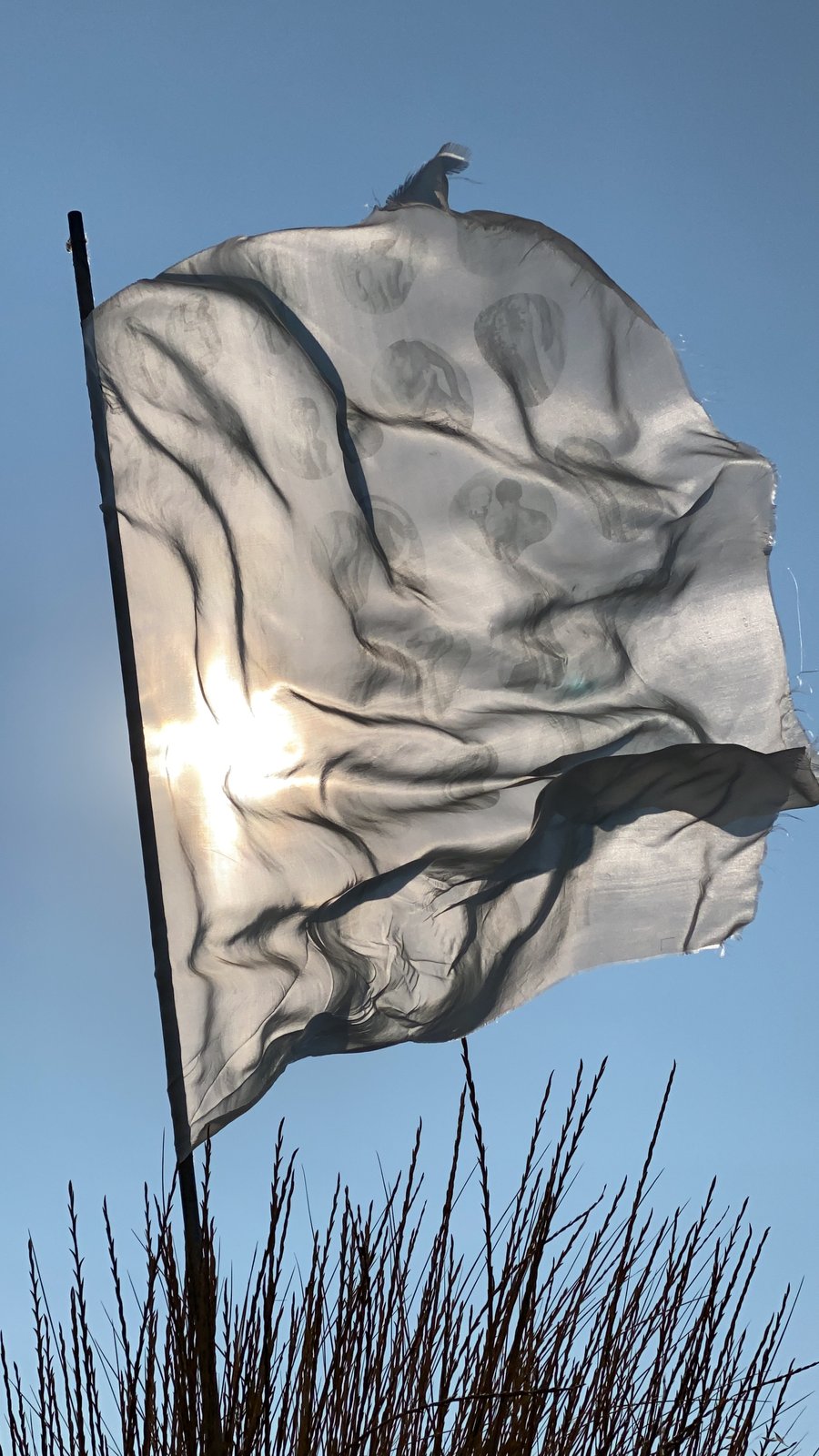
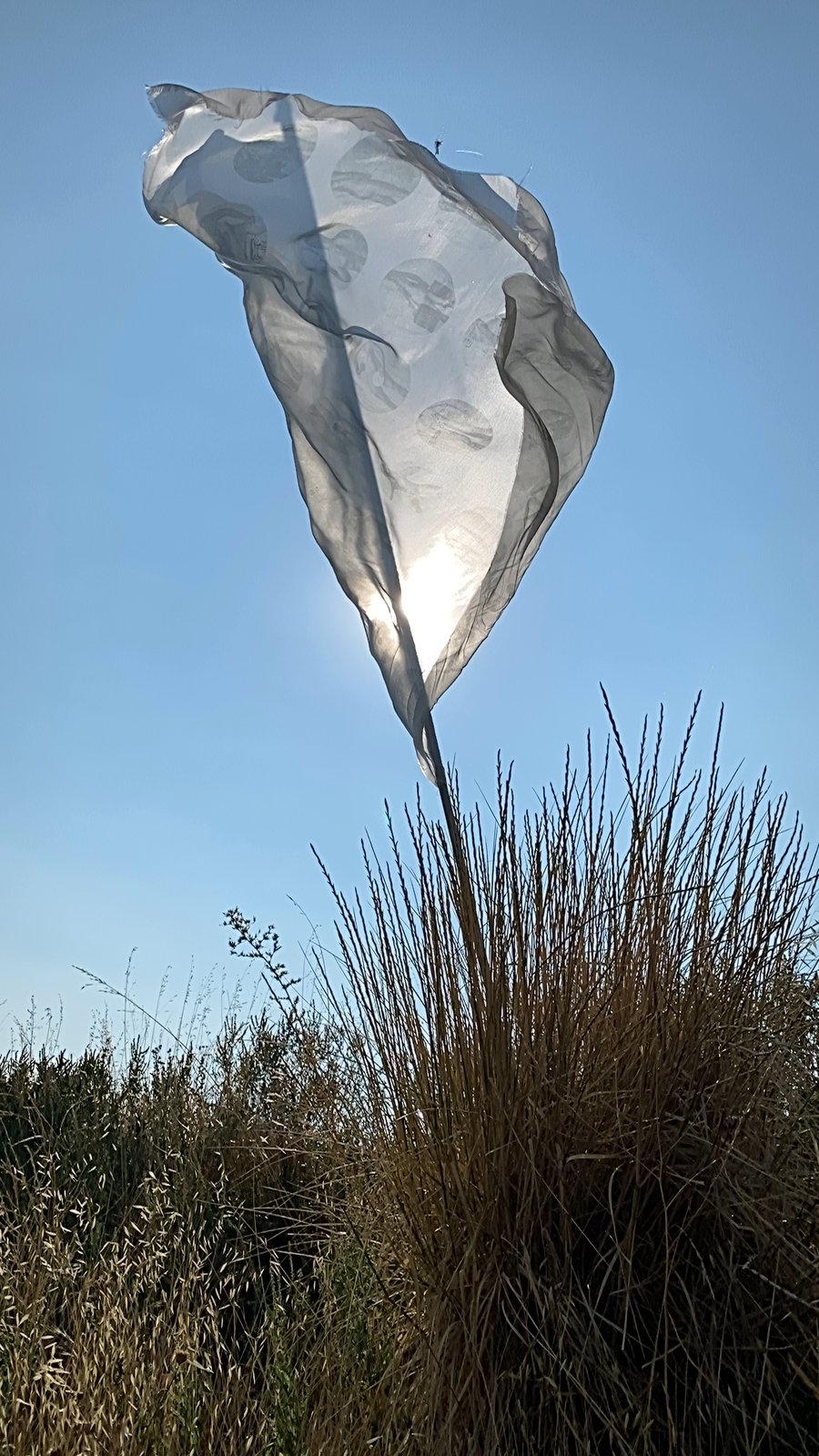
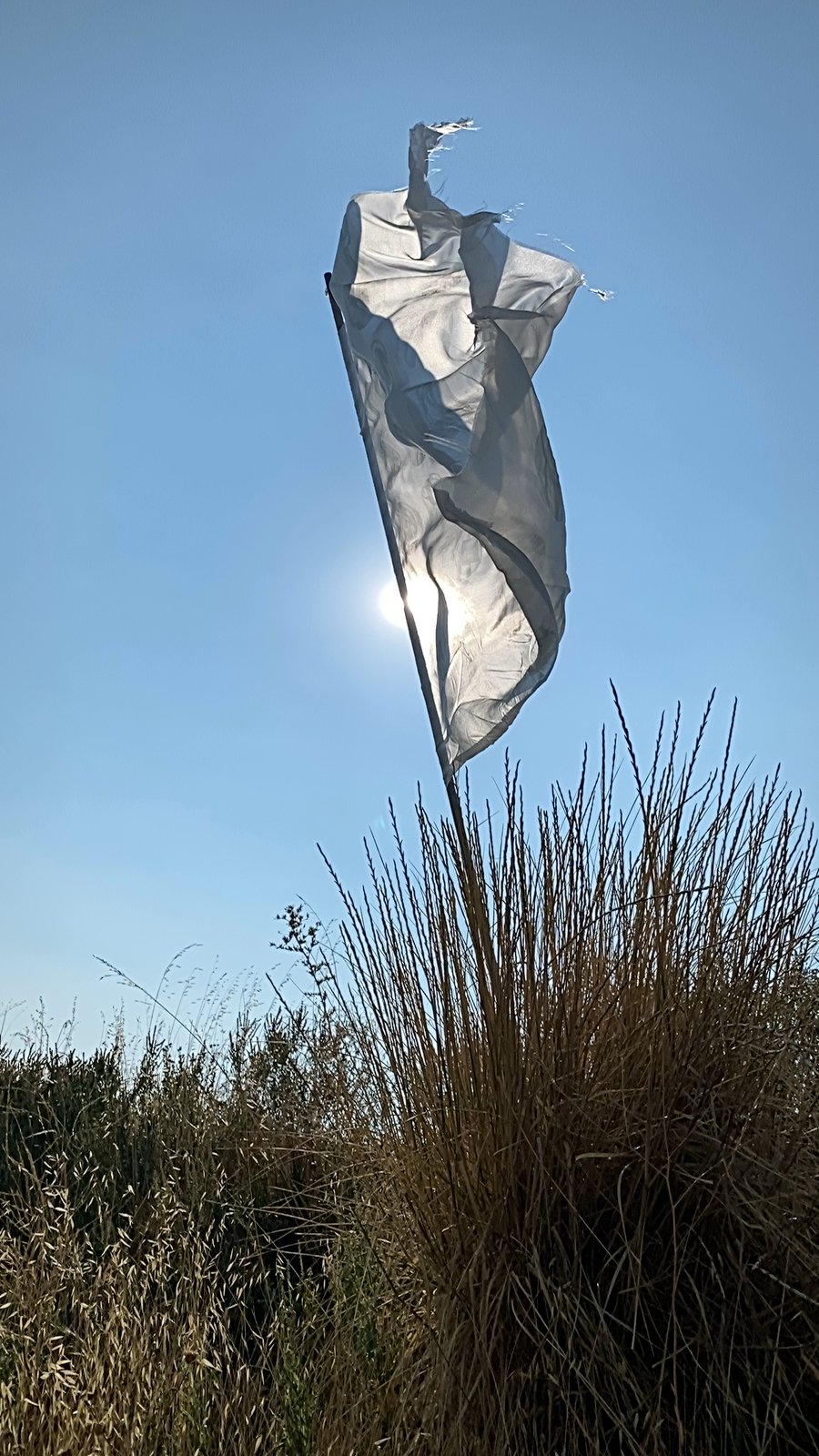
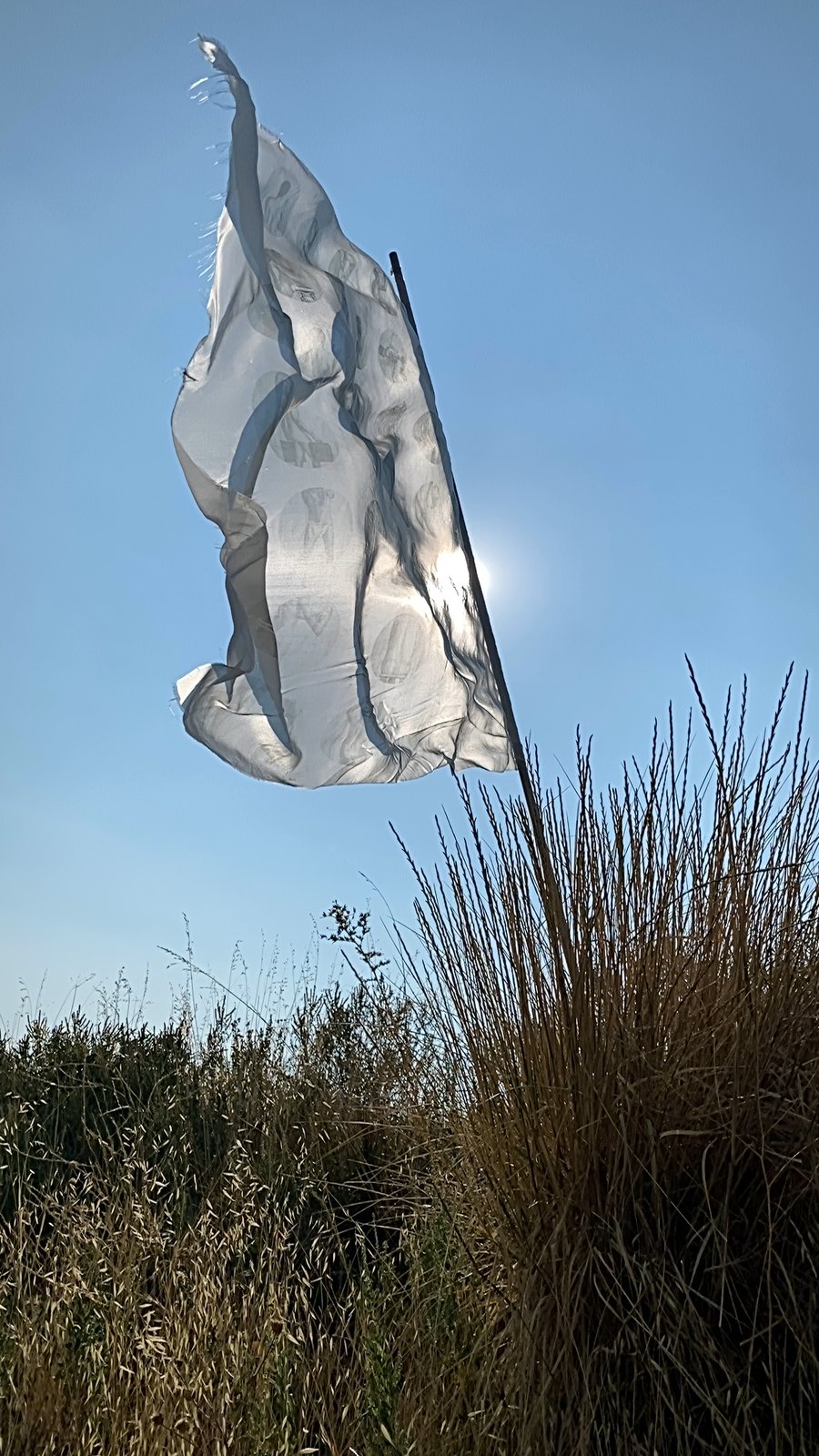
the white flag, near Julian, CA, 2021.
the white flag, as the center of the measure of all things, The Studio Door, San Diego, CA, 2022.
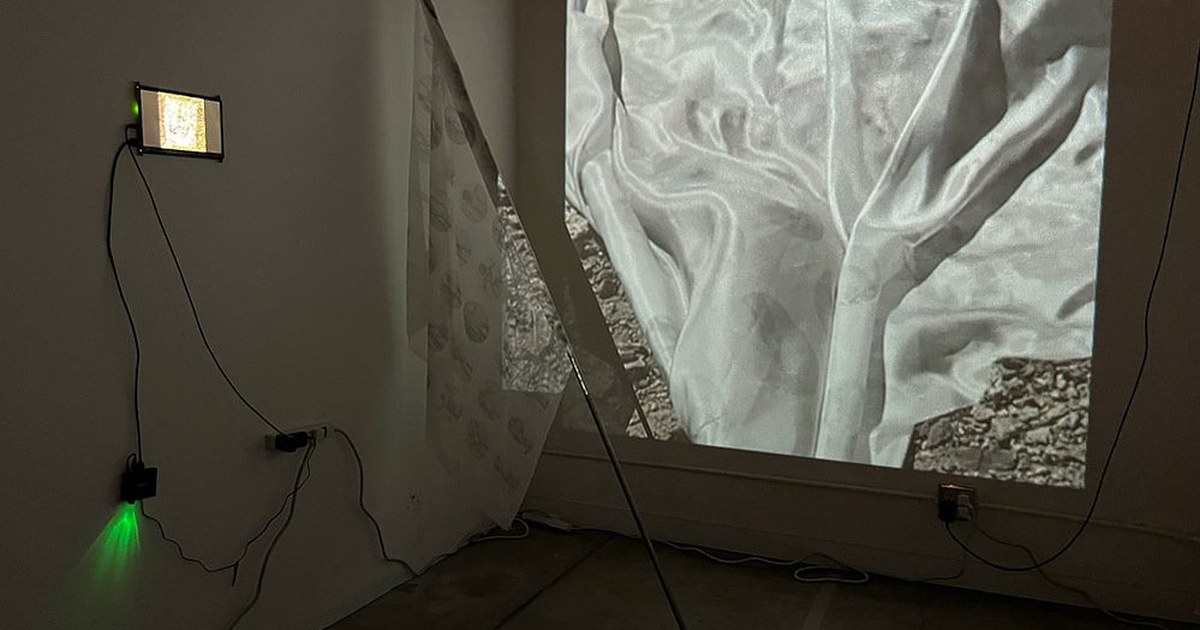
the white flag, in no thing at all — level of service not required (LOS/NR), La Jolla, CA, August 29 – October 5, 2024.
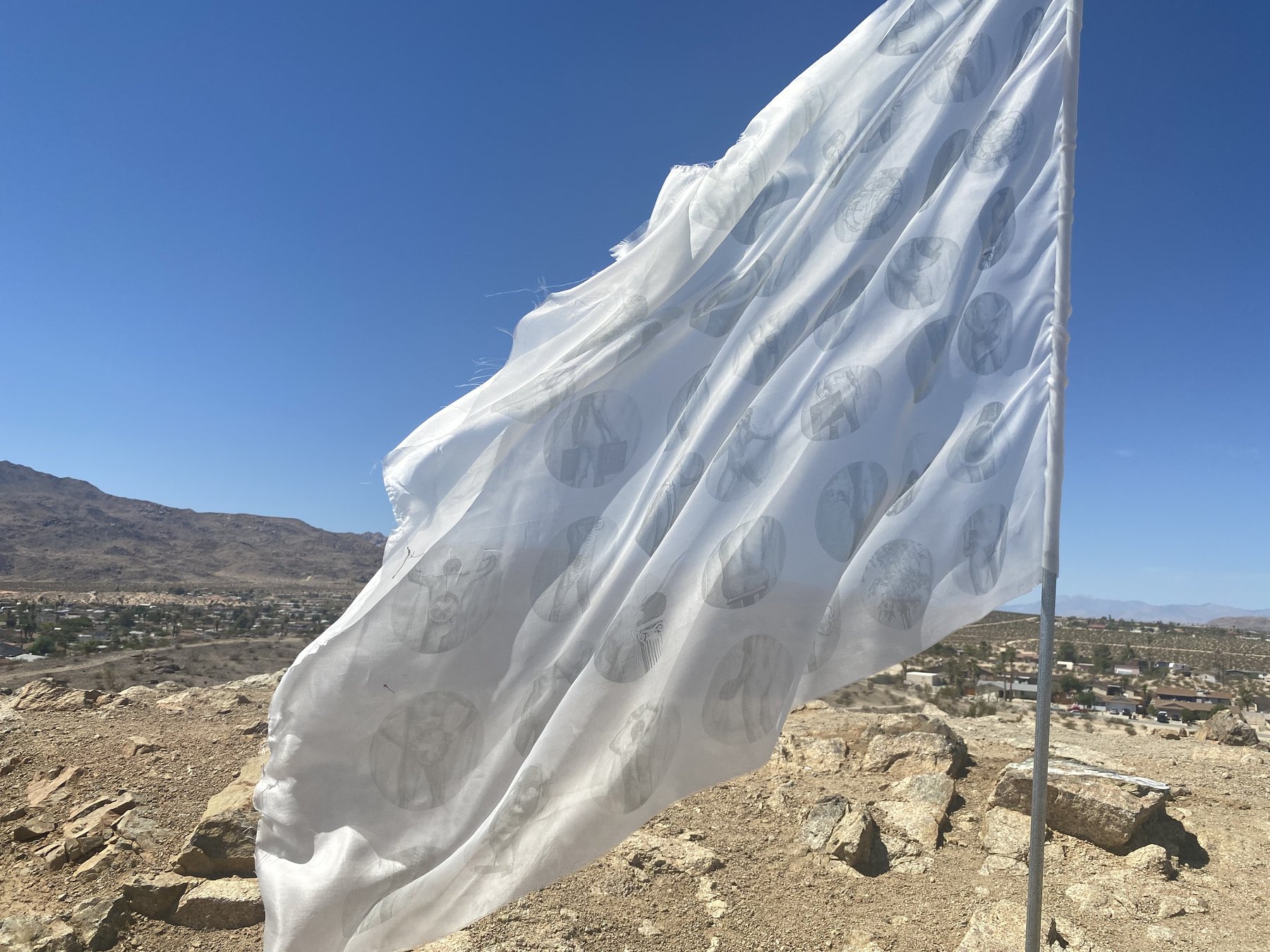
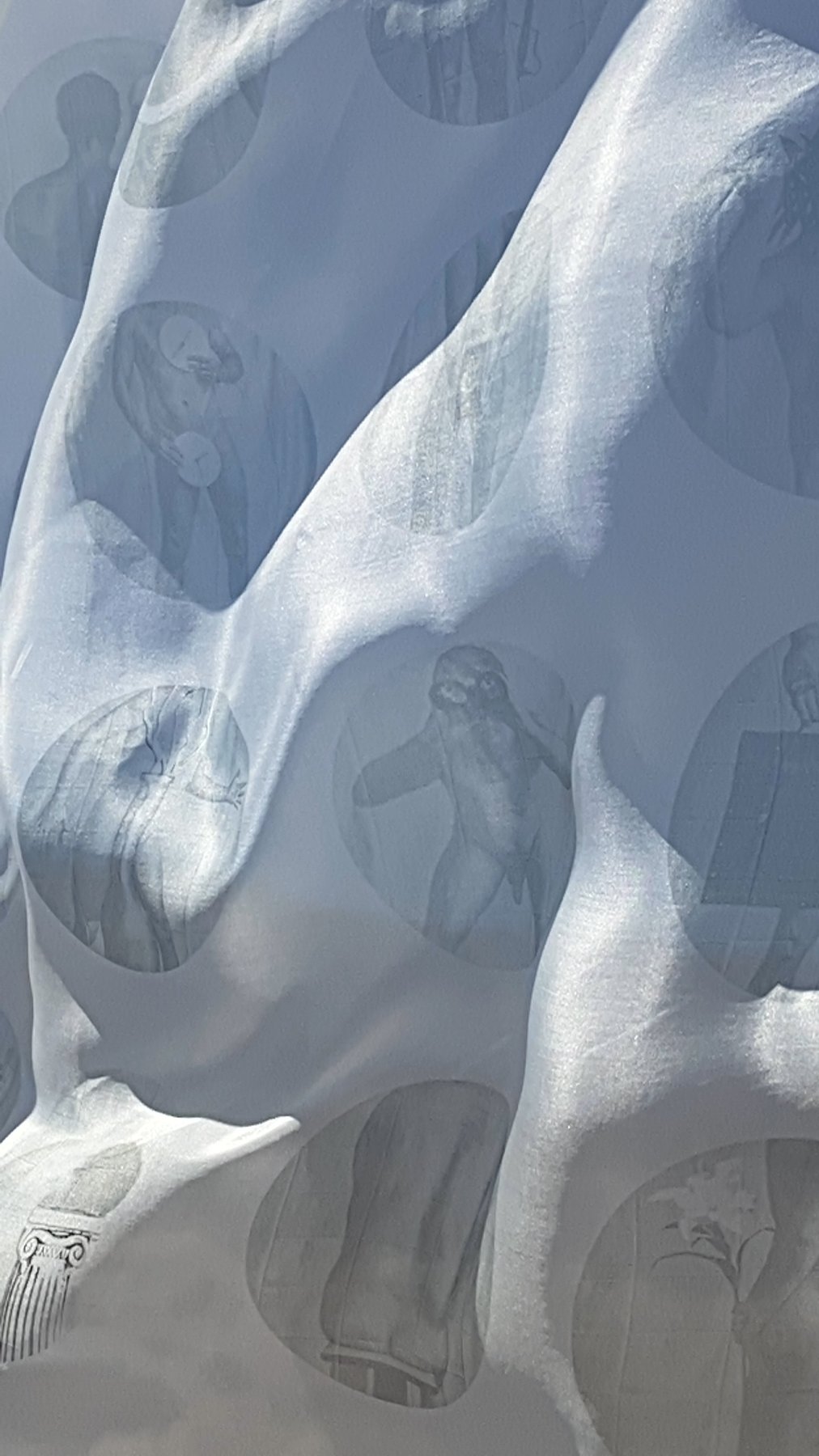
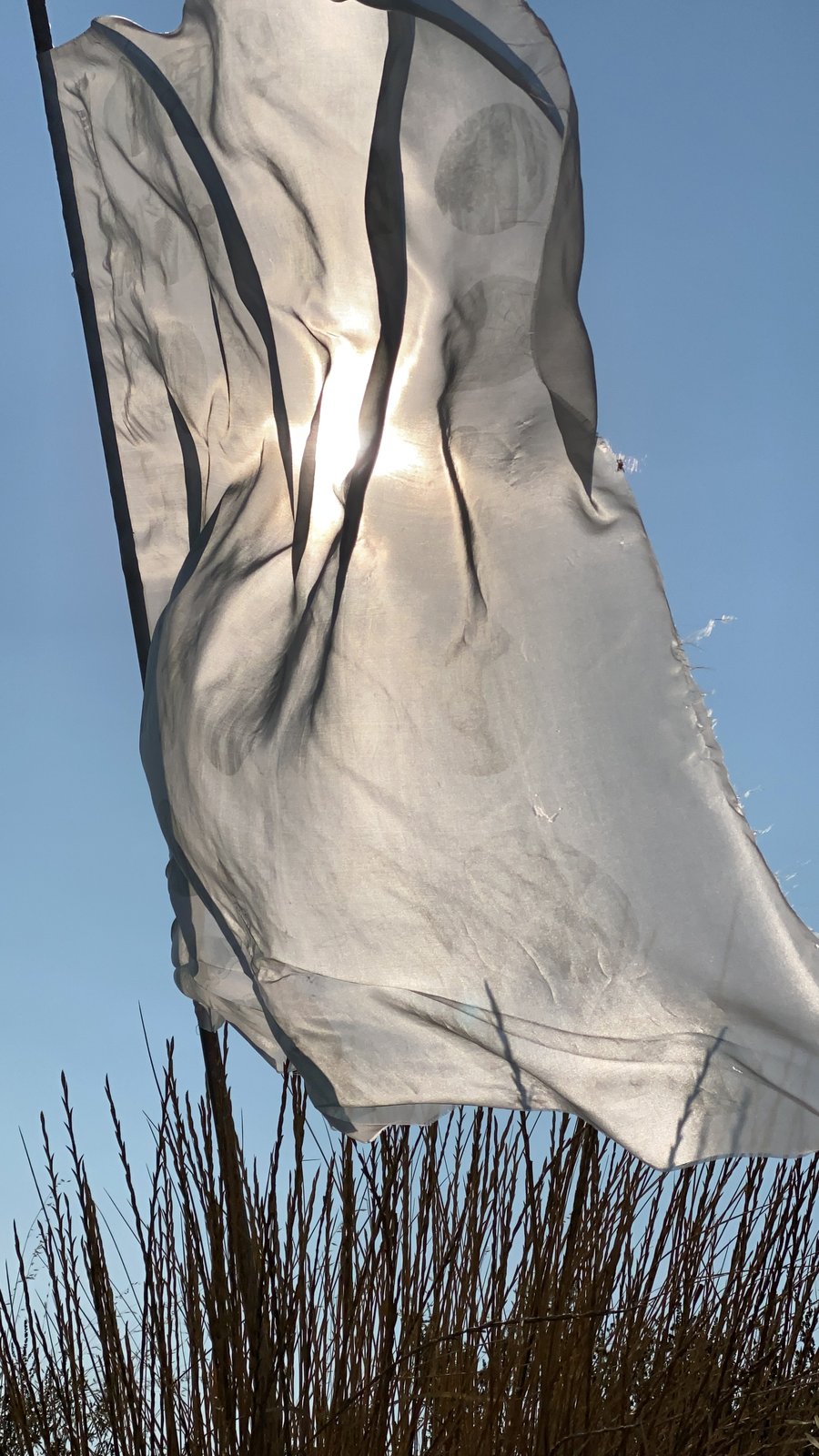
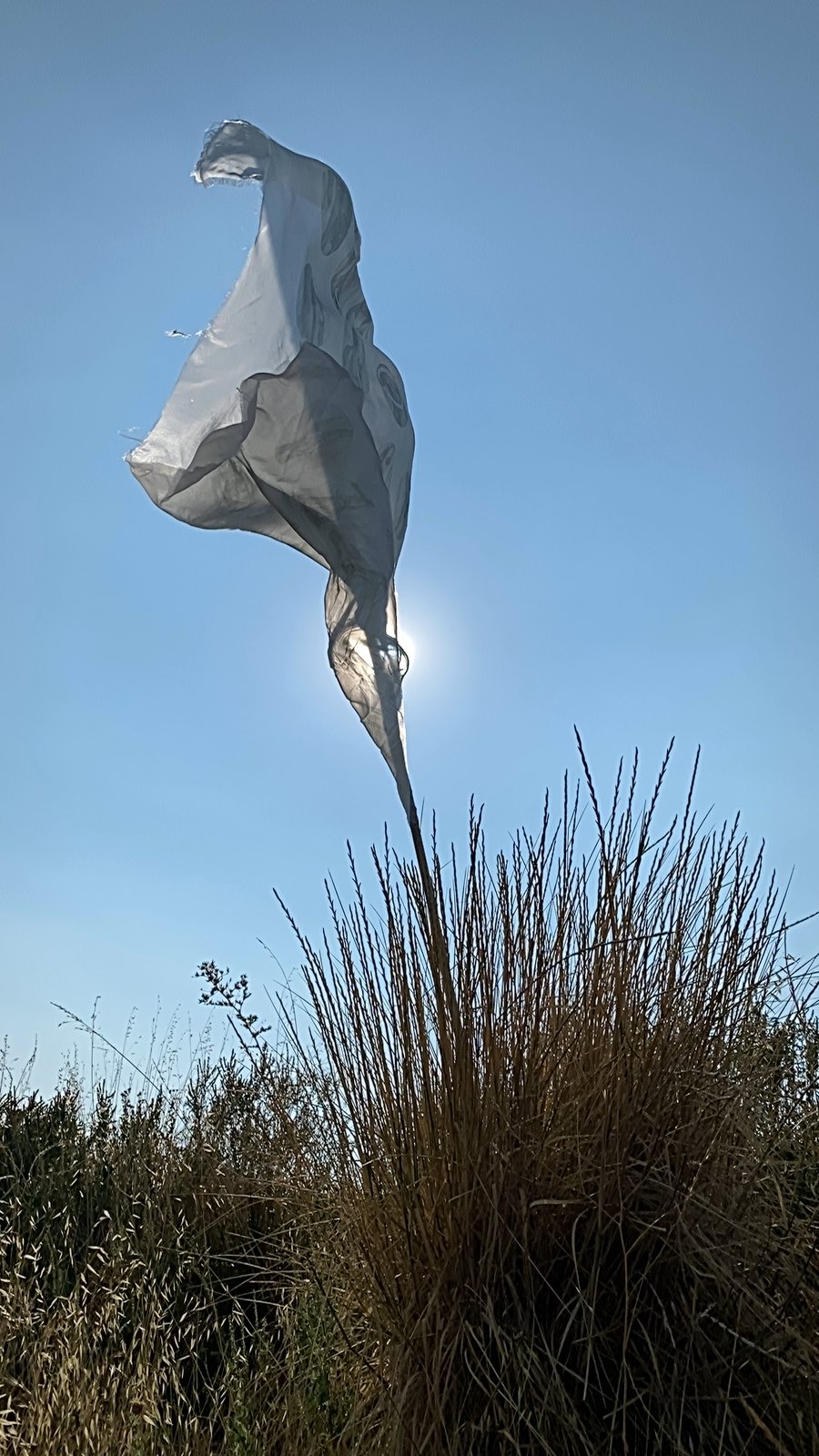
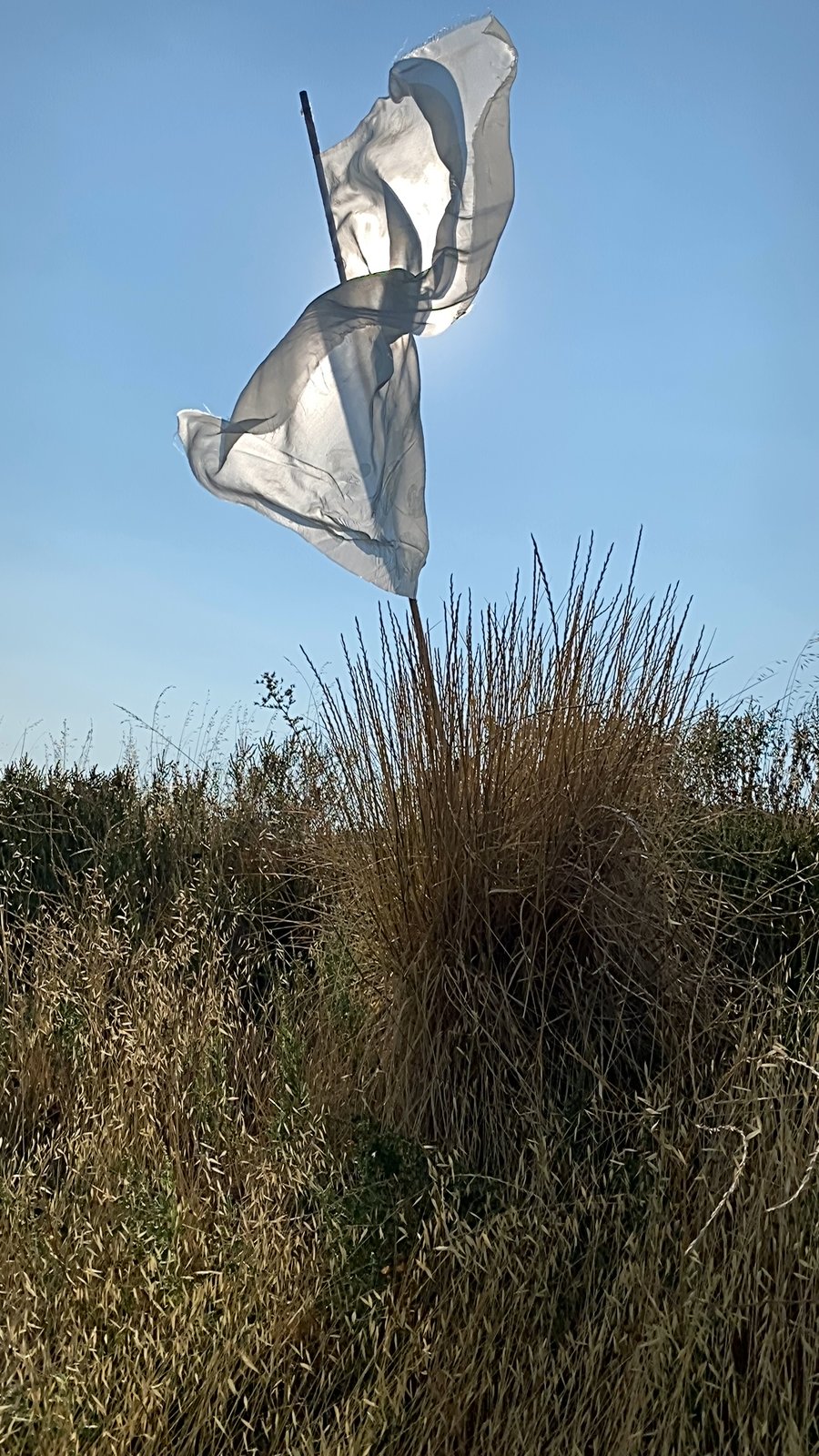
the white flag is a silk print on a metal pole, seven feet tall. The silk carries a catalog of figures, each inscribed inside a circular medallion, drawn from the classical tradition of figure study — bodies, fragments, the apparatus through which the Western tradition has taught the body to be seen. Somewhere among the figures, one holds binoculars to the eyes, looking back; this is the only face on the flag, and it is covered by the looking. The viewer who finds it has already been looking long enough to be found, and to be altered by being found.
White, for surrender. White, for innocence — the body before alteration. This flag carries neither nation nor cause; it carries figures, bare to the gaze, in the condition the body was given.
The human body is a marvelous creation, meant to be kept intact. Every alteration — physical, psychological, optical, made by the elements or by the gaze — is a small damage. The flag raises the figures to be seen, and the seeing is already the beginning of the alteration. The body the viewer sees is not the body that was before the looking, the way the electron is never the electron we see — by the time the seeing has reached us, the body has moved.
The silk responds to the conditions it is placed in. In the open air, the wind moves the figures in their circles; the sun comes through the thin silk so the bodies become visible from both sides at once. Indoors, the figures stand still. Eventually, the wind takes the flag itself — the surrender is not declared, it is performed by the elements. The silk falls. The figures, still in their circles, lie down on the ground.
The flag does not declare. It holds the inheritance of looking — the looked-at body, the looking body, the apparatus that joins them — and lets the wind decide what survives. It waits to be read, and reads back, and alters the one who stayed long enough to be read. The measure of all things, and so, is impossible. The seen is not what it was before being seen.
The flag was raised again near Julian later in 2021.