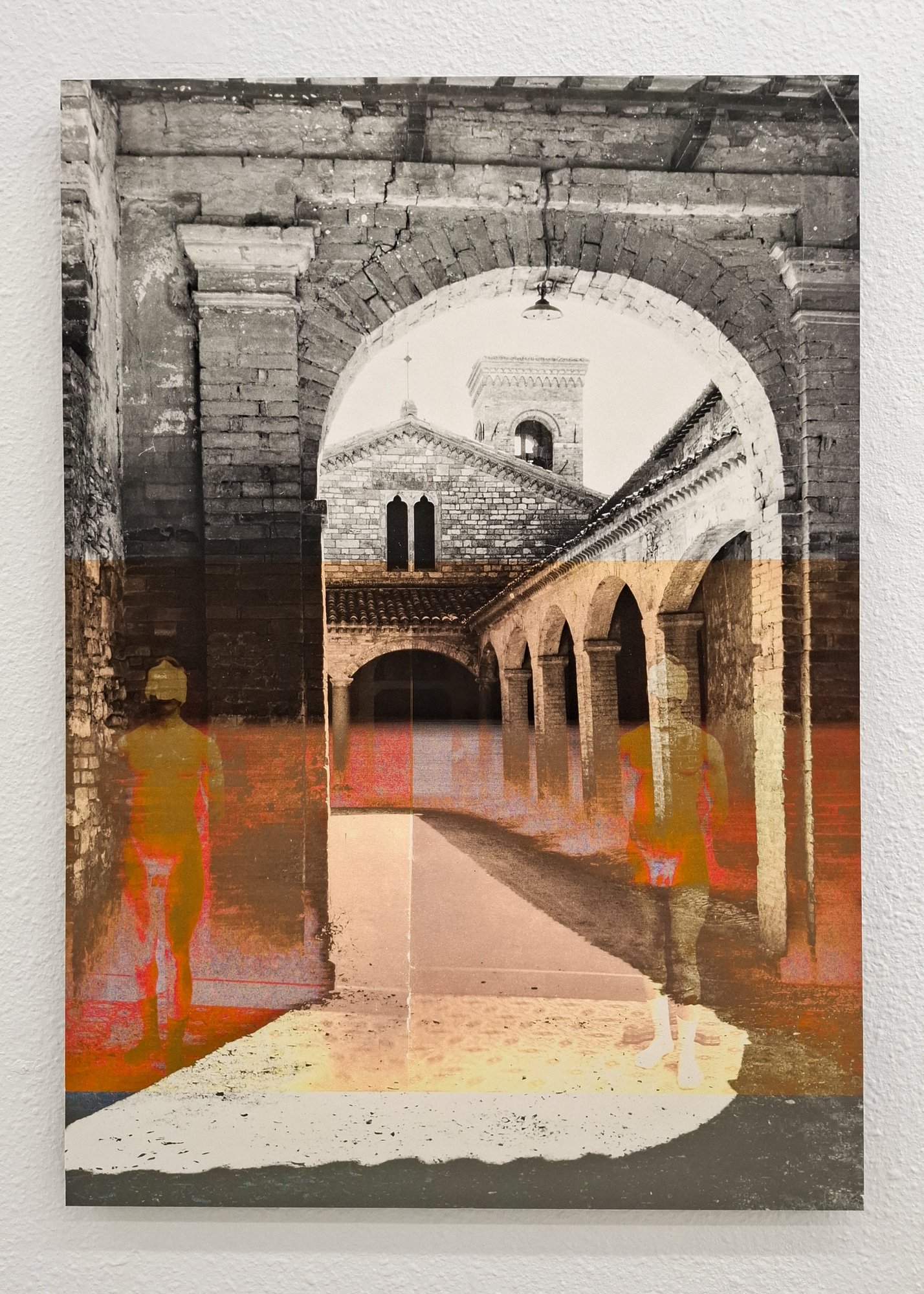
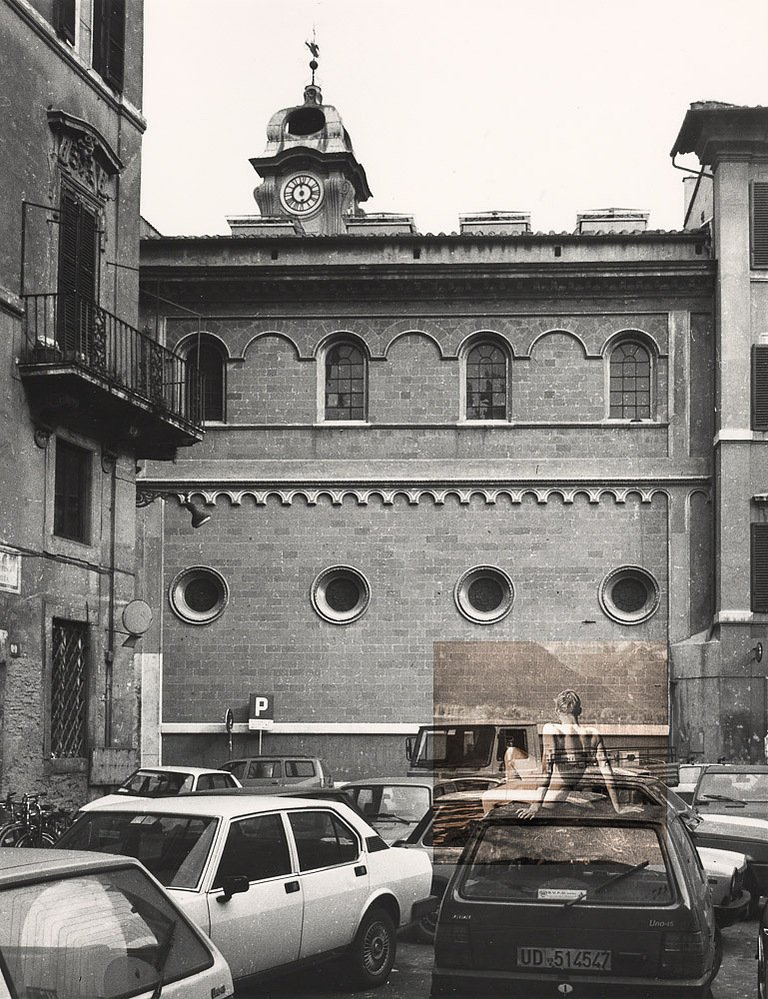
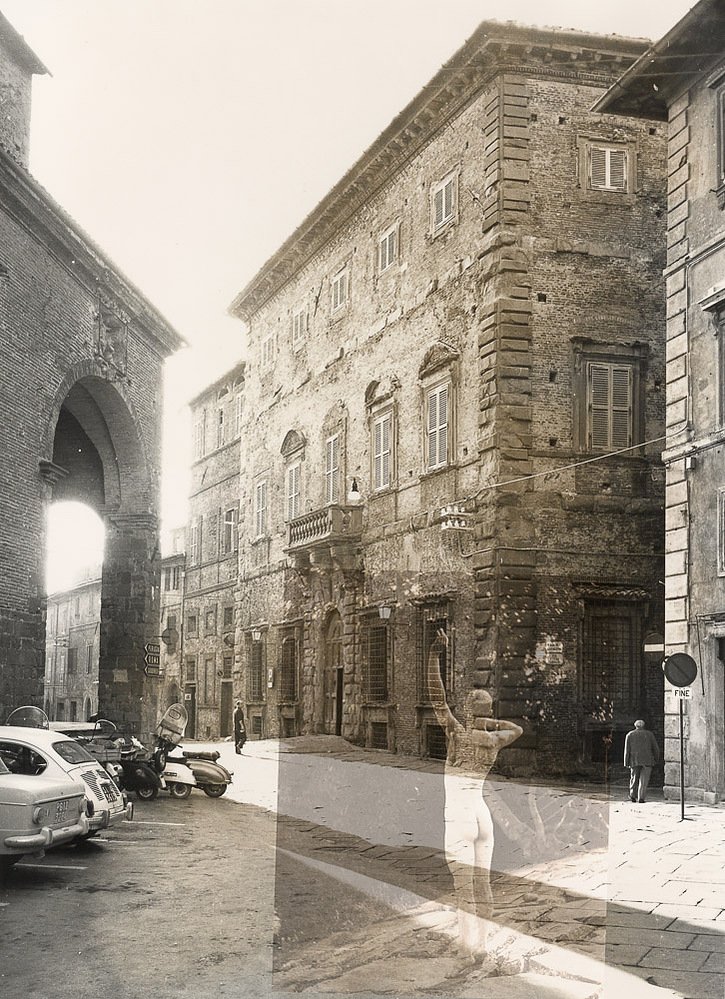
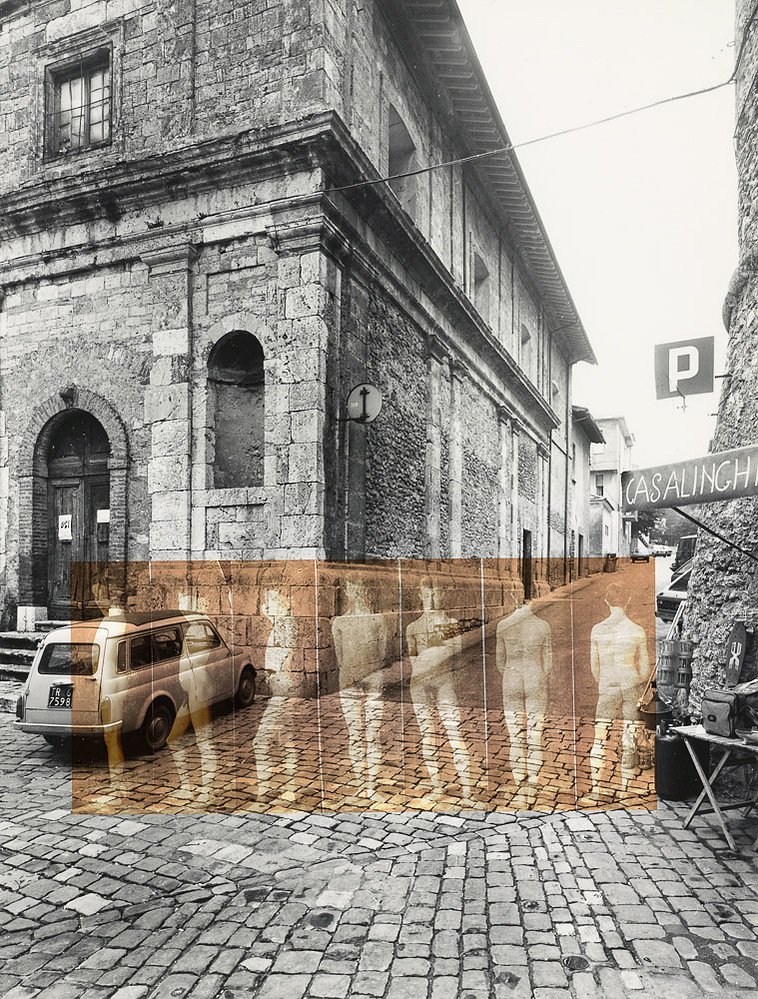
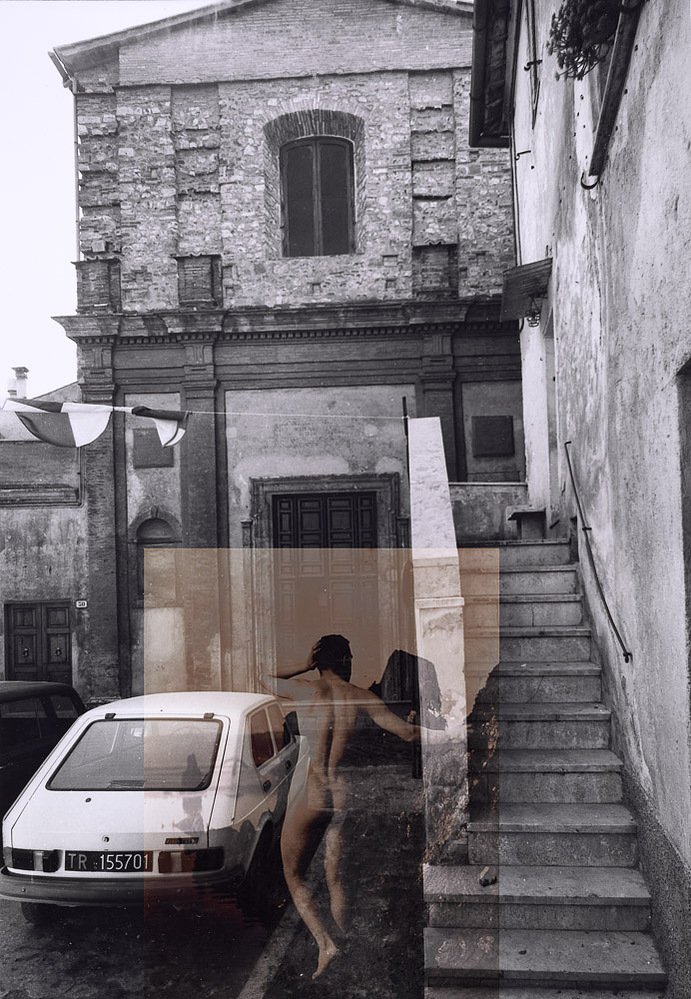
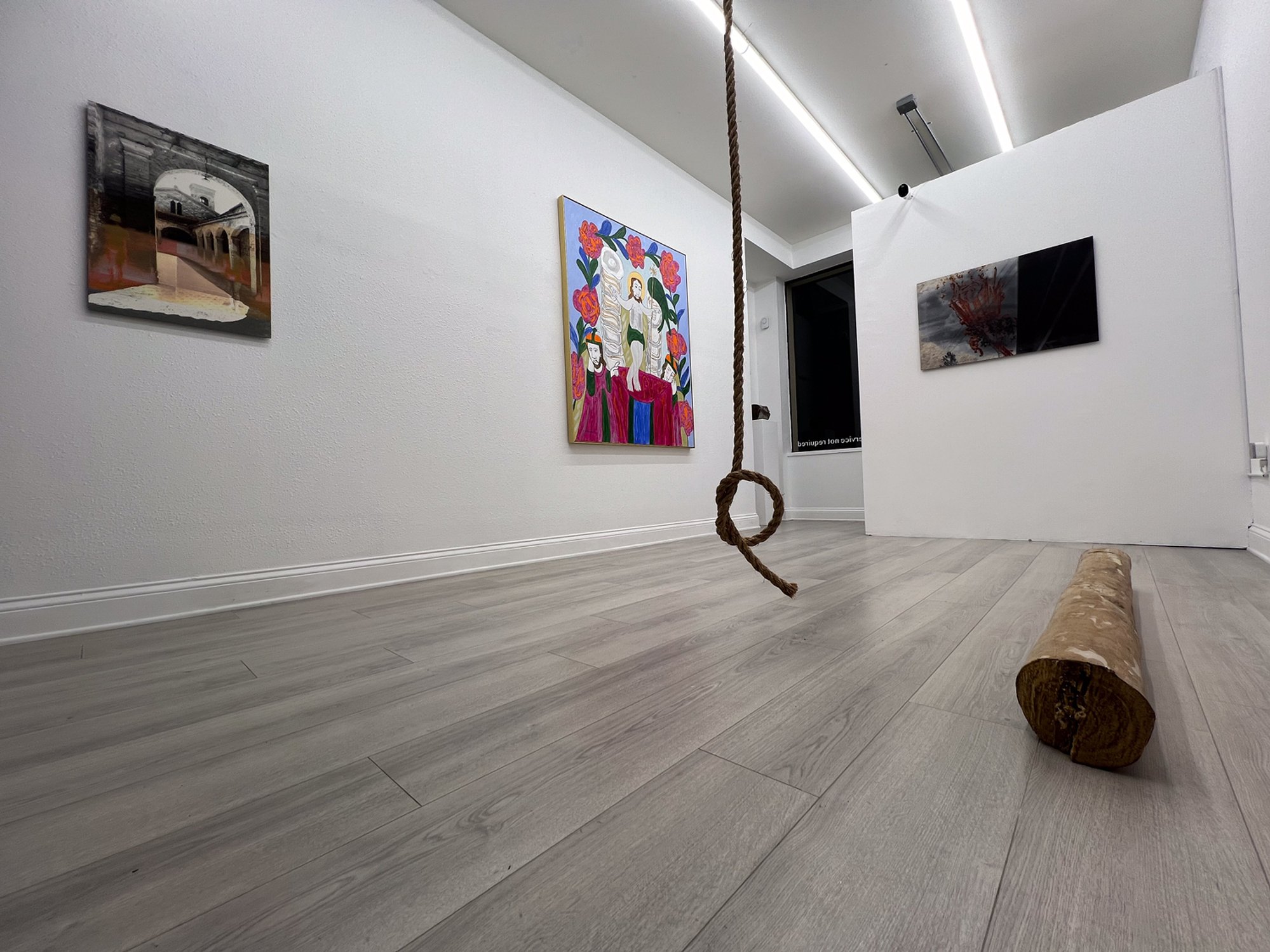
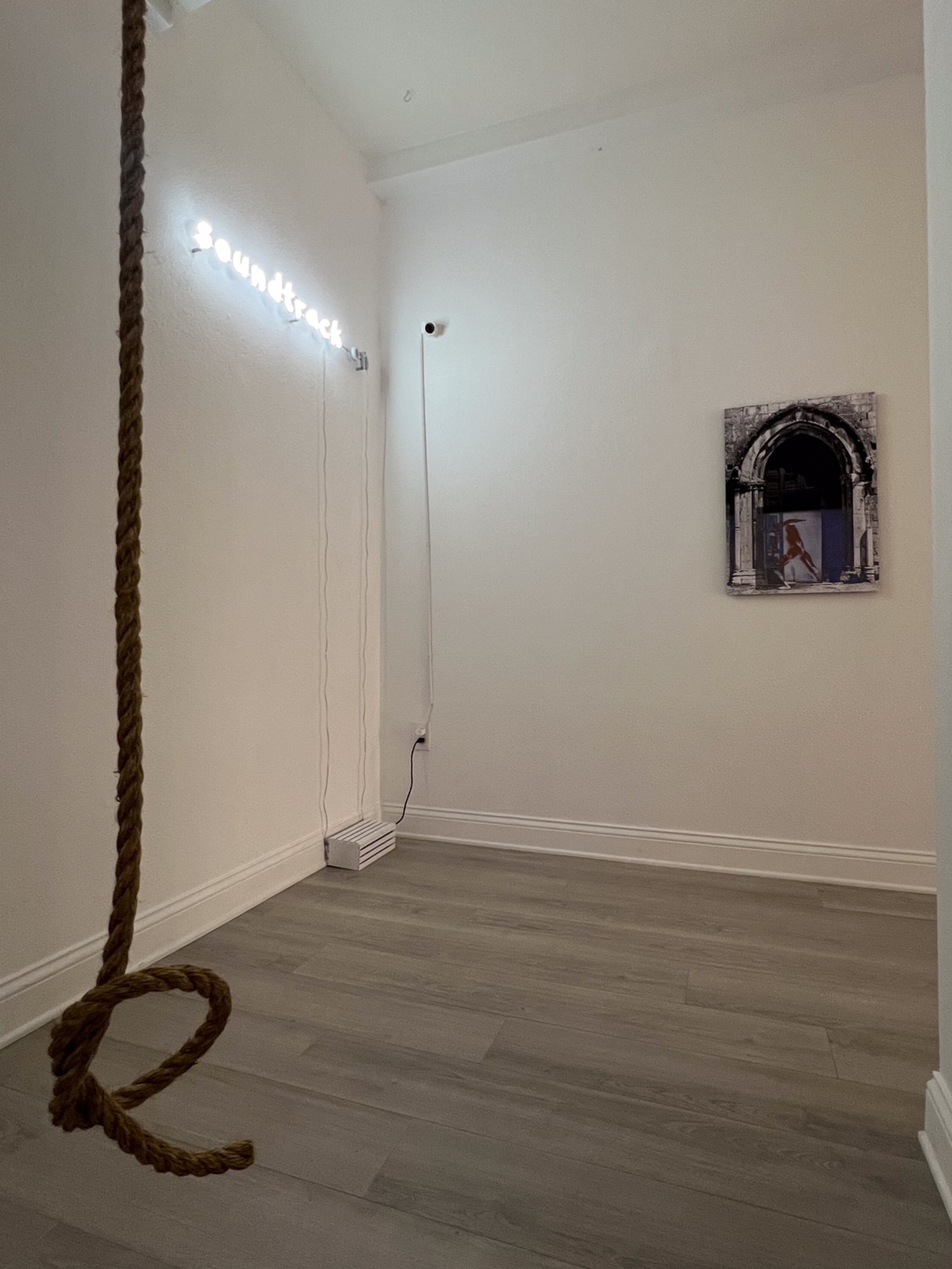
guard and gatekeeper, in writings — level of service not required (LOS/NR), La Jolla, CA, 2025.
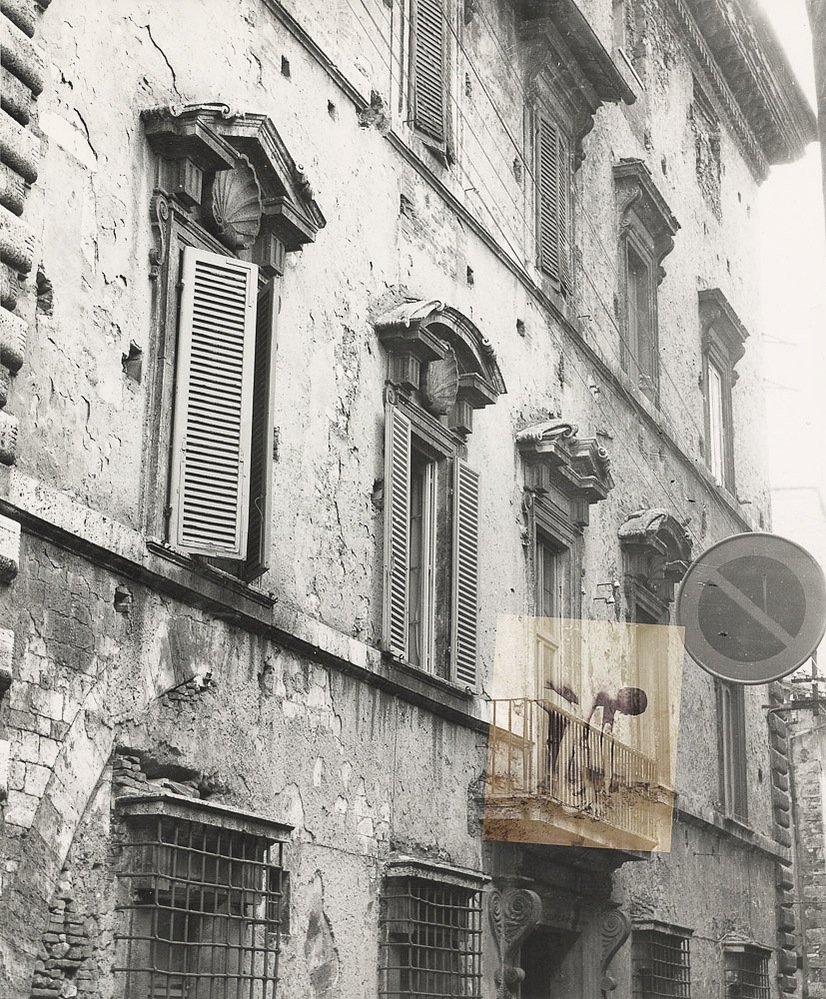
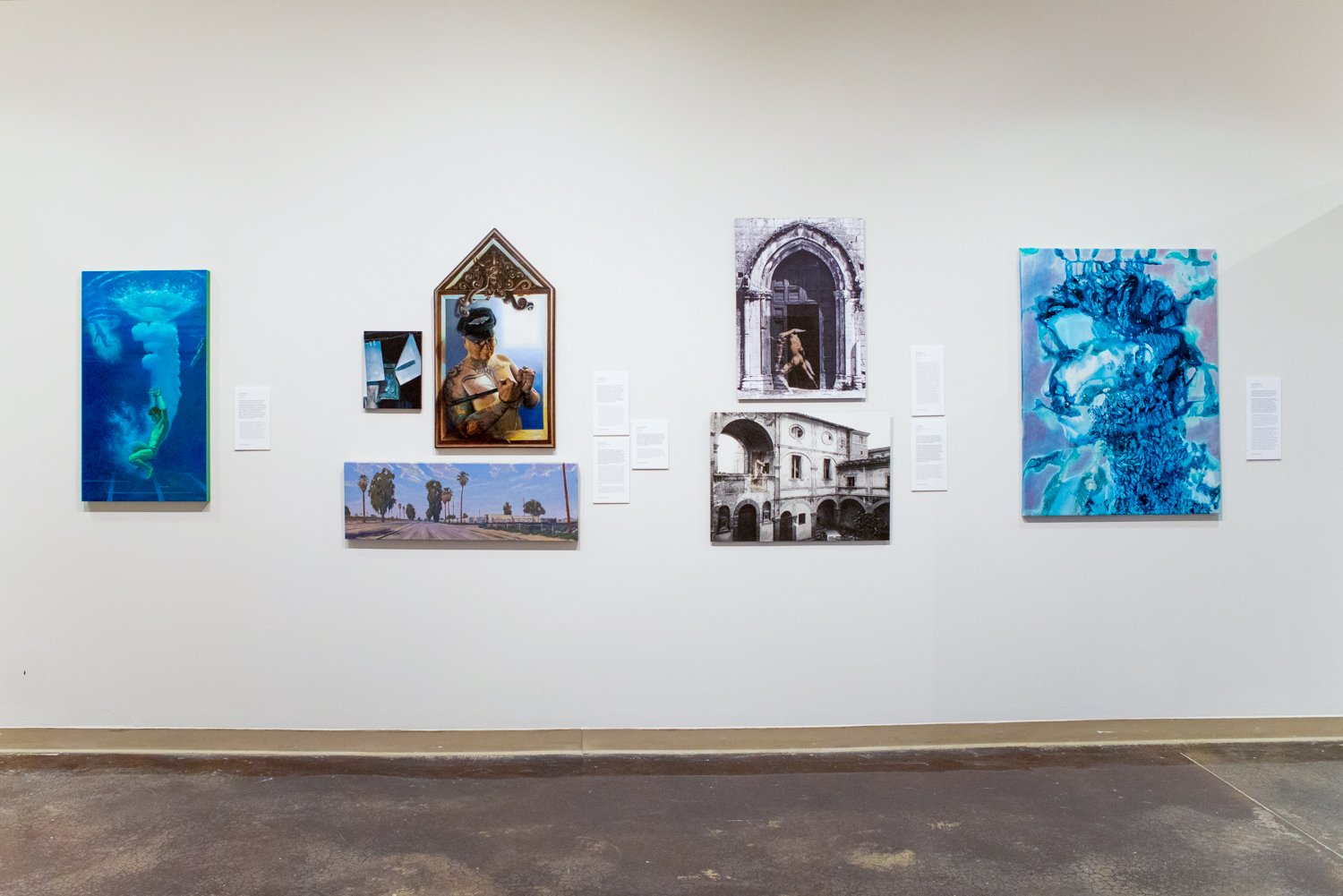
gatekeeper and facade, in Resonantly Me — Bakersfield Museum of Art, Bakersfield, CA, 2024.

… and bear witness to the passing of time, the collective of structures, the silence of reflective light. Separated, singular, poised — fixed moments of the eye. Space surrounding crumbling down, opening outwards — a pulsive motion of awake and unaware. Senses contorted in abundance, blending slices to create another reality. An amalgam of empty from long ago eras, in and around the Rome of ancestors, and bare people of anonymous image makers once freely moving about. This is a spiritual self-portrait, a way out of self — being trapped is only but a state of mind.
The work was made in 2020, during the months of pandemic shutdown, when the artist’s clinical practice was conducted almost entirely by telephone. Patients were heard through the receiver but not seen — present as voices, absent as flesh and breath.
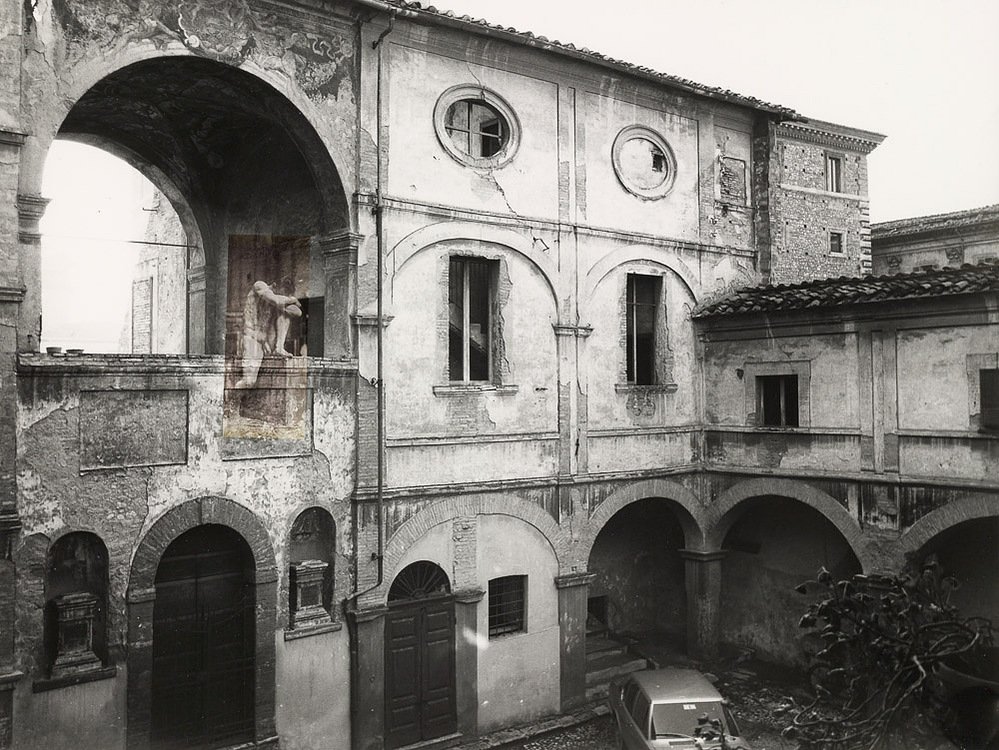
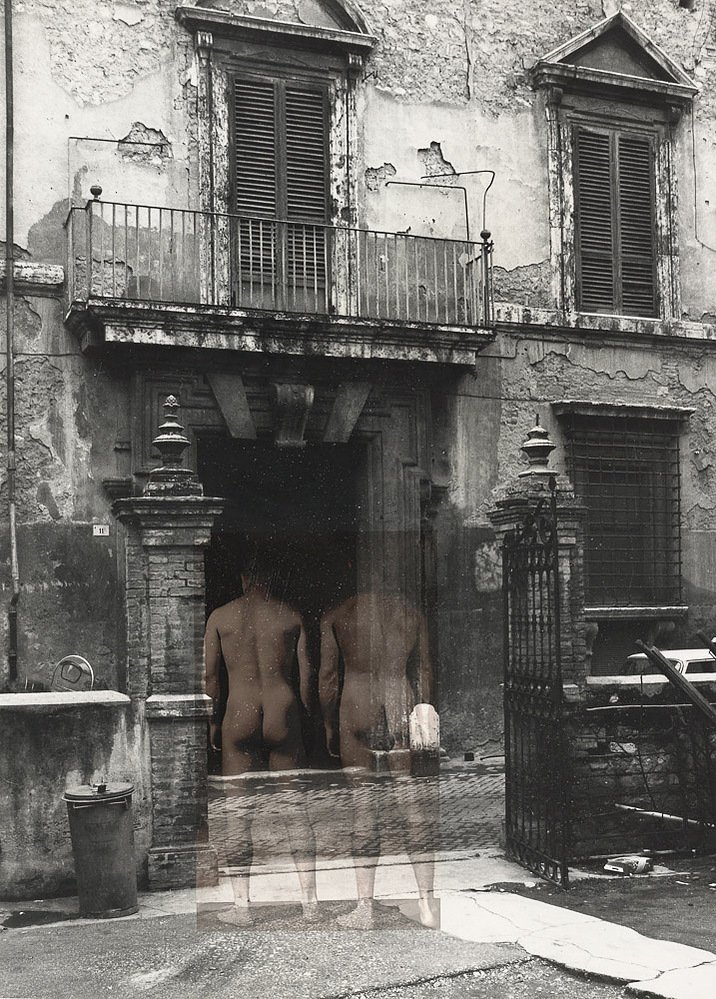
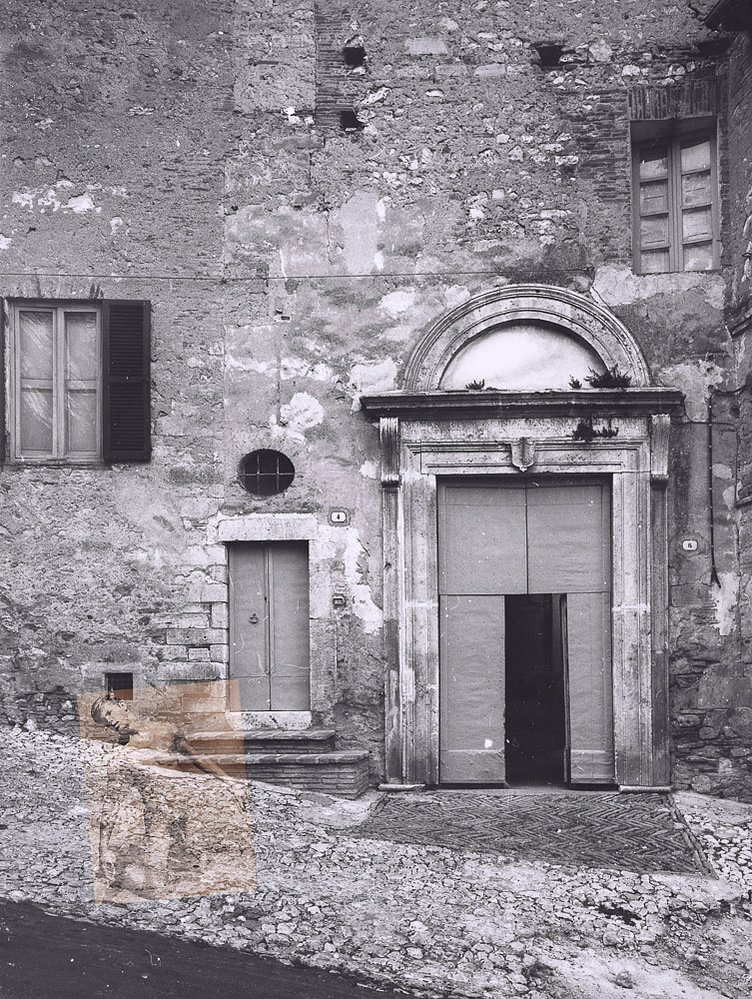
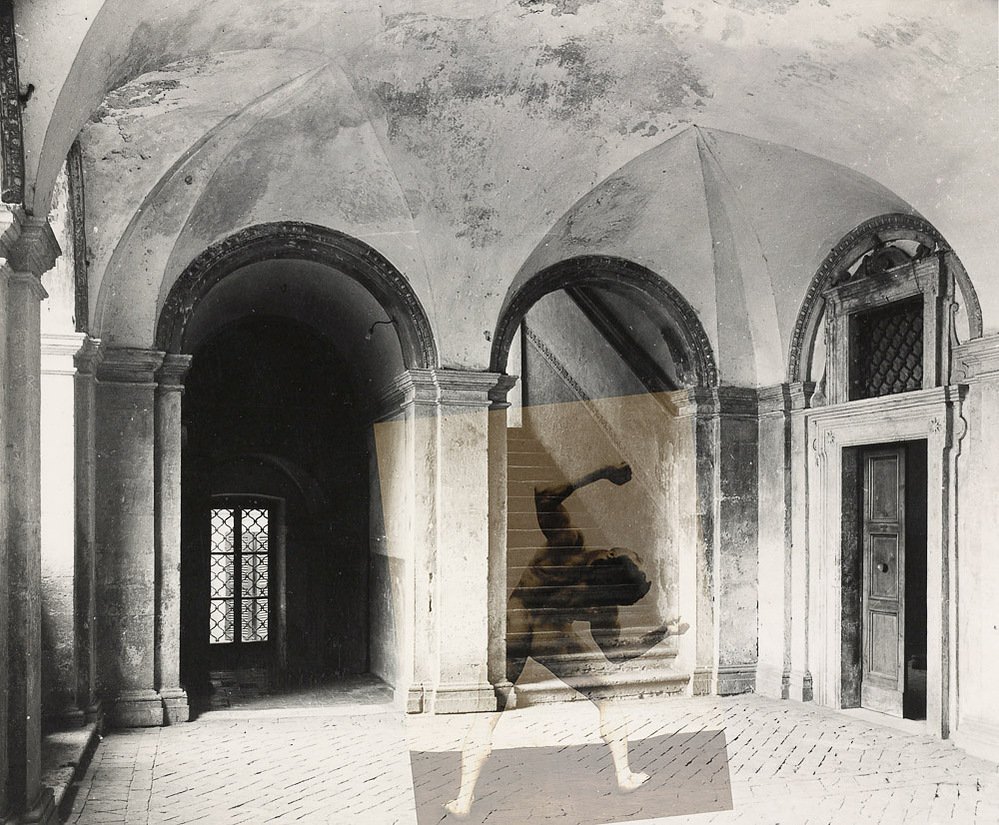
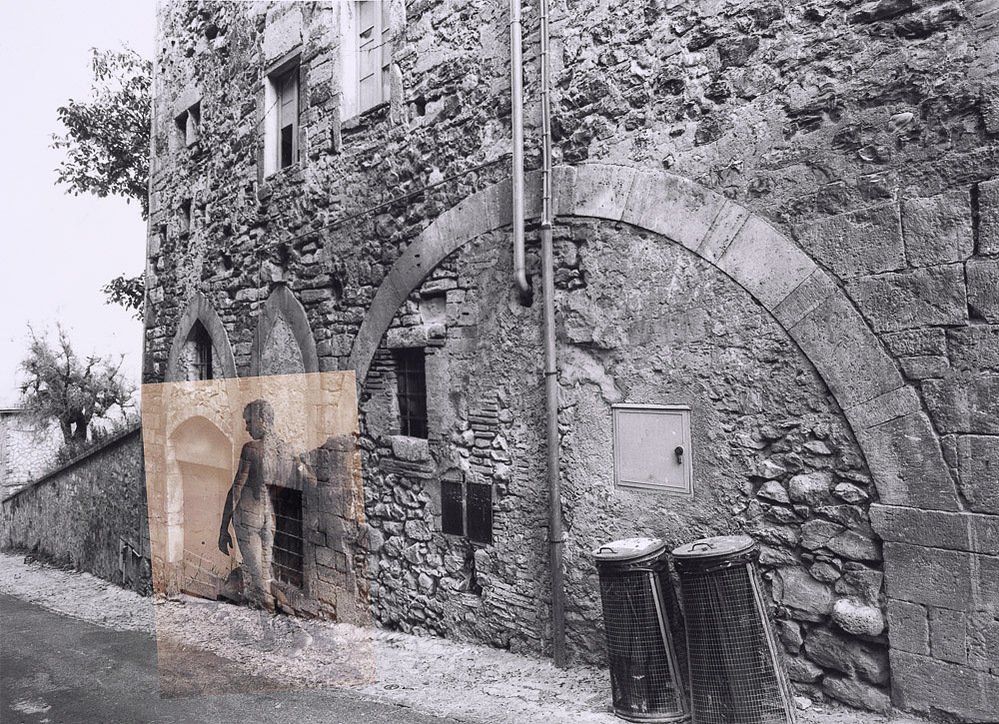
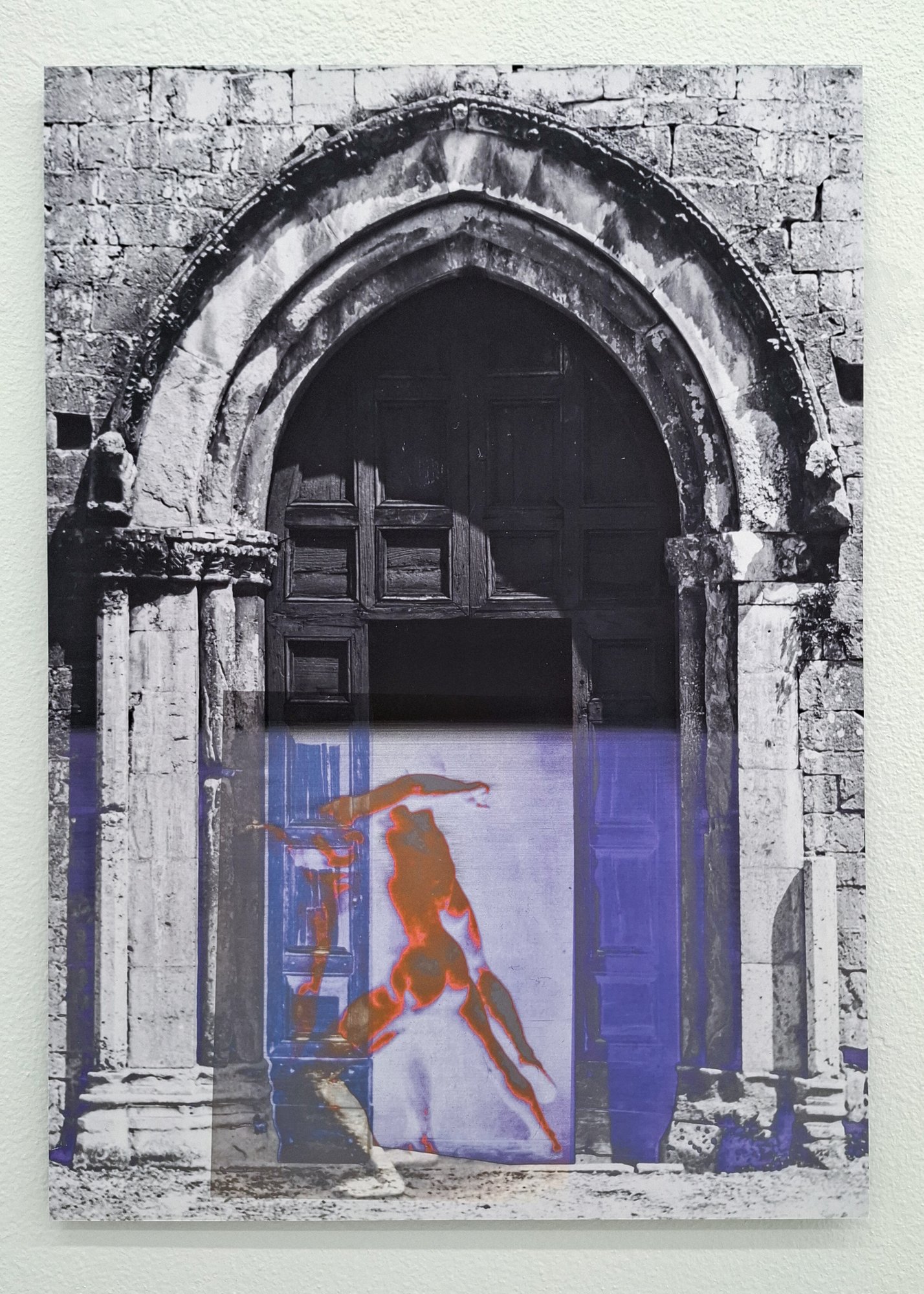
The collages combine two archives of anonymous photographs. Black-and-white architectural views of Italian streets, doorways, gates, arches, and stairs — documentary photographs from the middle decades of the twentieth century — provide the settings. Bare figures from the early twentieth century, operating within the broader European tradition of figure studies that drew on Greek and Roman antiquity, are placed within these settings, at the thresholds of the architecture. The architectural backgrounds remain in their original black-and-white. The figures are pulled into a restrained chromatic register of muted ochres and sepias, visually present-tense against past-tense settings. Each composite carries a single-word title naming a position or movement at the threshold.
The composites are then projected onto contemporary torsos and backs, photographed in the act of bearing the inherited images as temporary skin on living flesh.
One image — guard, with two figures at the threshold of an archway — is projected onto a breathing chest in slow video. The chest rises and falls. The projected figures rise and fall with it. The dead bodies in the photographs are temporarily animated by the borrowed breath of the living body that bears them.
The work proposes that the contemporary body can be the means by which the dead are temporarily brought into living presence. The borrowed breath is what allows this — at a moment when many bodies were dying for lack of breath, and when the artist’s clinical capacity to attend to breath had been reduced to listening through a phone line.