Public Art

Cor Fabrica

2023
316 stainless steel, mirror polish
121 in × 48 in × 48 in × 0.5 in
Current
Cor Fabrica has been donated to the Hillcrest Community Foundation and is currently sited at the Pride Promenade in San Diego, CA, awaiting official unveiling.
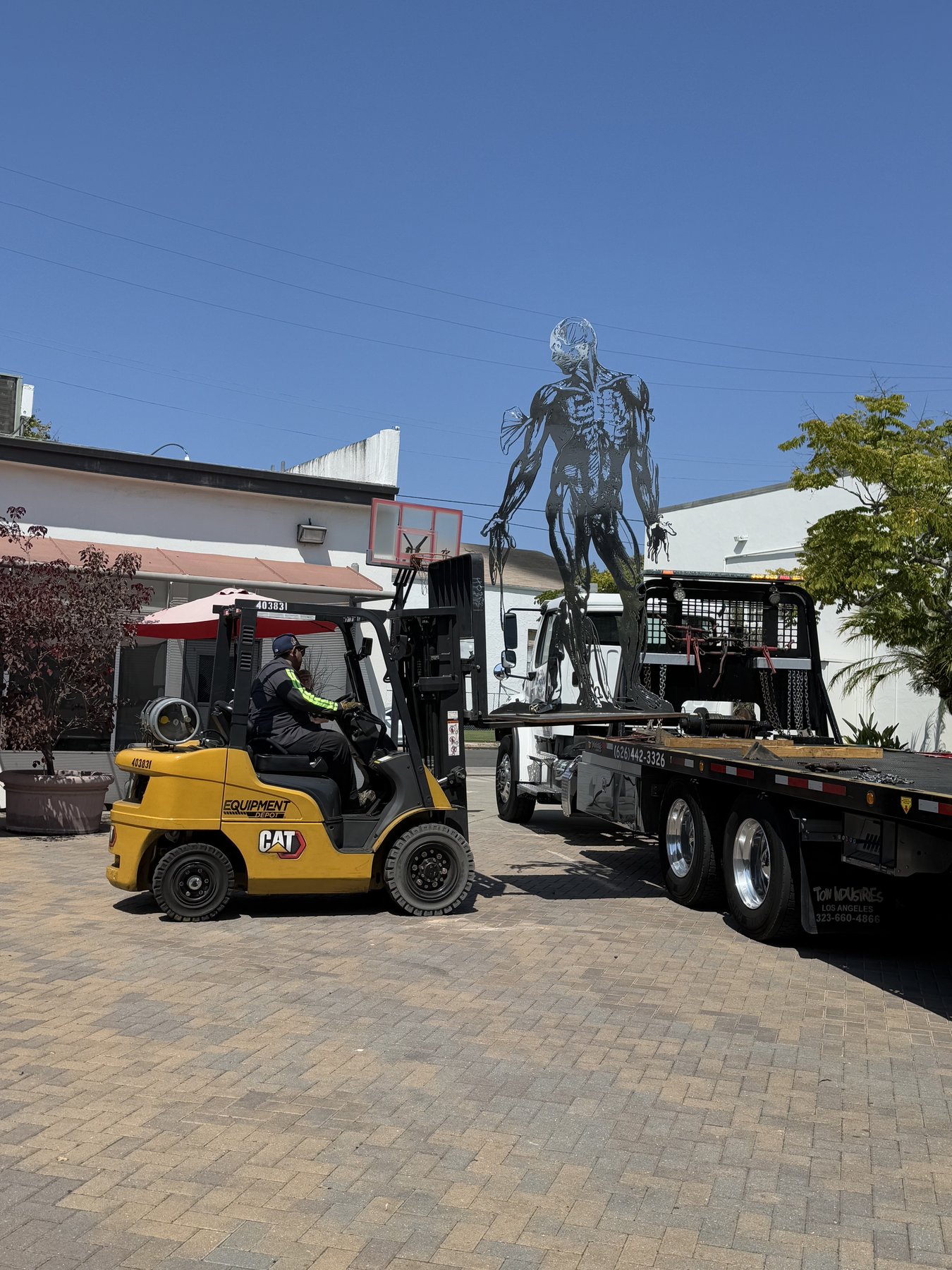
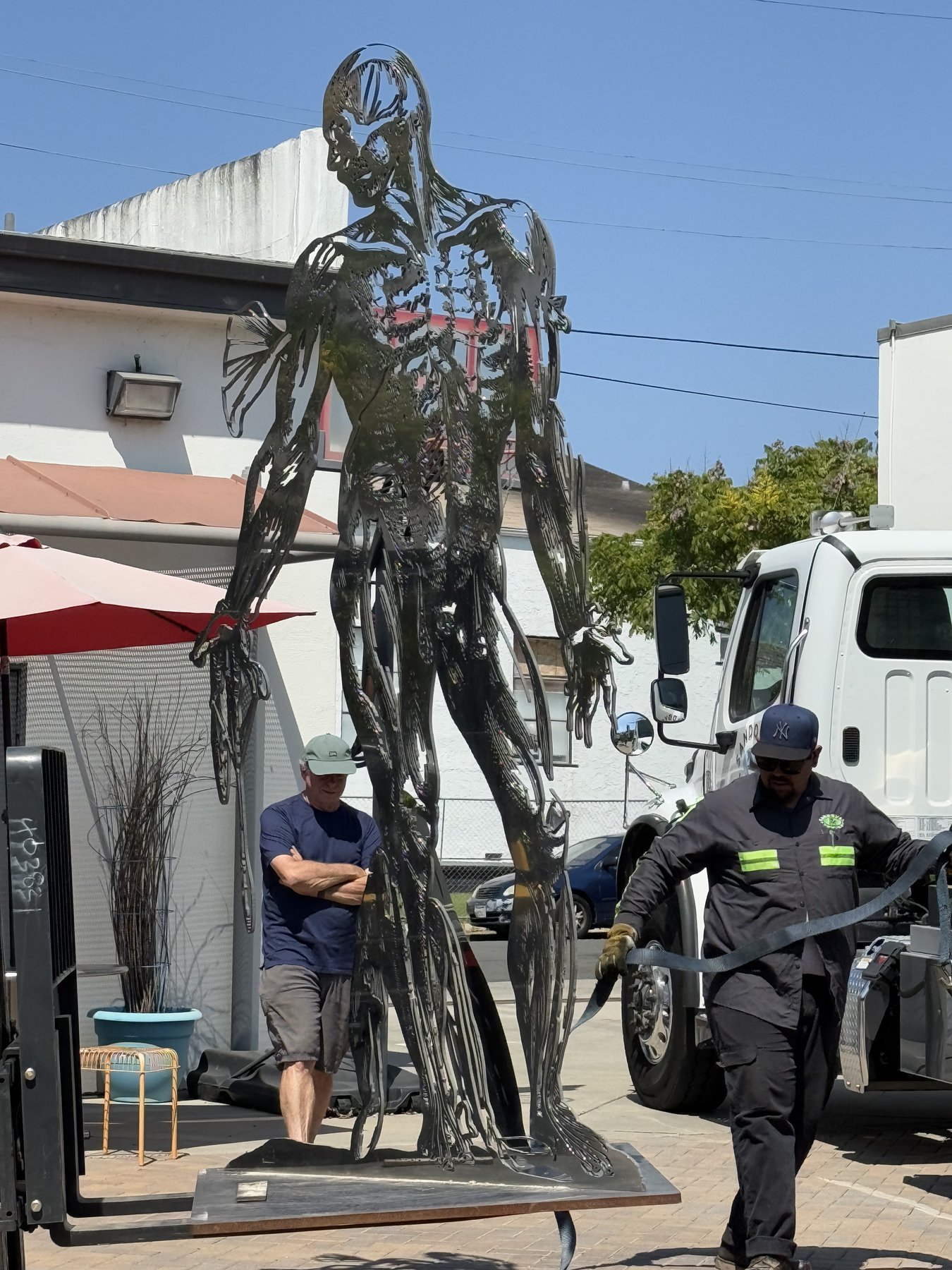
Cor Fabrica being unloaded by forklift from a flatbed truck on arrival at the site for permanent installation, July 24, 2025
Cor Fabrica arriving on site for permanent installation, July 24, 2025.
Cor Fabrica installed at Chocolate Drop, Twentynine Palms, CA, 2023
Cor Fabrica, installation view at Chocolate Drop, Twentynine Palms, CA, 2023.
On the Work

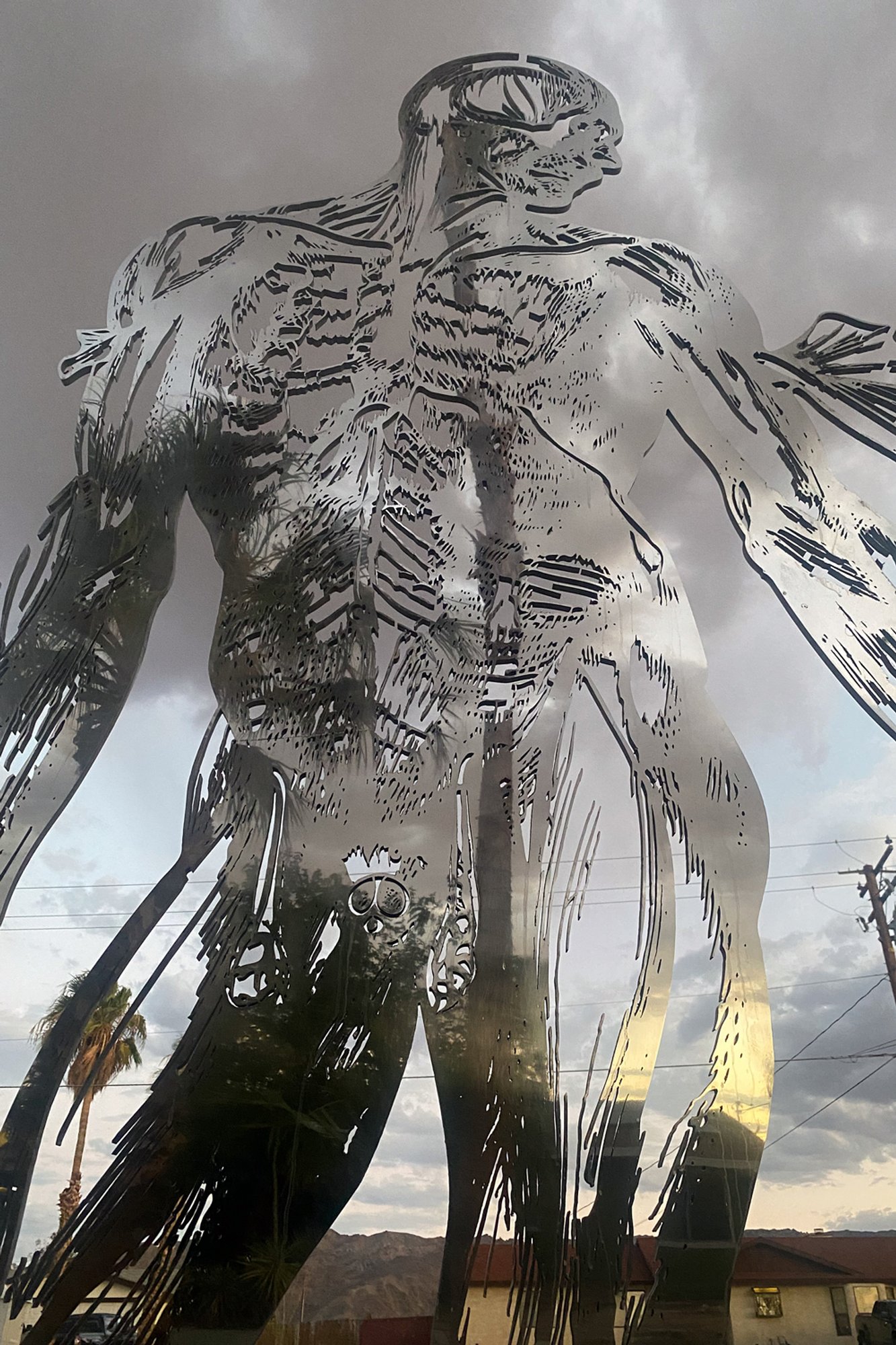
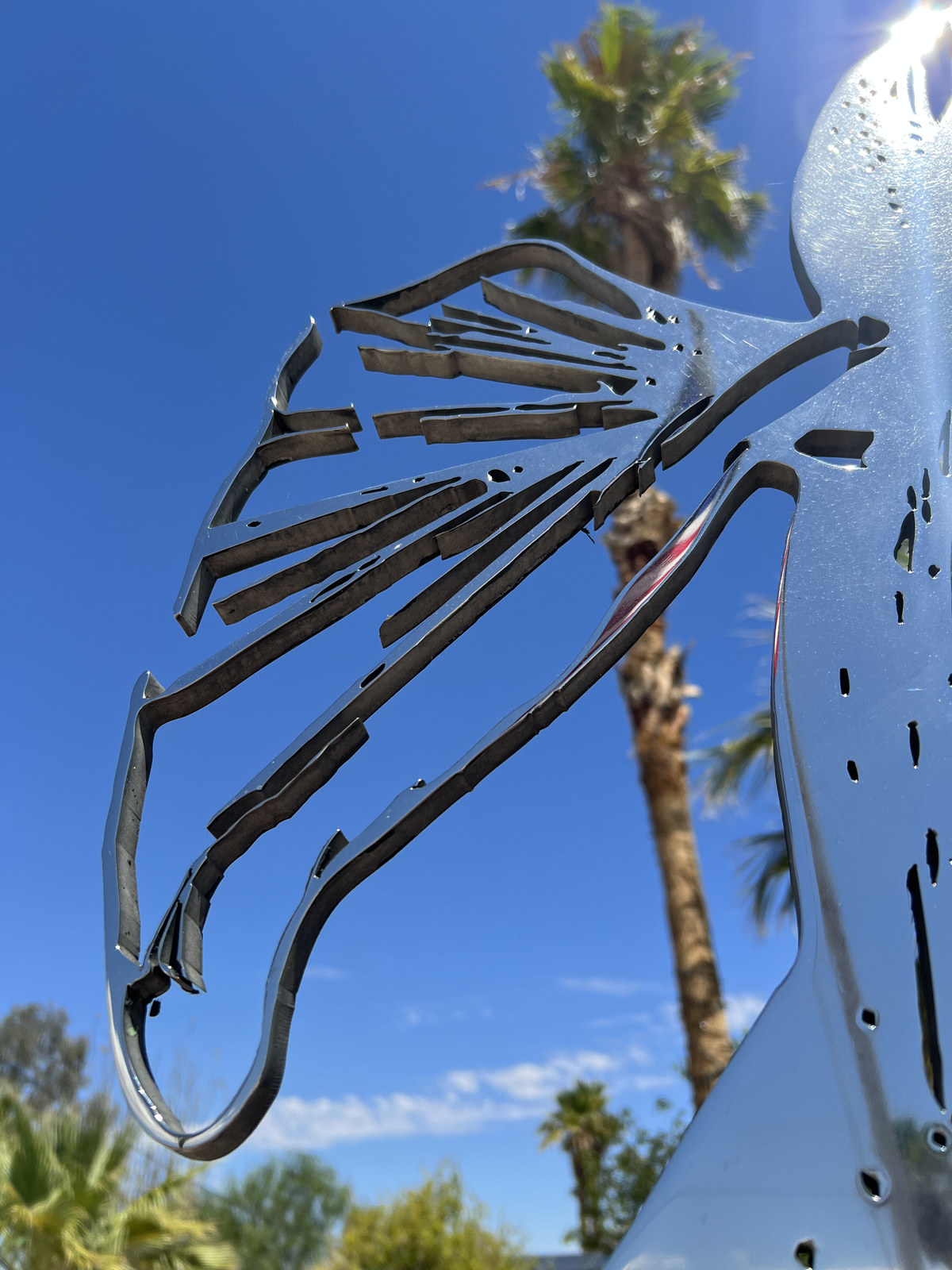
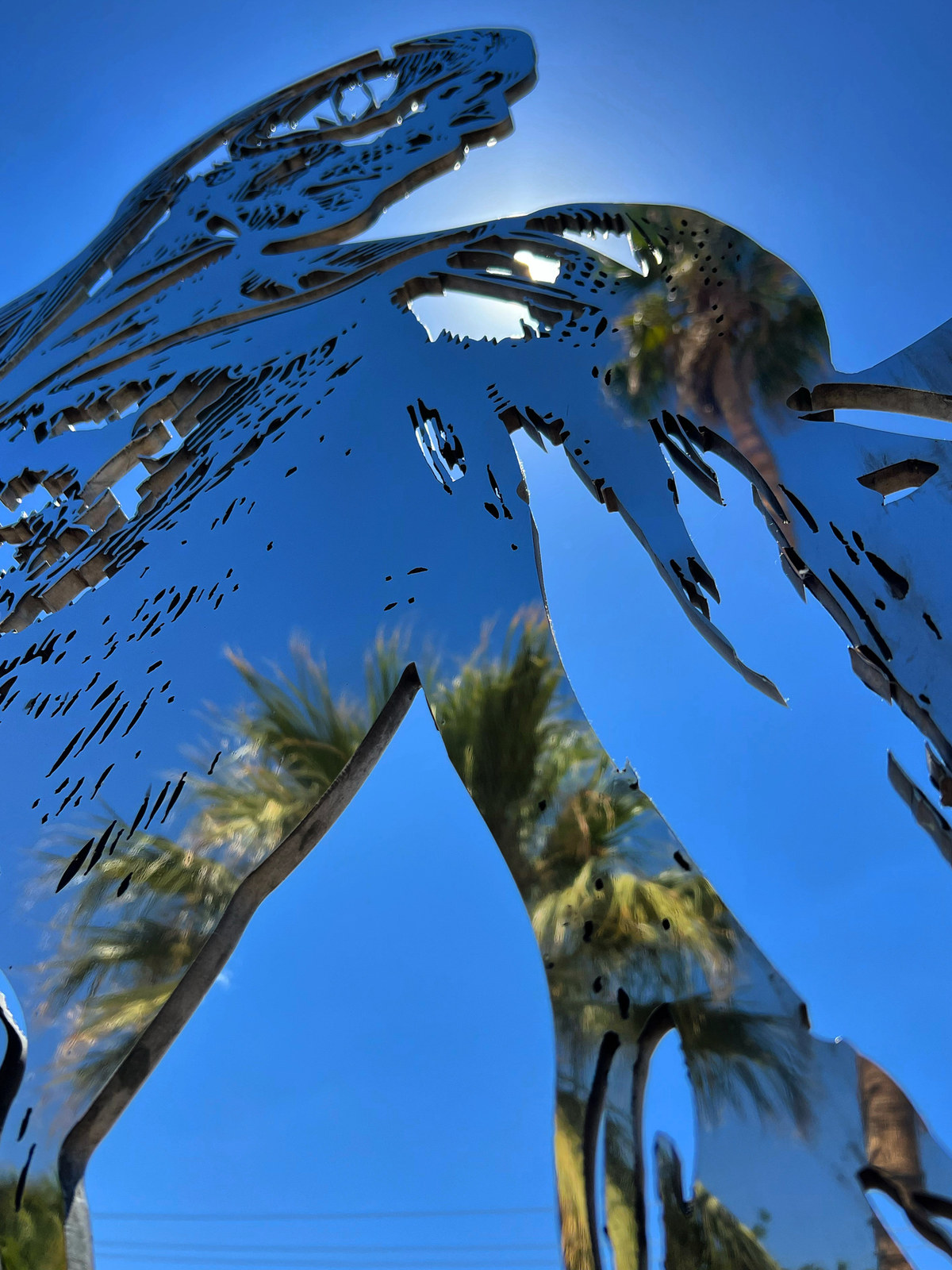
Based on one of the six muscle-figure plates from Andreas Vesalius's De Humani Corporis Fabrica (1543), the foundational anatomical text in Western medicine, Cor Fabrica is a ten-foot mirror-polished stainless steel sculpture. Permanently sited at the Pride Promenade in Hillcrest — San Diego's LGBTQ+ Cultural District, on Harvey Milk Street — the work places the dissected anatomical figure of the Renaissance into the civic landscape of a neighborhood whose own histories of bodies, illness, care, and survival give the figure new ground to stand on.

The mirror surface returns the sky and the viewer's body to itself: the body laid open by medicine becomes, simultaneously, the body the medical gaze never quite contained. As both a practicing physician and an artist, Fodoreanu approaches Vesalius not as iconography but as a living question — what knowledge of the body does the medical tradition produce, and what does that tradition leave out.

Critical Writing
Fodoreanu produces a medical body, flayed like Titian's Marsyas or the écorché engravings of old medical folios. This raw exposure of the inside-turned-outside is translated into a monumental language of remembrance … Vesalius's scientific gaze did for anatomy what Alberti did for painting — the surface is exhausted to reveal what is underneath. His discoveries positioned dissection as aesthetic form: muscles left the bone to mimic flora, roots, and vine. Fodoreanu utilizes this body as fabric to seek out something within us, a window into new territory, an open-ended figural knowledge that images a body as an ecological network.
Andrew Woolbright, exhibition essay for Liminal Forms, 2023
Cor Fabrica, installation view at Chocolate Drop, Twentynine Palms, 2023 — three-quarter view with palm fronds and dusk sky
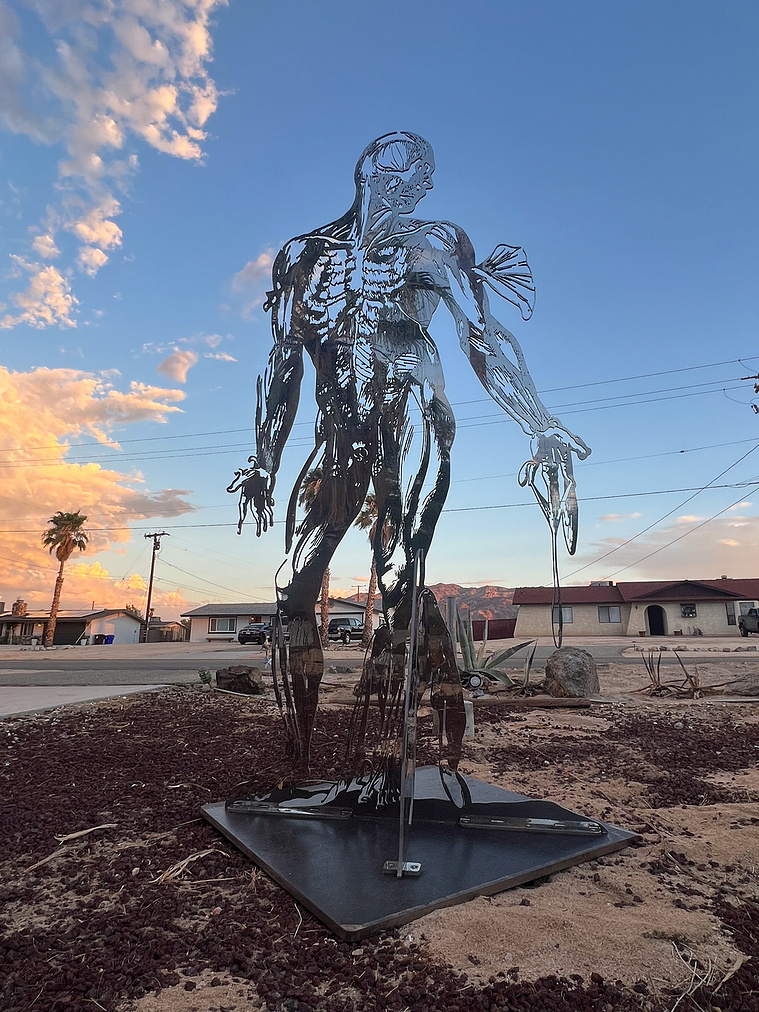
Cor Fabrica, installation view at Chocolate Drop, Twentynine Palms, 2023 — looking up at the figure against a gray sky with power lines
Cor Fabrica, installation view at Chocolate Drop, Twentynine Palms, 2023 — dramatic upward angle, mirror surface reflecting blue cloudy sky
Cor Fabrica, installation view at Chocolate Drop, Twentynine Palms, 2023 — night view with palm tree, red landscape lighting at base
Artist's Statement

This project was inspired by one of the drawings found in Andreas Vesalius's De Humani Corporis Fabrica, a book published in 1543 in Basel by Andreas Vesalius, a twenty-eight year old male, a dwarf, a virgin, and a physician who insisted on doing his own dissections instead of relying on naive barbers, scrutinized ancient texts of anatomy and compared them with freshly dissected human bodies in front of his eyes, searching for the mystery of his own ailment, own revenge, or own establishment, and published a book that forever changed the field of medicine.

The act of human dissection involved blood, lymph, unpleasant smells and sights. The dissection needed to be done fast, in a hurry, as the bodies quickly rotted under the scorching midday sun. At the end, the cutout body parts were either thrown to dogs under the table or given a proper burial with much remorse, depending on the local traditions and ceremonies. The entirety of these actions completed a ritualistic decorum of the unfolding spectacle. They were messy encounters of a violent nature. An open, cut out body would rightly feel as harmed and vandalized.

And what seemed to have repaired this feeling of damaging something sacrosanct and forbidden was the performance of the dissector himself in extracting the essence of knowledge from these pieces. Downloading the entirety of knowledge contained within, it was almost like the dissector with his fingers deep into the viscera of the body, was adjudicating and absolving the guilt associated with such a profane act. In his arrestive book it seemed as if Vesalius was transferring the open body laying cut at his fingertips into a body of anatomical knowledge in a written form. He in fact used to suspend these corpses vertically during his dissections as it was easier to manipulate them, and what he ultimately seemed to have revealed during his dissections was not only the open corpses on display but also himself doing the showing of them.

These acts became representational and performative at the same time. The one who was showing was himself caught up in the act of being shown. The "body" that the anatomist was exhibiting was both his own and that of the cadaver: two standing bodies, next to each other, completing themselves into the other.

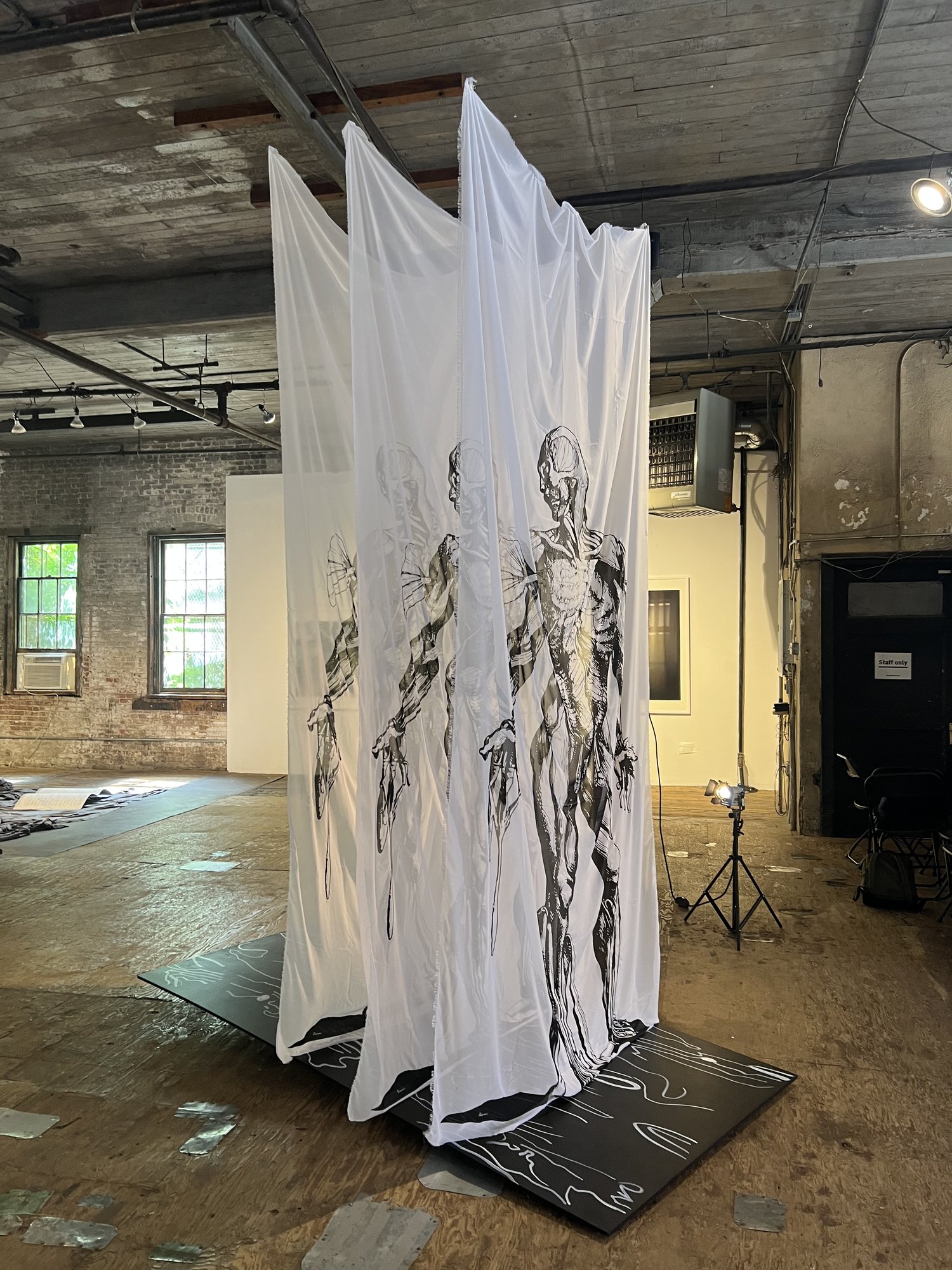
There were six illustrations about the muscles in this book, initially cut in pear wood, a material commonly used to construct flutes and violins. Six drawings sawn parallel to wood grains, then inked pressed into the papers, demonstrating a stepwise dissection of the body, with layers of the muscles being sliced away, one by one, all the way to the bones. Single, contrapposto, full page drawings of muscular bodies in different stages of decaying and being taken apart. Four of them still retaining faces reflecting the skies above, placed amid calm Padua hills, flowers and trees, slowly being disassembled by an invisible hand, by the steel of a knife cutting away, layer by layer, ignoring warm dripping out liquids from the body, nearing the bones, page by page, towards nothingness. All stances of serenity, acceptance, generosity, despite belonging to a body incompatible with life. Stances above the fame, names, politics, textual description, and exhaustive explanations. Stances imagined and drawn by anonymous artists with no claim for renown.

And one of the four, the most dissected, decayed, chest emptied, almost genderless, stands as almost the quintessential Vesalius mold and is the inspiration for Cor Fabrica— a still recognizable human face on an extremely deconstructed human body. On one side, the mark of humanity in front of adversity, and on the other, the pushed to the extreme layered dissected body as the mark of looking for deep within, for the abyss and portal to oneself — as Vesalius's own, a young man overarching his intentions towards dimensions above, above the possibility and into the realm of potentiality within.

As deep as the hands could have ploughed in, a transference of flesh, bile, and sin took place, cutting and taking apart, bloodying white sheets in the search for a felt, but oh so ephemeral, presence of self. A presence transgressing through times, centuries beyond, eyelids blinking together in the suds of exhaustion, heat, and knives dripping amidst, seeping roots into a future past, manifesting a body now matched in front of our eyes, a mirror thru times.

← Work C Fodoreanu