
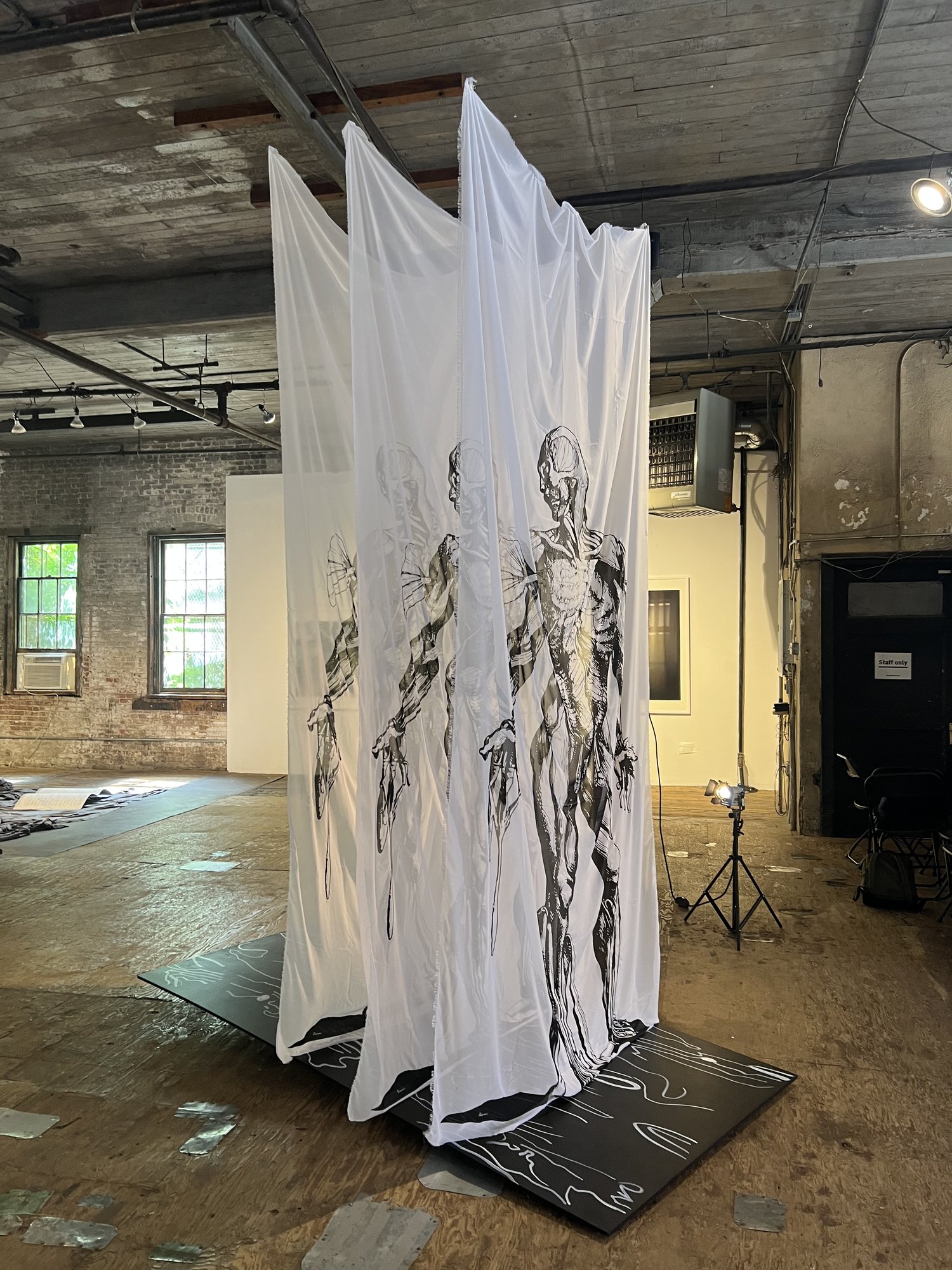
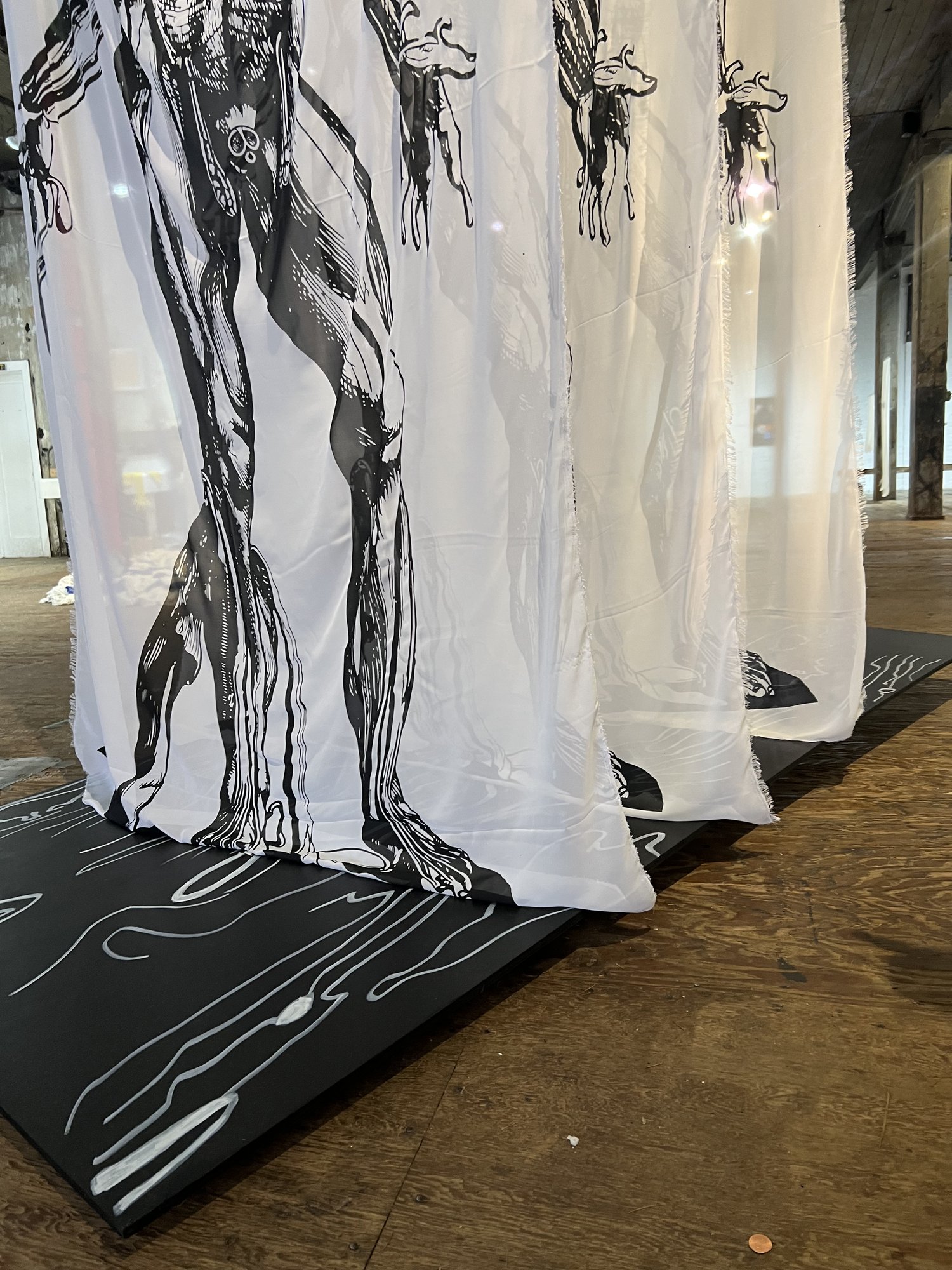
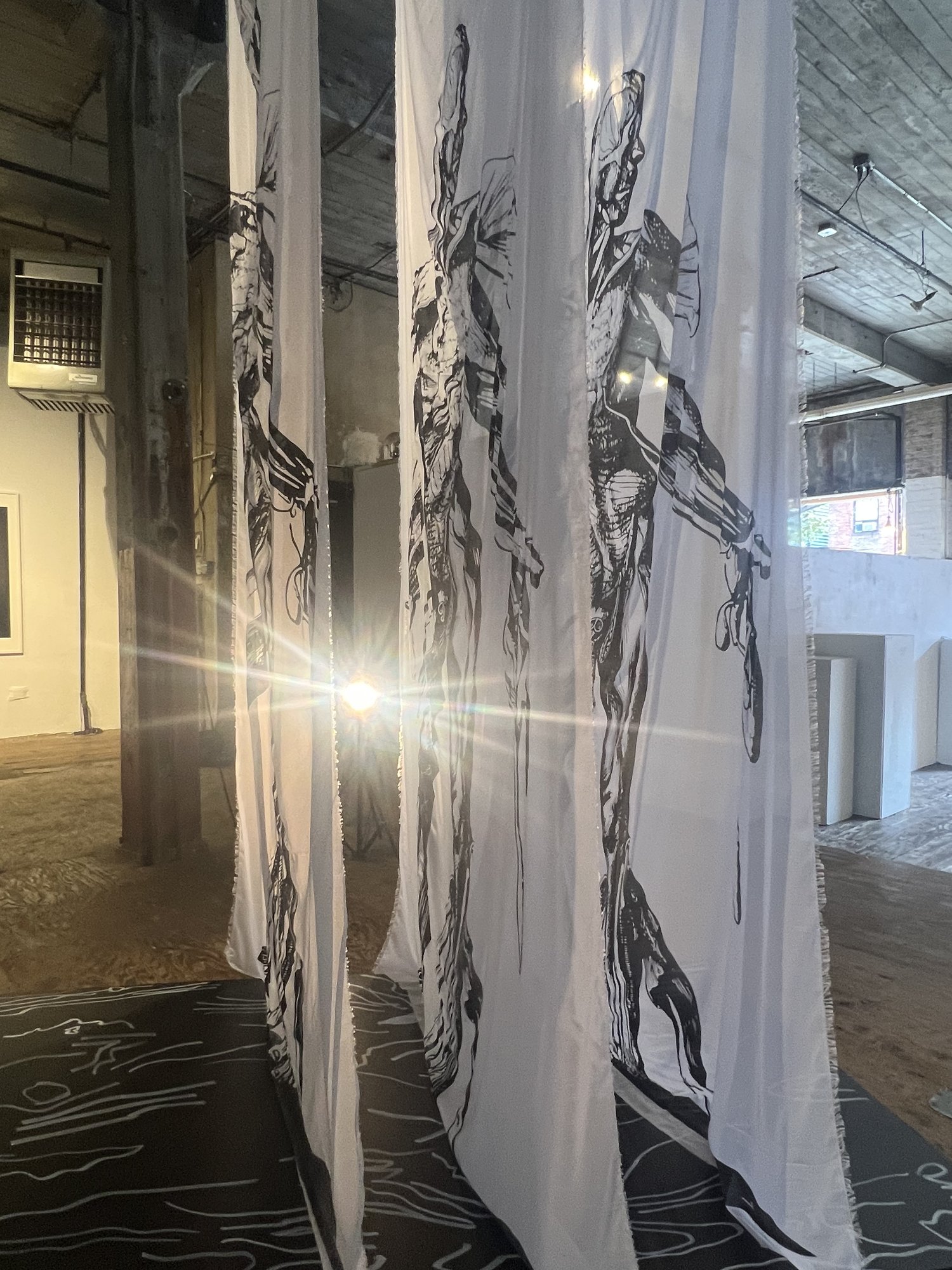
assemble, in Liminal Forms — MFA thesis exhibition, The Invisible Dog Art Center, Brooklyn, NY, 2023. Shown alongside preamble.
Exhibition
Artist's Statement
As a pediatrician, I watch closely as newly breathing bodies fill a mold slowly revealed across the last millennia of medical knowledge, and I am on the precipice of catching any deviations: measurements, tools, references. The recording inside assemble is one of those — a newborn heartbeat carried in a loop through a directional speaker placed at the center of the work. It is not accompaniment; it is the premise.
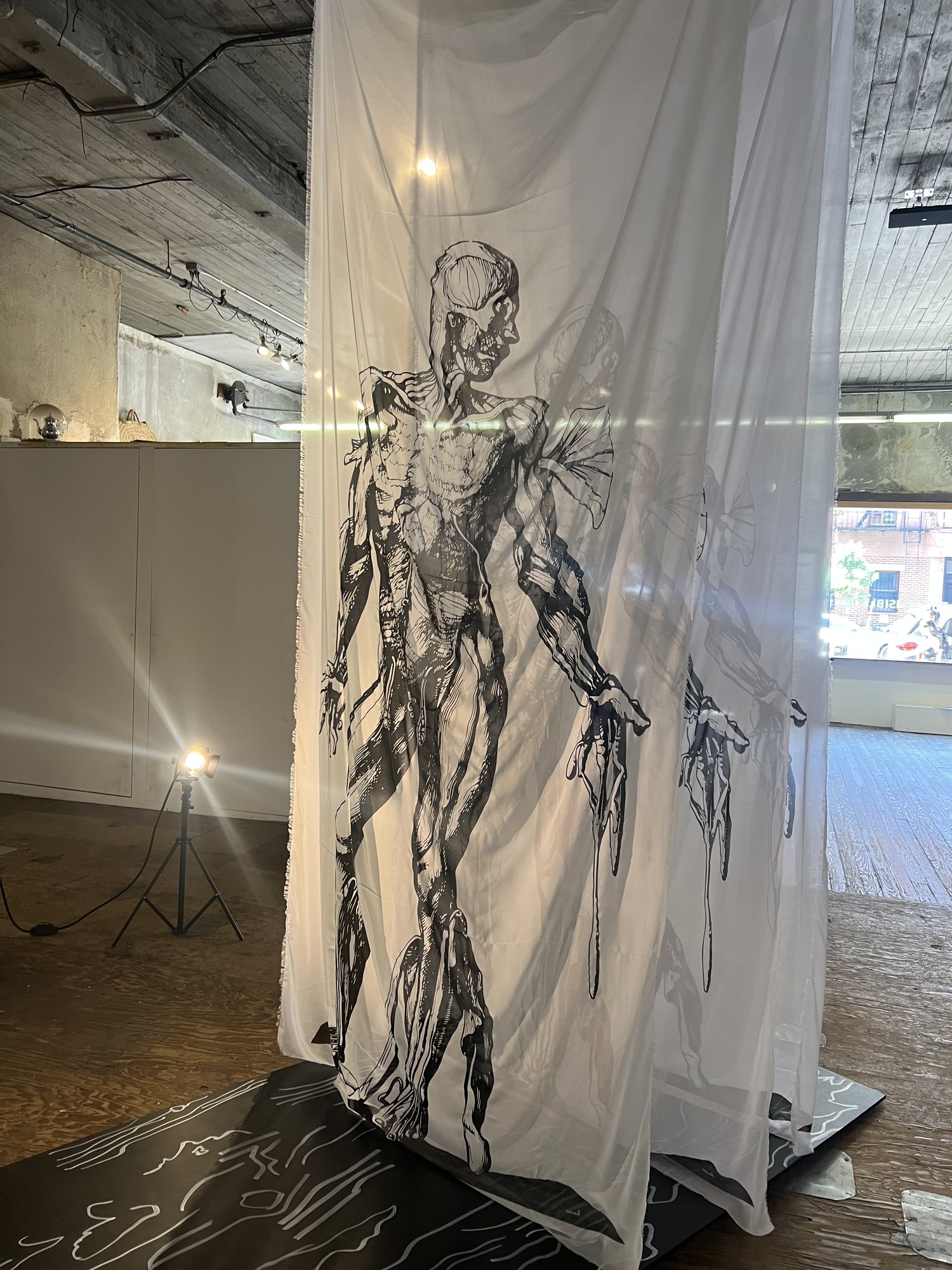
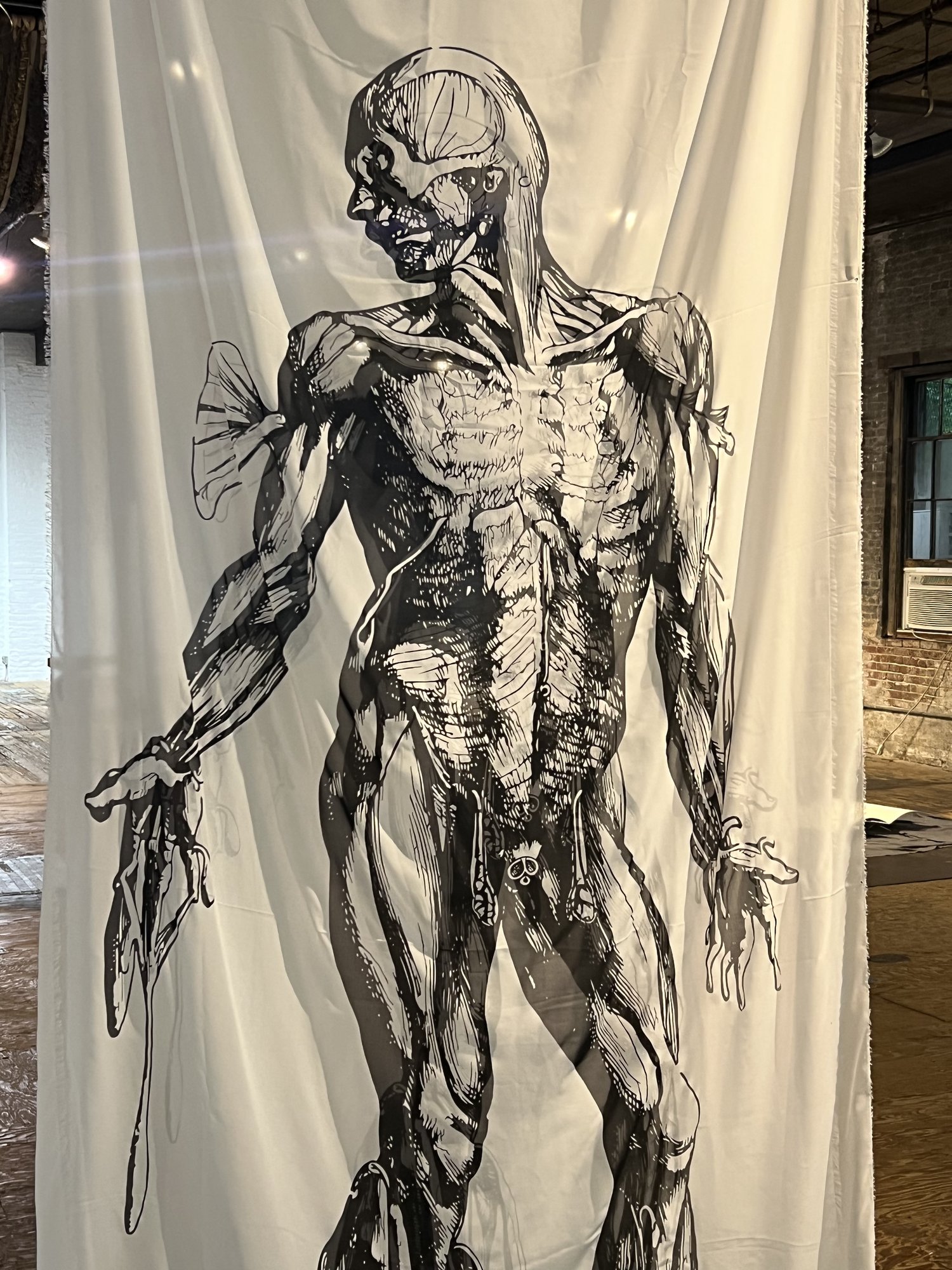
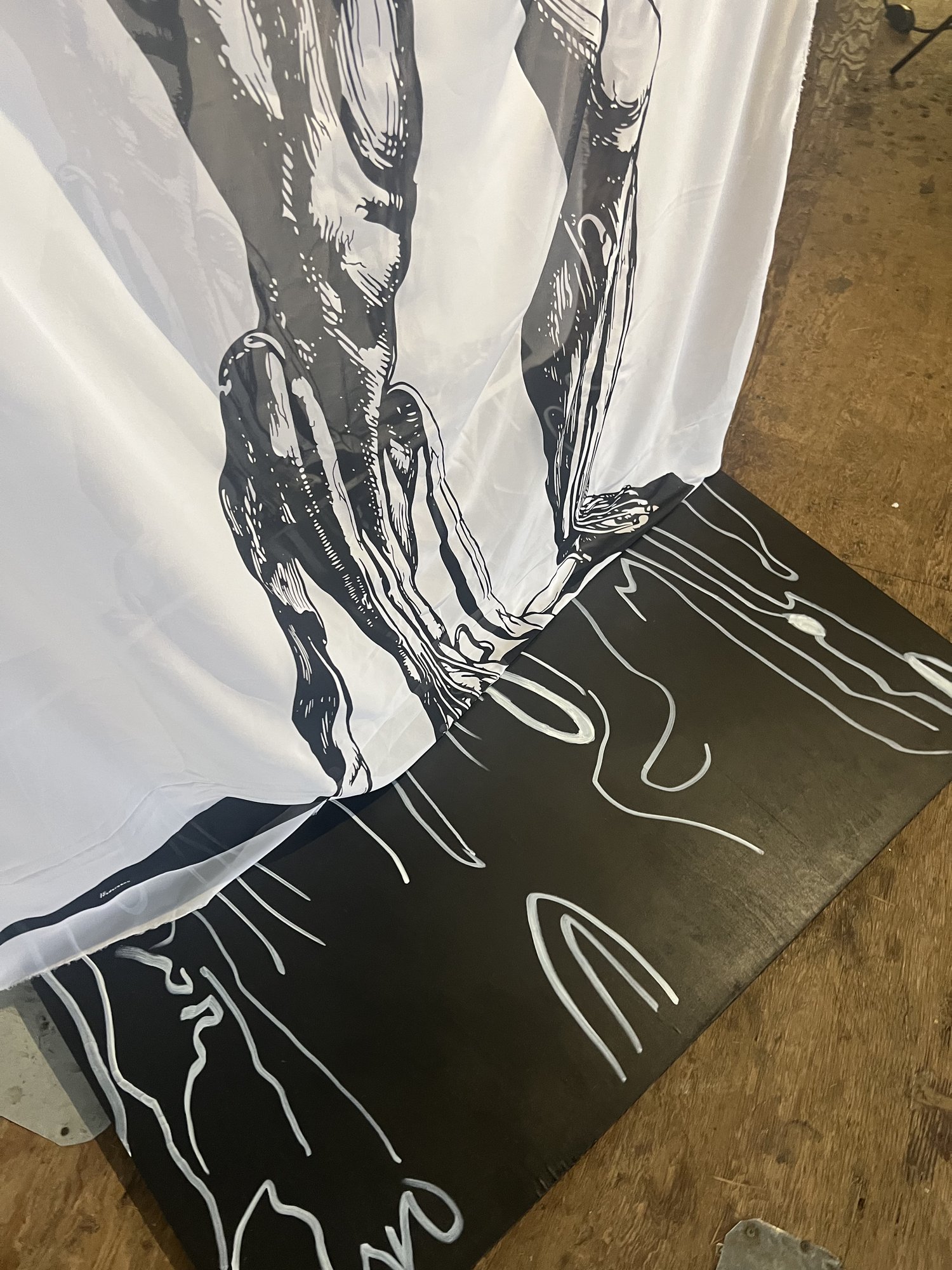
Above the speaker, silk panels printed with Cor Fabrica's shadow — a Vesalius muscle-figure after De Humani Corporis Fabrica — hang vertically, parallel to one another, layered in depth above a birch base that carries the same figure as a skipped-line drawing. The body repeats and recedes — a diagram of itself in space — until it dissolves into the light moving through the silk.
Anatomists cut the body open to show what was beneath the skin. Assemble asks what remains when even the dissected figure is made provisional, when the muscle becomes line, the line becomes silk, and the silk becomes air. The body is now held in the room, in the air, between us. What stays is the heartbeat — from beat to beat.
The Recording
Newborn heartbeat, recorded with a stethoscope. 53 seconds.
Critical Writing
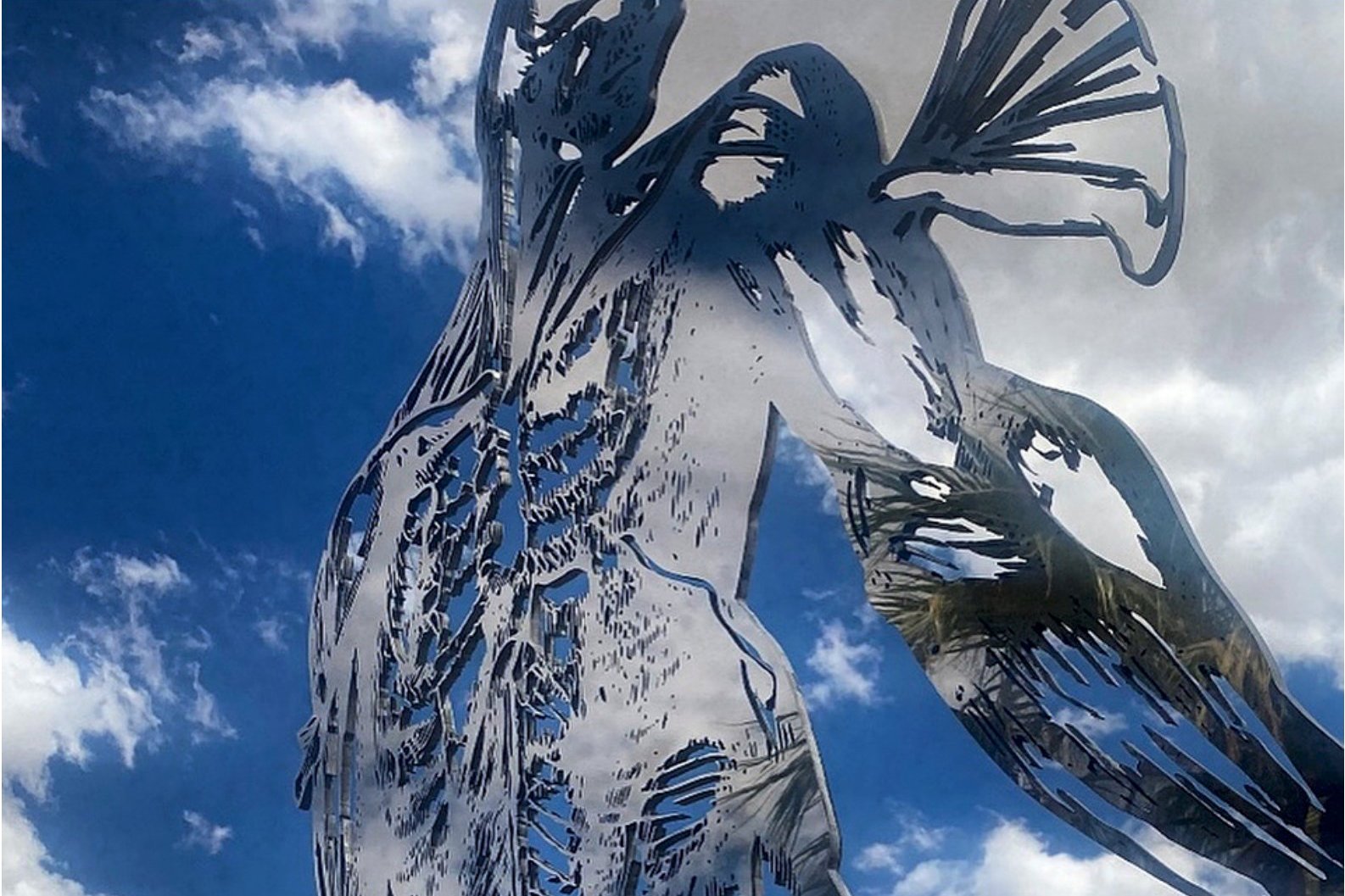
Fodoreanu produces a medical body, flayed like Titian's Marsyas or the écorché engravings of old medical folios. This raw exposure of the inside-turned-outside is translated into a monumental language of remembrance. On a series of hanging tapestries, Fodoreanu rephrases the designs of Vesalius's anatomical drawings onto skeins of fabric. Vesalius's scientific gaze did for anatomy what Alberti did for painting — the surface is exhausted to reveal what is underneath. His discoveries positioned dissection as aesthetic form: muscles left the bone to mimic flora, roots, and vine. Fodoreanu utilizes this body as fabric to seek out something within us, a window into new territory, an open-ended figural knowledge that images a body as an ecological network.— Andrew Woolbright, editor-at-large at The Brooklyn Rail, exhibition essay for Liminal Forms (presenting preamble and assemble), 2023
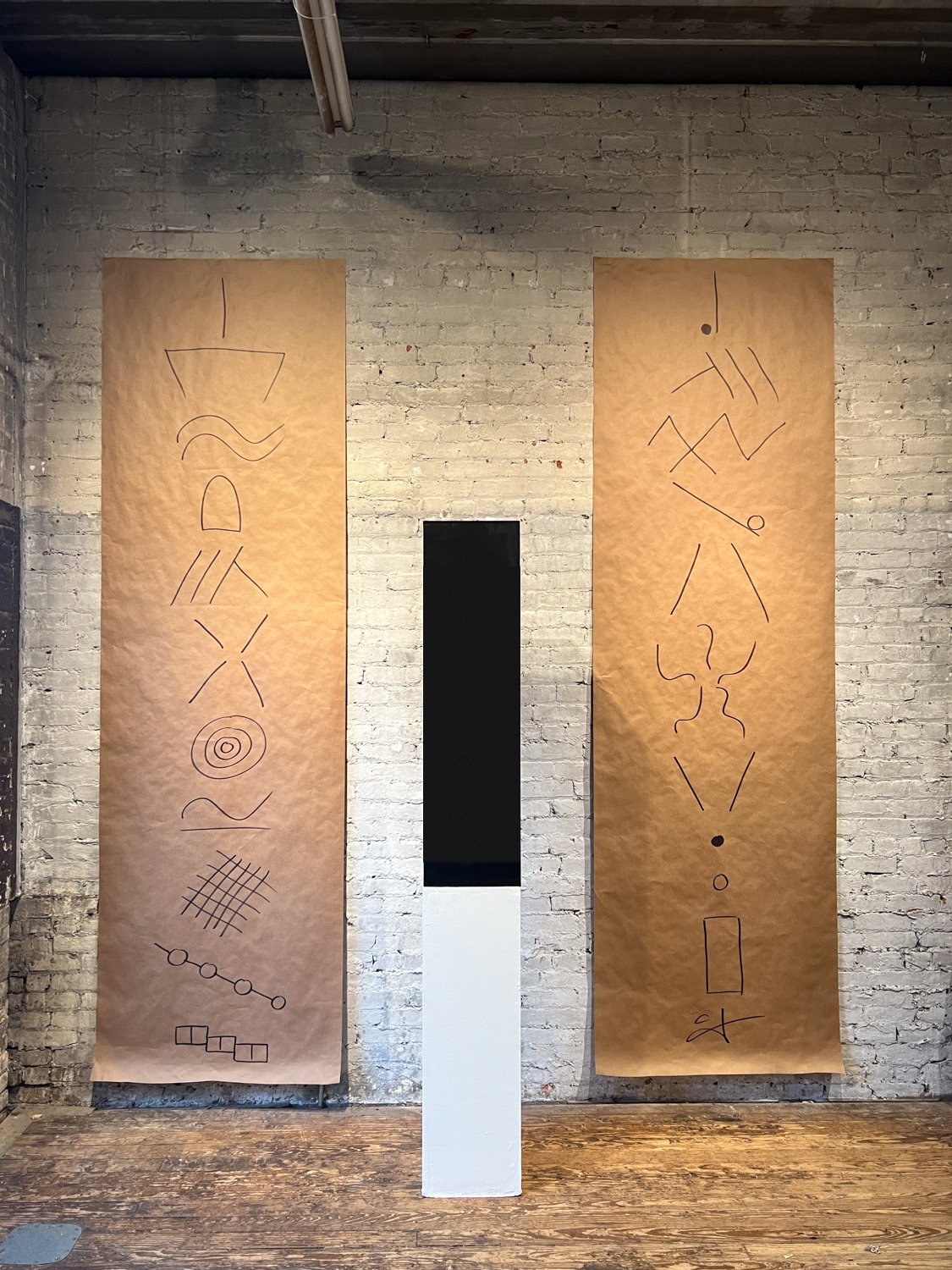
Installation — Liminal Forms, The Invisible Dog Art Center, Brooklyn, 2023
See also
C Fodoreanu