
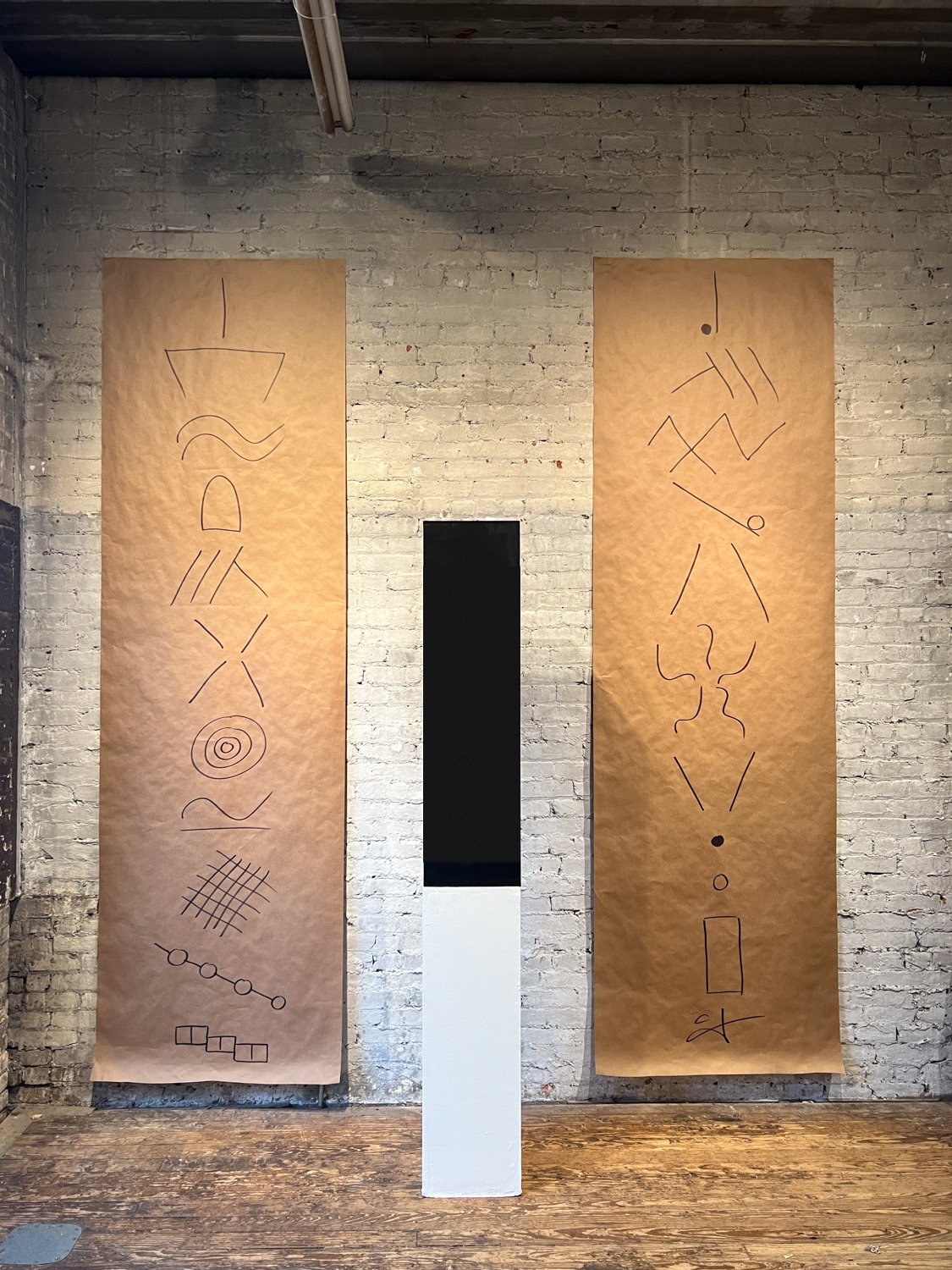
preamble, in Liminal Forms — MFA thesis exhibition, The Invisible Dog Art Center, Brooklyn, NY, 2023. Shown alongside assemble.
Exhibition
Artist's Statement
I came to preamble through clinical work. As a pediatrician, I sit on the side of the exam-room threshold where another person's selfhood is being held — sometimes briefly, sometimes for months — by people who are not them. Family. Nurses. Friends who answer the phone. The patient is not less of a self when ill; the self is just temporarily distributed.
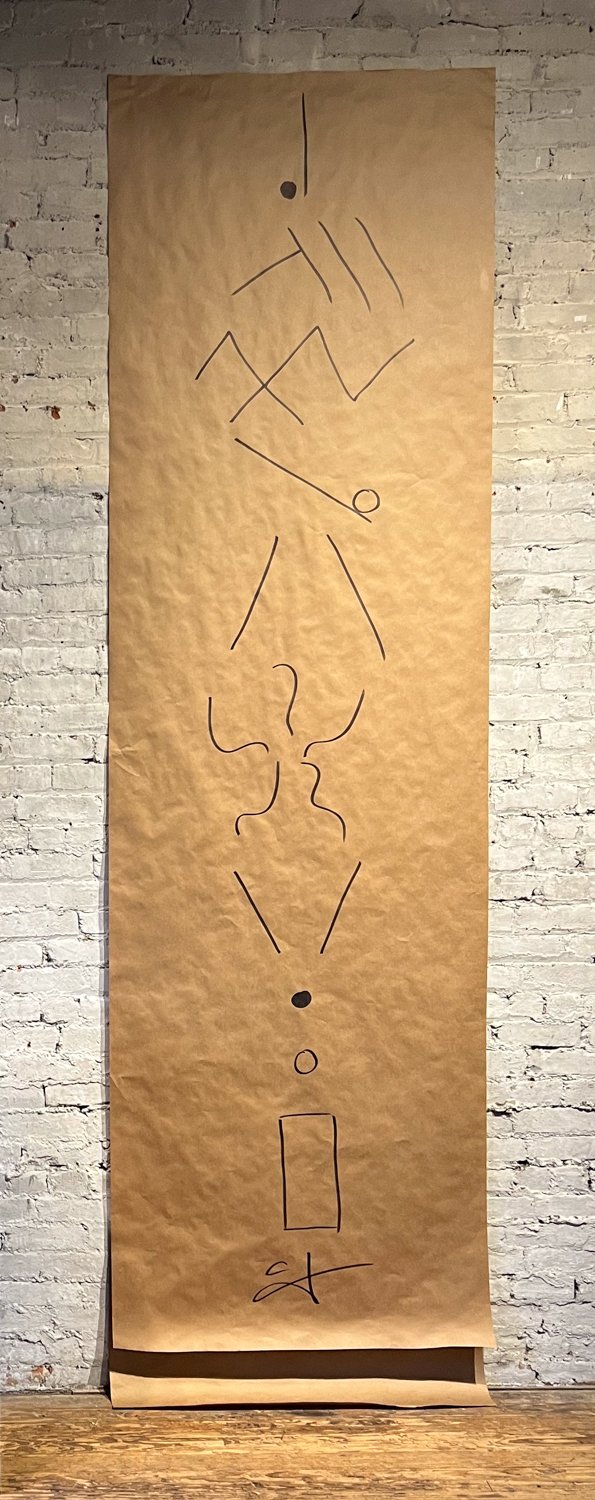
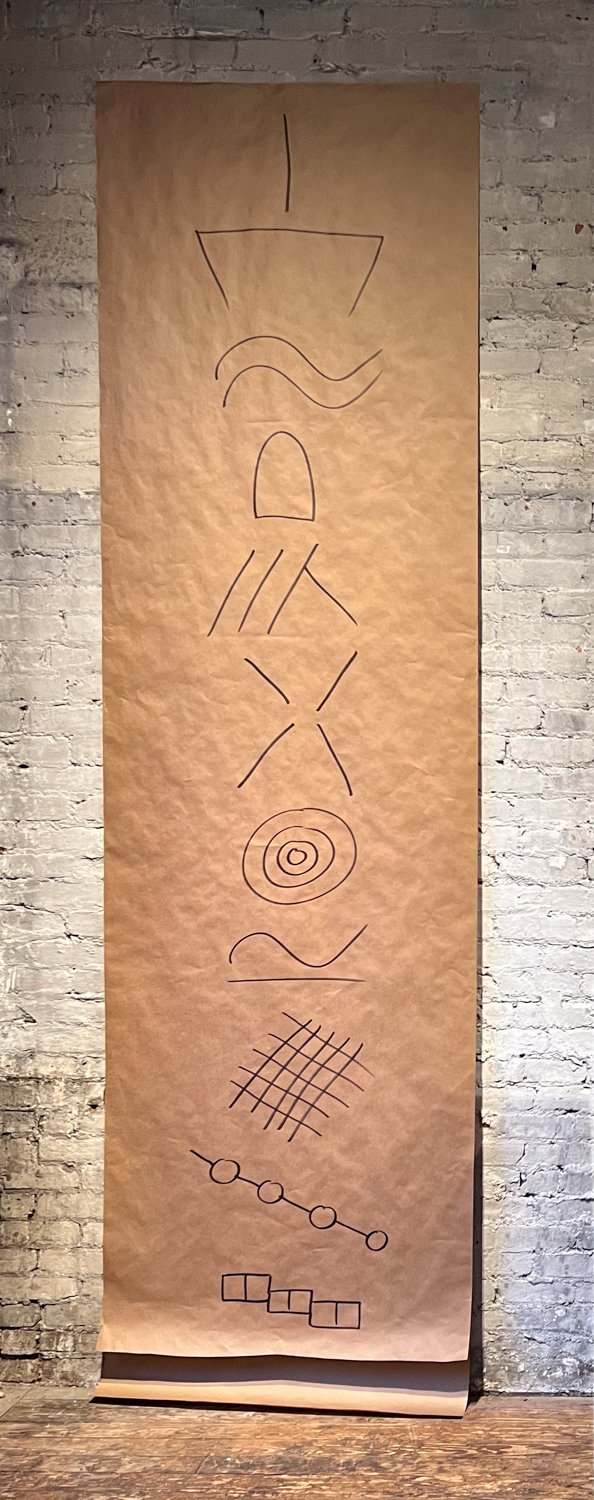
The drawings are oil on butcher paper, ten feet tall. Butcher paper is what wraps food on the way to a table; it's the substrate of the kitchen, the daily body. Scaling it to ten feet pulls it out of domestic use and into the body's monumental register. The two pedestals — one white, one black — mark the two thresholds the patient moves between.
Preamble proposes that illness is not an event inside one body. It is a temporary dispersal, and the people who hold the meaning of the dispersed self — including the artist, the doctor, the friend — are part of the body that is healing.
Critical Writing
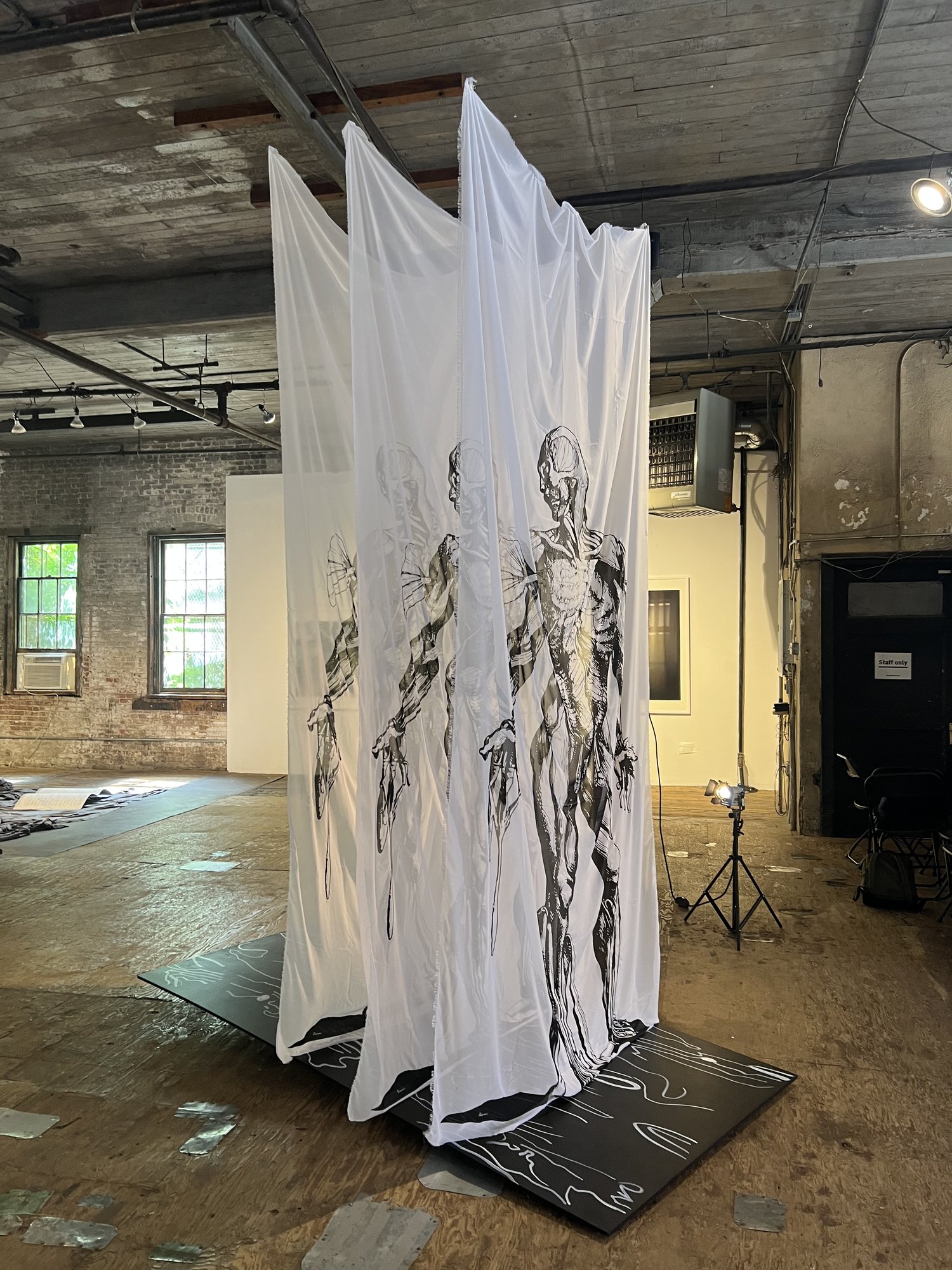
Fodoreanu produces a medical body, flayed like Titian's Marsyas or the écorché engravings of old medical folios. This raw exposure of the inside-turned-outside is translated into a monumental language of remembrance. On a series of hanging tapestries, Fodoreanu rephrases the designs of Vesalius's anatomical drawings onto skeins of fabric and paper. Vesalius's scientific gaze did for anatomy what Alberti did for painting — the surface is exhausted to reveal what is underneath. His discoveries positioned dissection as aesthetic form: muscles left the bone to mimic flora, roots, and vine. Fodoreanu utilizes this body as fabric to seek out something within us, a window into new territory, an open-ended figural knowledge that images a body as an ecological network.— Andrew Woolbright, editor-at-large at The Brooklyn Rail, exhibition essay for Liminal Forms (presenting preamble and assemble), 2023
Installation — Liminal Forms, The Invisible Dog Art Center, Brooklyn, 2023
C Fodoreanu