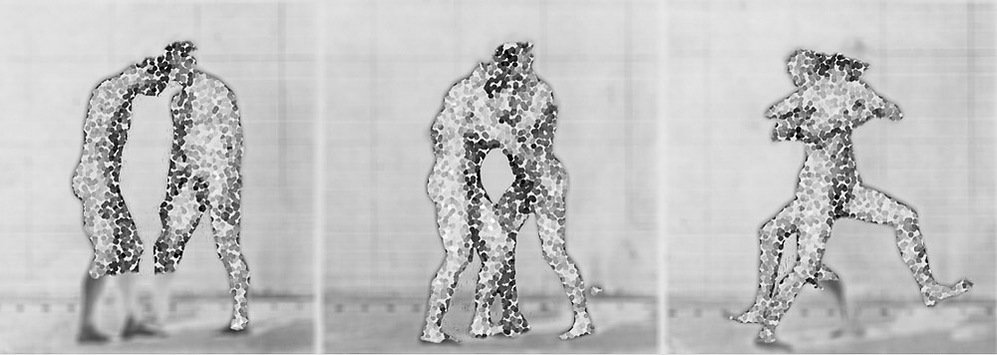
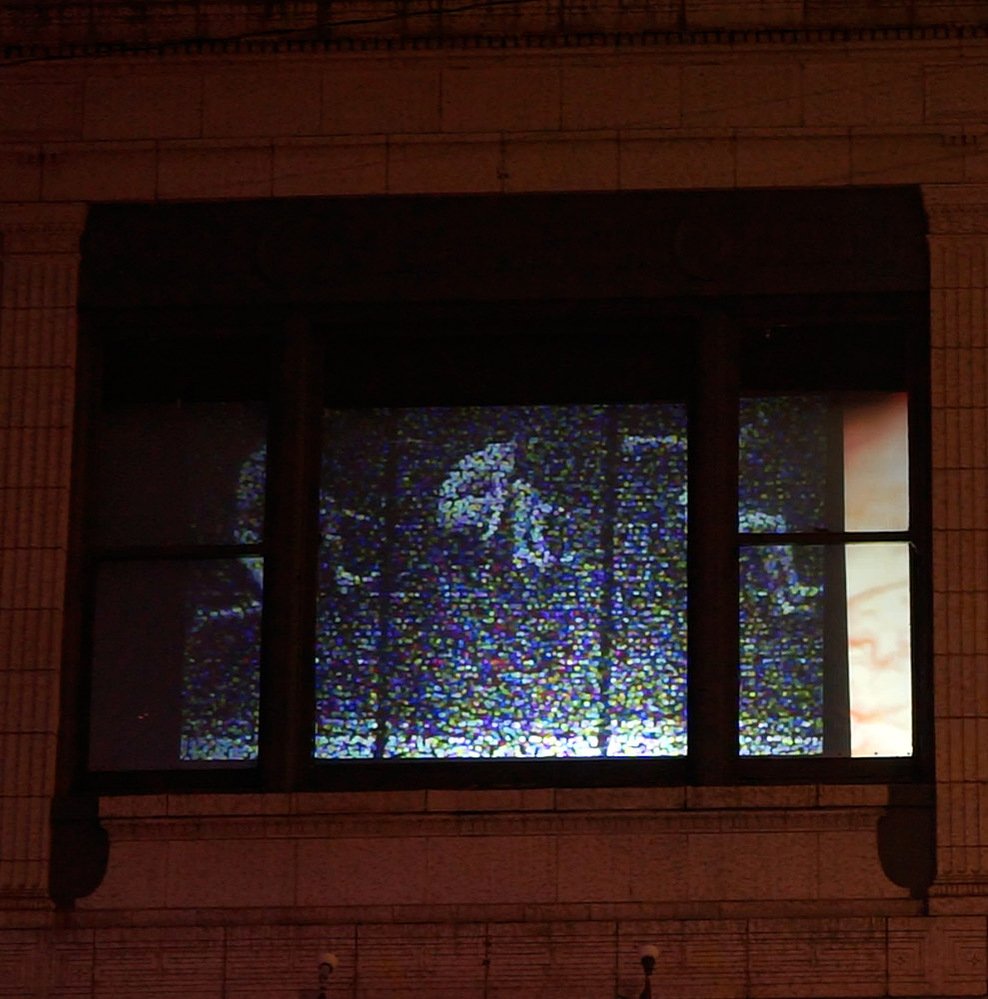
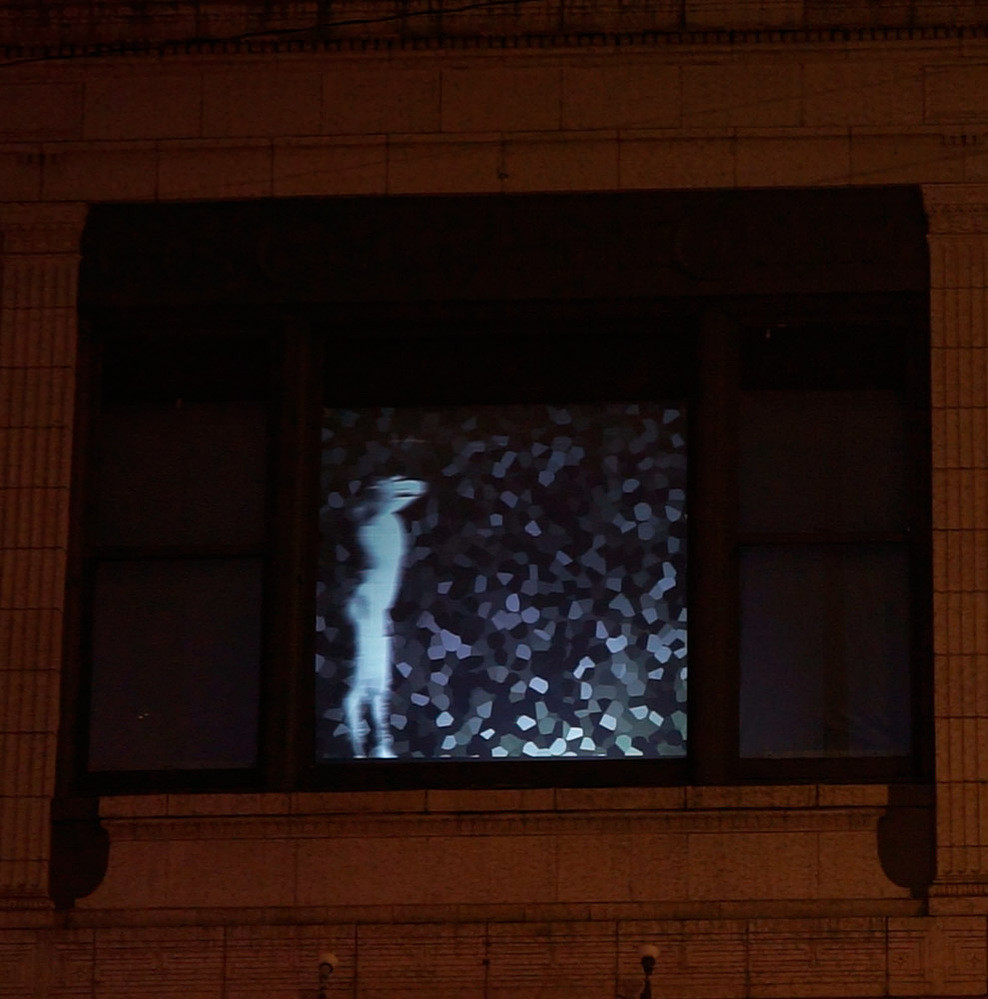
sub-limin-al — window installation, 1 West Grand, Chicago, IL, 2023.
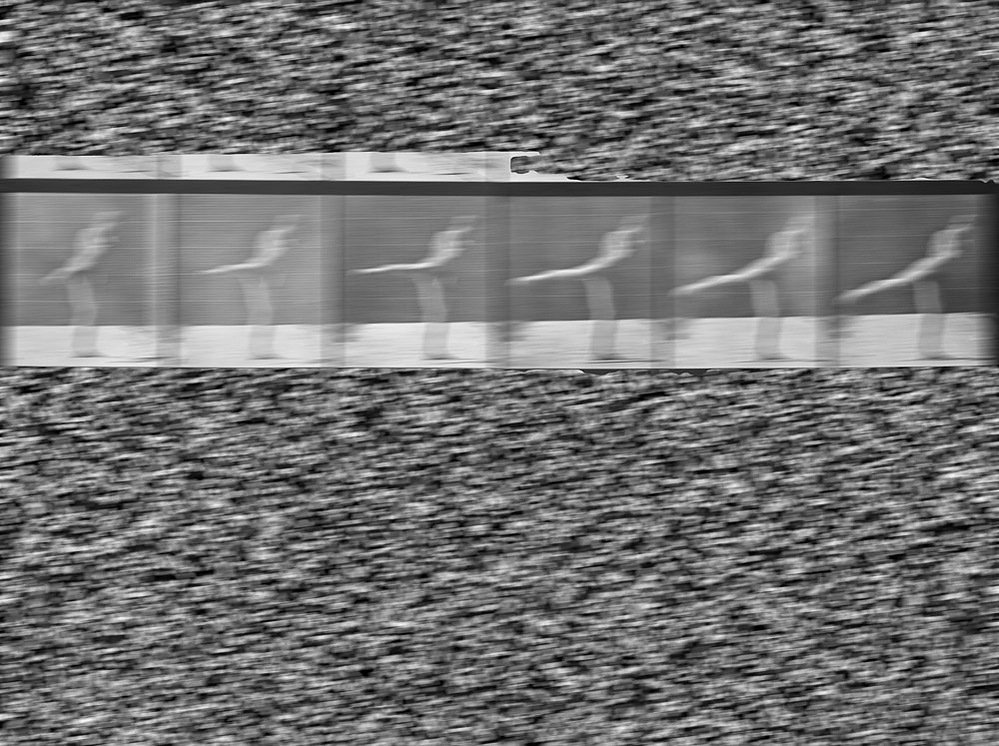
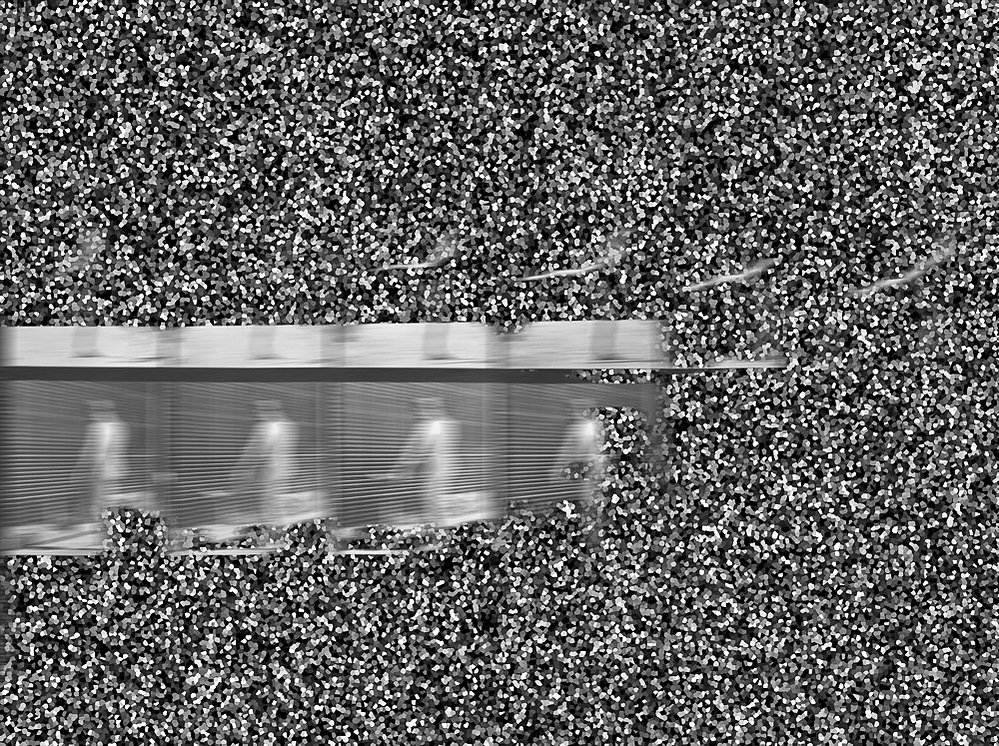
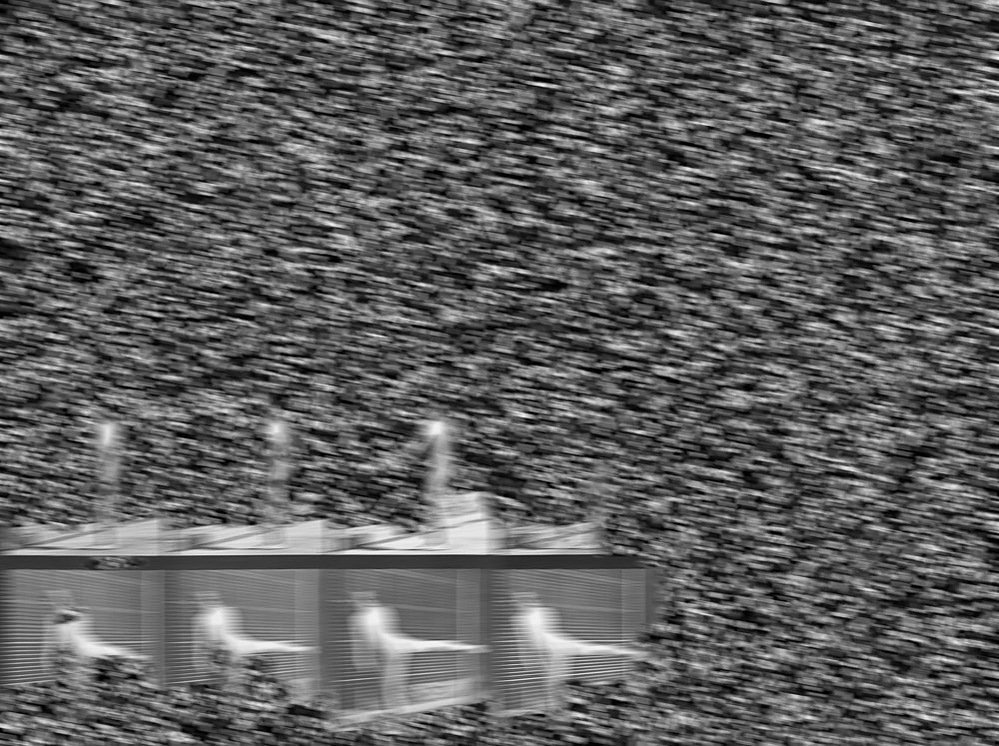
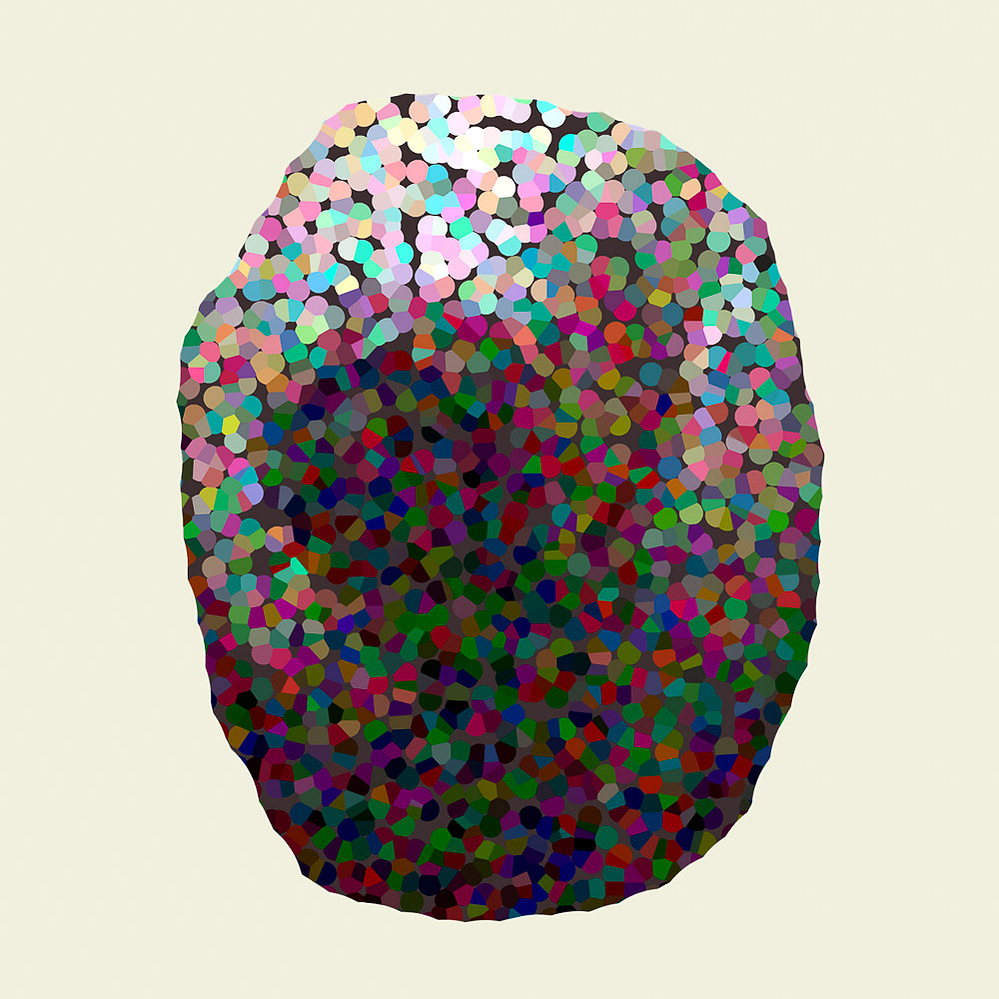
sub-limin-al, in writings — level of service not required (LOS/NR), La Jolla, CA, 2025.

No dimensions set.
No thoughts out loud.
No expressed desires.
An amalgam of nuances, tonalities, gray matter — forward attention, short focal range. Dissipation, dilution, un-timed cues — rebirth in the tomorrow.
And then, it feels personal, broken, anew; relational, reinventing self, and cured. Breakup.
How much of it was ours to begin with?
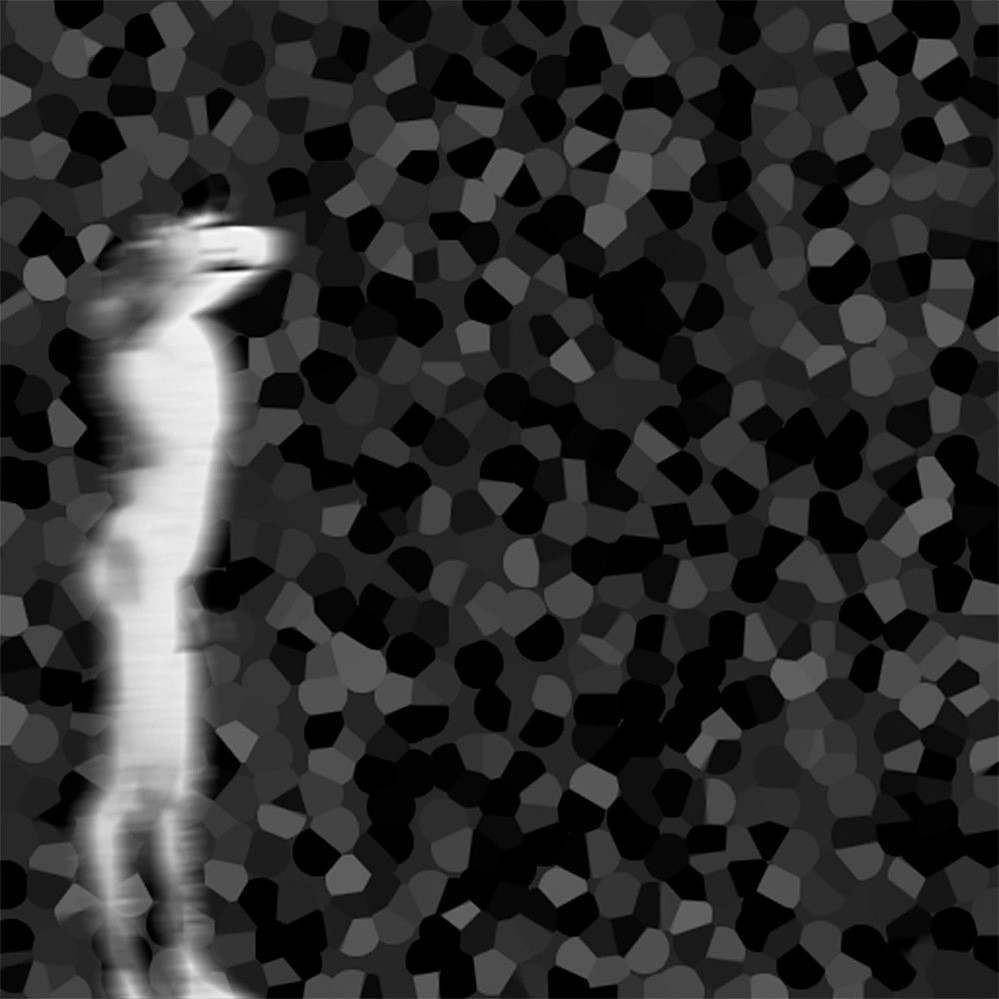
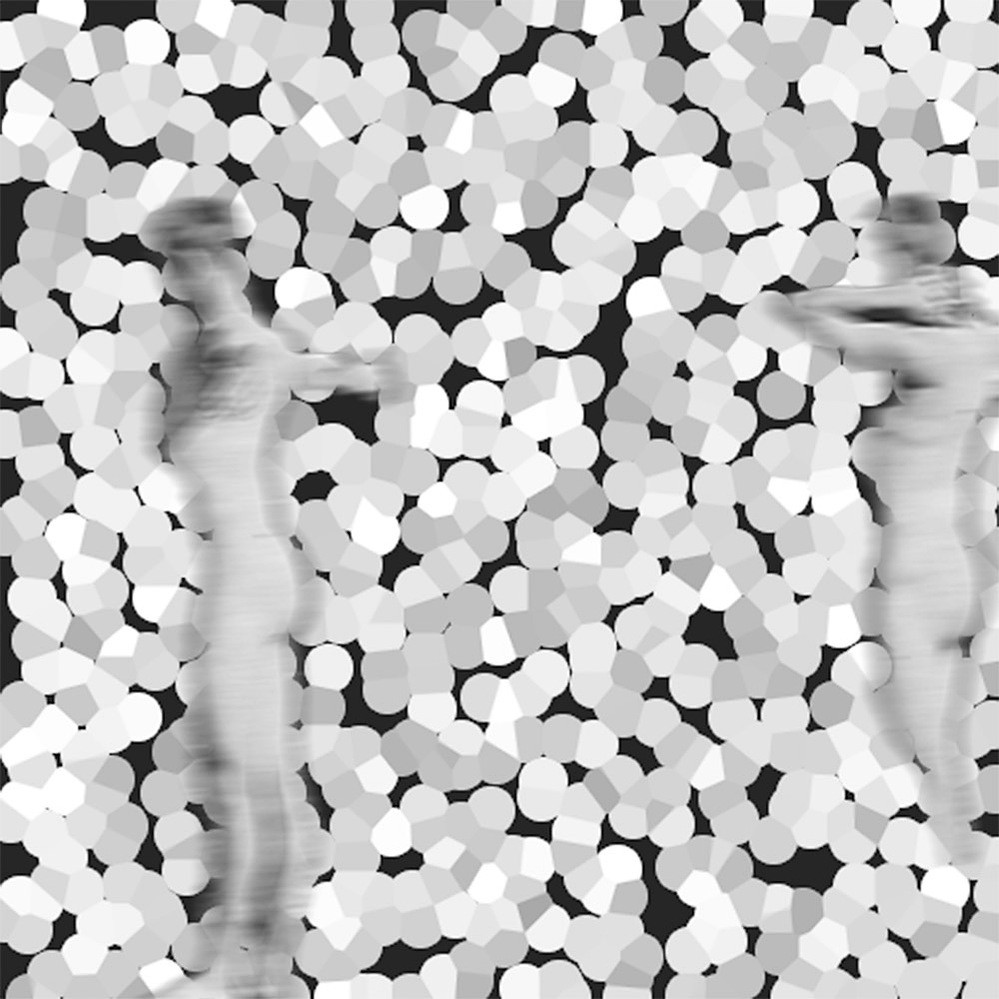
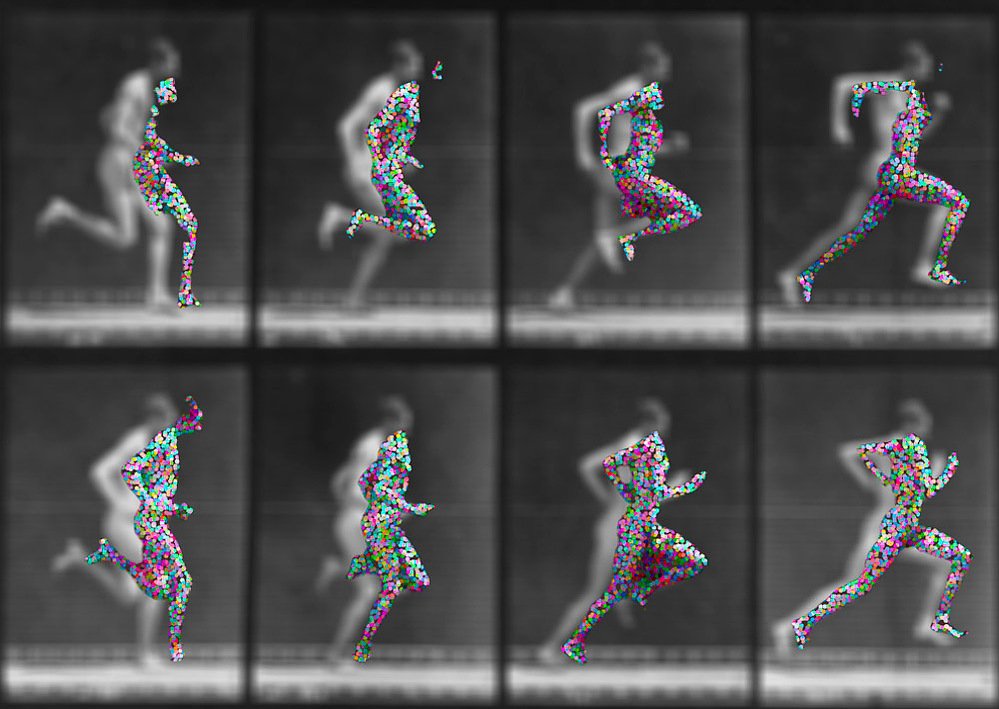
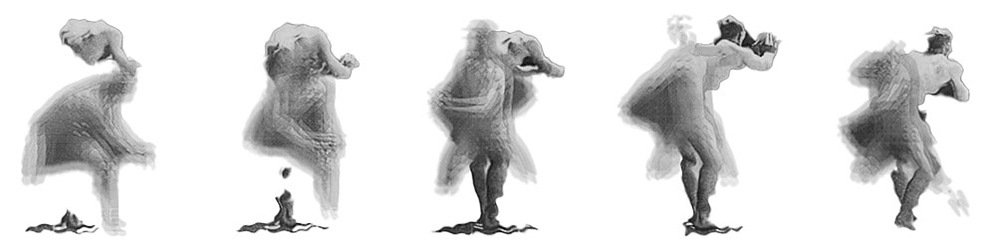
The work appropriates Eadweard Muybridge’s late-nineteenth-century motion studies — the foundational photographic archive of human movement, captured through batteries of cameras triggered in sequence at the University of Pennsylvania in the 1880s. The figures are bare, as Muybridge often photographed them, in postures of running, leaping, climbing, contortion, contact. The original project framed these images as anatomical and scientific. The framing has always been partial.
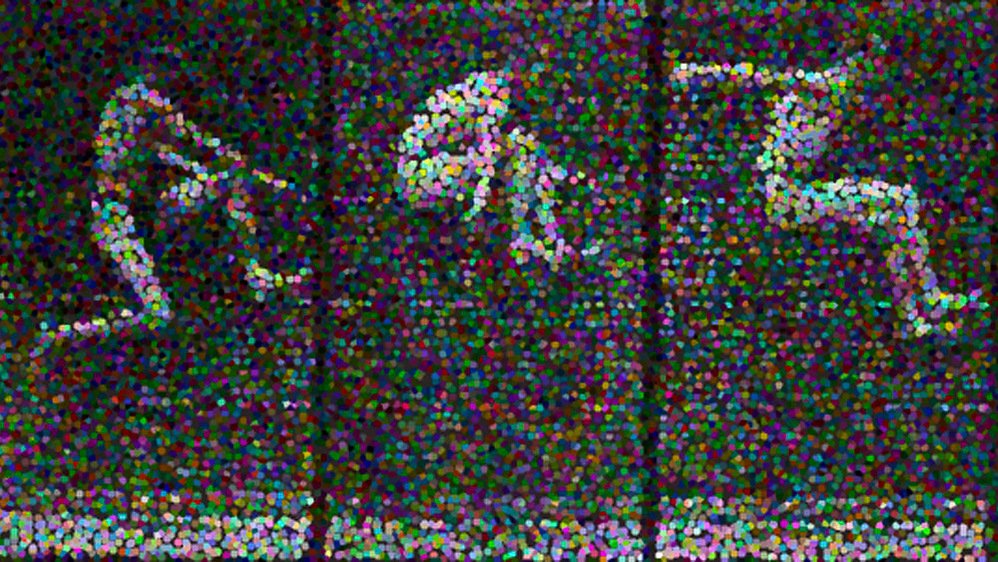
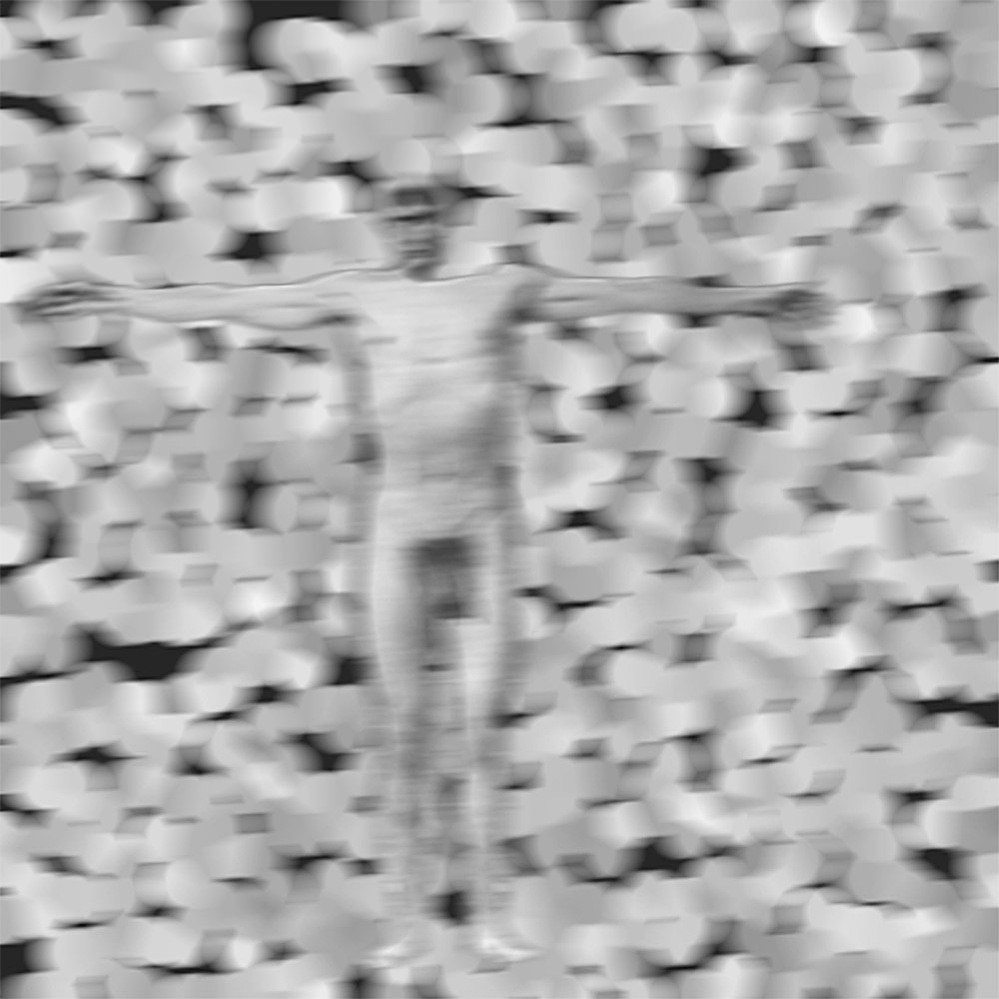
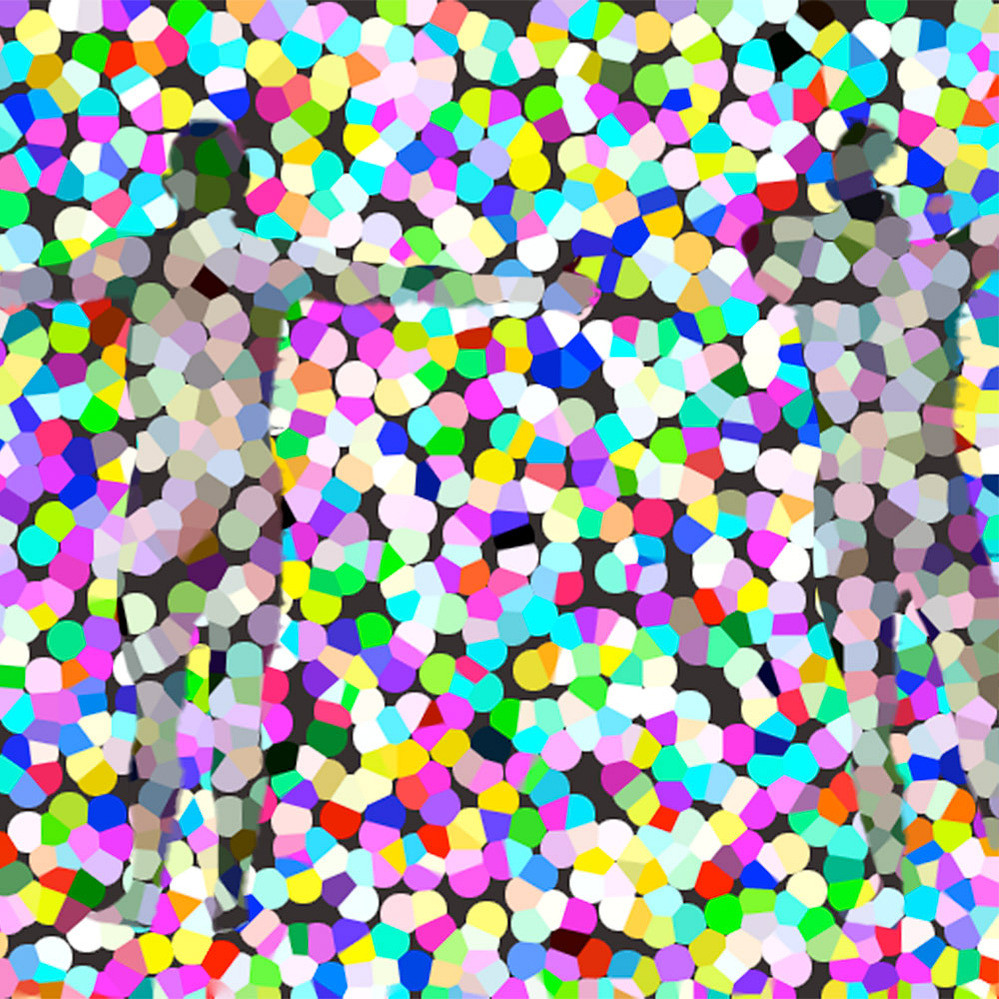
The figures have been rendered through digital pixelation. The photographic image is broken down into colored particles, dots, fragments — visual operations that fragment the body to the threshold of dissolution while preserving it as recognizable form. The viewer sees the figure and the field of particles simultaneously. The body is composed of the same substance as the surrounding noise. The figure emerges from the field as the looker attends to it; the longer the attention, the more legible the body becomes.
The same pixelation appears in the artist’s earlier situs solitus (2018–2020), where it works as the visual language of censorship, turned against the cultural modesty that hides certain parts of the body. Here it is turned the other way. The Muybridge archive has been visible for over a century under the protection of its scientific framing — the bodies bared, but their bareness held inside the dispassionate authority of anatomical study. The pixelation does not undo a hiding; it slows the looking until what the seeing has always been becomes legible. The two works turn one technique against one problem — what is permitted to be seen, and how — from opposite directions.
The title makes the threshold explicit. Sub-limin-al — below the limen — names the place where what is not consciously acknowledged operates anyway. And that place is where most looking actually happens, including the looking the Muybridge archive has always asked for without naming it.